Budgeting: How to save money on heating this winter, and what it will cost
The biggest way to save money on heating is the thermostat: setting it back while you sleep or are out can cut heating and cooling costs by up to 10%, says the DOE. This winter, the EIA expects gas-heated homes to pay about $640 from November to March, 9% less than last year, and electric-heated homes $1,196.
 By Wealtie Team · 3 min read
Key takeaways
- The EIA forecasts average heating-season spending of $640 for homes heated by natural gas this winter, down 9%, and $1,196 for electric-heated homes, up 4%.
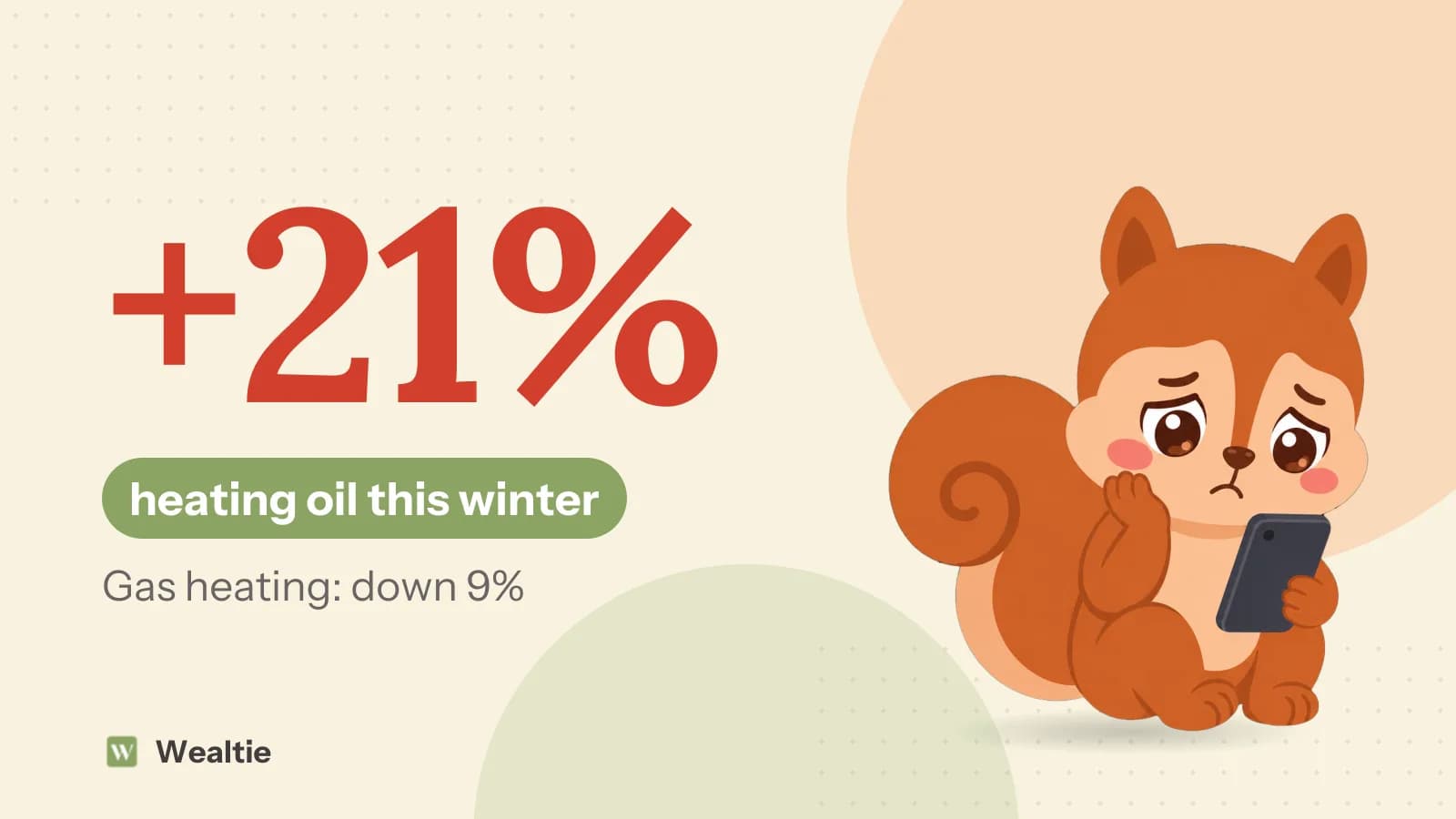
- Homes heating with heating oil face the biggest rise: $2,115, up 21%, because of higher distillate prices; propane is forecast at $1,246, down 3%.
- Setting the thermostat back while you sleep or are out can cut heating and cooling costs by as much as 10%, about 1% on heating for each degree Fahrenheit over eight hours.
- Sealing draughts, servicing the boiler or furnace and heating only the rooms you use cut the bill without new equipment.
- Budget the winter as one season: divide the forecast by the months it covers, or use your utility's budget billing.
How much will heating cost this winter?
It depends mostly on the fuel your home uses. For November 2026 to March 2027, the Energy Information Administration's Winter Fuels Outlook forecasts these average household costs:
| Main heating fuel | Forecast, Nov to Mar | Change from last winter |
|---|---|---|
| Natural gas | $640 | −9% |
| Electricity | $1,196 | +4% |
| Propane | $1,246 | −3% |
| Heating oil | $2,115 | +21% |
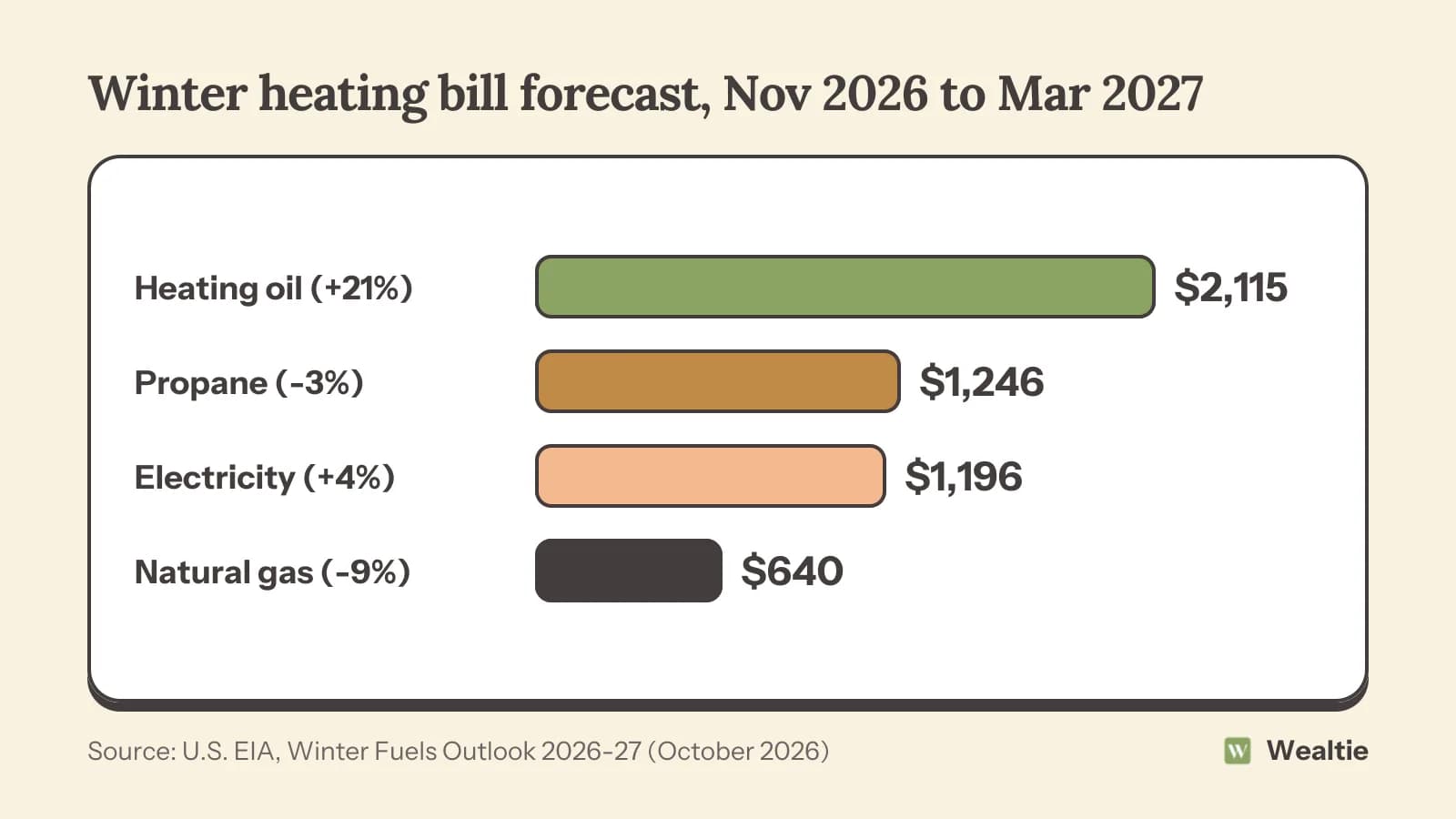
Natural gas heats 46% of US homes, and together with propane covers about half of households; both are expected to cost less this winter because fuel prices are lower. Electric heating costs more because the EIA expects residential electricity prices to rise about 3%. Heating oil, used by about 3% of households, mostly in the Northeast, is the outlier: lower global refining output has pushed up distillate prices and left US stocks low going into winter.
These are averages. Your bill depends on the size and insulation of your home, your heating system and the weather where you live.
What's the biggest way to save money on heating?
The thermostat. Setting it back while you sleep or are out can cut heating and cooling costs by as much as 10%, according to the Department of Energy's Energy Saver guidance.
The DOE puts the saving at about 1% on heating for each degree Fahrenheit you set it back over eight hours. A 7°F setback overnight is about 7%. Keep the house at the lowest comfortable temperature while you're awake, and lower it at night and while everyone is out.
A programmable or smart thermostat makes this automatic and brings the heat back before you wake up or come home. On an electric-heated home at the forecast $1,196, 7% is about $84 over the winter.
Should you leave the heating on all day?
Usually not. Heating an empty house all day uses more energy than letting it cool a little and warming it up again. The setback advice above is based on exactly that.
The exception is a heat pump, which can work less efficiently if it has to recover from a big drop. If you have one, use smaller setbacks or a thermostat designed for heat pumps, and check the manufacturer's guidance.
What else lowers a heating bill?
Most of the rest is about keeping heat in and making the system work less.
- Service the boiler or furnace. The DOE says regular maintenance can cut heating and cooling costs by 10% or more. Change filters during the months the system runs most.
- Seal draughts around doors, windows and loft hatches. Draught strips and a door snake cost little.
- Heat the rooms you use. Close doors and turn radiators down in spare rooms.
- Use the sun. Open curtains on sunny days and close them at dusk.
- Lower the water heater temperature a little, if it's set high.
None of these needs new equipment. Insulation and new heating systems save more, but they're bigger decisions; check for local rebates before you buy.
How do you budget for winter heating bills?
As one season, not month by month. Heating bills peak in December and January, so a budget built on October's bill will be short by January.
Add up last winter's heating bills, or use the forecast for your fuel, and spread them. The forecast $1,196 for electric heating over five months is about $239 a month in season, or about $100 a month if you save for it all year. Many utilities offer budget billing, which charges the same amount each month based on your yearly use and settles up once a year. How to save money on your electric bill covers budget billing and the rest of the year's electricity.
If heating costs are a struggle, the federal Low Income Home Energy Assistance Program helps eligible households, and many utilities have hardship schemes. Ask before a bill is overdue, not after.
How do you keep the winter bills in view?
Put the heating bill in your budget as its own line, and spread the big months with a separate pot.
In Wealtie, set a fixed budget-billing amount as a recurring transaction that logs itself on its due date, or set aside a monthly amount in a sinking fund for the winter peak. Your monthly budget then shows what's left after heating, and Budget Health warns you mid-month if spending is heading over in a cold month.
Questions people ask
From November 2026 to March 2027, the EIA forecasts about $640 for the average home heated by natural gas, $1,196 for electricity, $1,246 for propane and $2,115 for heating oil, in its October 2026 Winter Fuels Outlook.
The lowest comfortable temperature while you're awake, and lower again while you sleep or are out. The Department of Energy says each 1°F of setback over eight hours saves about 1% on heating.
Usually not. The Department of Energy says setting the thermostat back while you're asleep or out can cut heating and cooling costs by up to 10%. A programmable thermostat brings the heat back before you get up or home.
The EIA expects heating oil spending to rise 21% because global distillate production has fallen with lower refining activity, pushing up prices and leaving US stocks low heading into winter.
Add up last winter's bills, or use the EIA forecast for your fuel, and divide by the months they cover. Set that amount aside each month, or ask your utility for budget billing, which evens out payments over the year.
Sources
- Winter Fuels Outlook 2026-27 · U.S. Energy Information Administration · checked 6 November 2026
- Energy Saver: Home Heating and Cooling fact sheet · U.S. Department of Energy · checked 6 November 2026
This article is general information, not financial, tax or legal advice. Your situation is your own; check the numbers that apply to you before you act on them.