Budgeting: Loft insulation cost, savings and how long it takes to pay back
Loft insulation cost is modest for most homes, especially if you lay it yourself, and it cuts heat lost through the roof. In a worked example, insulating a typical loft costs about 500 professionally and saves about 150 a year on heating.
 By Wealtie Team · 3 min read

Key takeaways
- Loft insulation cost is modest for most homes.
- In a worked example, it costs about 500 professionally and saves about 150 a year.
- Doing it yourself roughly halves the cost if the loft is easy to reach.
- Check for grants, which can cover some or all of the cost.
What is the loft insulation cost?
For most homes, insulating the loft is one of the cheapest and most effective ways to cut heating bills. Heat rises, and without enough insulation, a lot of it escapes through the roof. Laying rolls of insulation between and over the joists keeps that heat in the rooms below. In a worked example, insulating a typical loft costs about 500 if you pay a professional, or about 250 if you do it yourself, and saves about 150 a year on heating.
Many lofts already have some insulation, but it may be too thin by modern standards. Topping it up costs less than starting from scratch and still makes a difference.
In some places, grants or energy company schemes cover part or all of the cost, especially for older homes or households on lower incomes. Check what's available before paying for it yourself.
It's worth looking in your loft before getting quotes. If you can see the tops of the joists, the insulation is probably too thin. If the insulation is well above the joists and evenly spread, you may already be in good shape. A quick look with a torch tells you a lot, and it helps you judge whether a topping-up job or a full installation is needed.
Loft insulation also has a summer benefit. It slows heat coming in through the roof on hot days, so upstairs rooms stay a little cooler, which can mean less need for fans or air conditioning.
How much does loft insulation save?
Here's a worked example for a typical loft, in round numbers that work in any currency:
| Item | Amount |
|---|---|
| Professional installation | 500 |
| Do it yourself | 250 |
| Yearly heating saving | 150 |
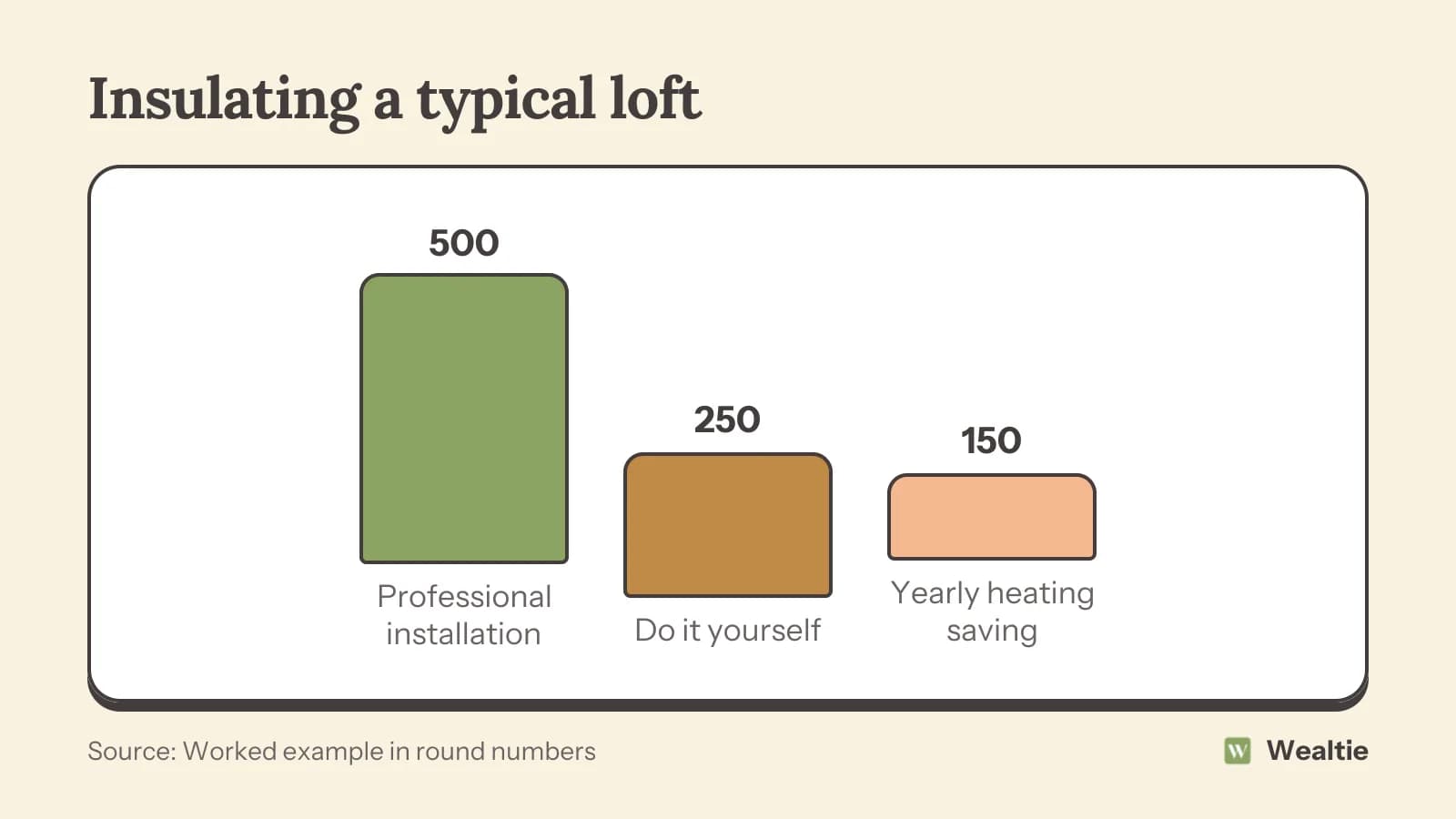
At 150 a year, professional installation pays for itself in a little over three years, and doing it yourself in under two. After that, the savings keep coming for decades, since insulation lasts a long time. Your own figures depend on the size of your loft, how much insulation is already there, how you heat your home and your energy prices.
What affects the cost?
Size of the loft
A bigger loft needs more material and more time to fit. Measuring the floor area before getting quotes helps you check that prices are fair.
Existing insulation
Topping up thin insulation costs less than insulating an empty loft, since you need fewer rolls and less time.
Access
A loft with an easy hatch, a ladder and boarded areas is quicker to work in. Tight spaces, low roofs and lots of stored items add time. Clearing the loft before the installer arrives can bring the price down and speed up the job.
Boarding for storage
If you want to store things in the loft, the insulation needs raised boarding above it, so it isn't squashed. This adds to the cost but keeps the insulation working. Squashed insulation loses much of its effect, so it's worth doing properly if you rely on the loft for storage.
Can you do it yourself?
Yes, if the loft is easy to reach and has no damp or other problems. Insulation rolls are laid between the joists, then a second layer is laid across them. Wear protective clothing, gloves, goggles and a mask, since insulation can irritate the skin and lungs. Don't block the gaps at the edges of the roof, which let air flow and stop condensation. Leave space around light fittings and keep the water tank and pipes insulated too, since the loft will be colder once the floor below is better insulated. If you're unsure, a professional installer can check for problems first.
How do you make the most of insulation?
Insulation works best alongside other simple fixes. Draught-proofing doors and windows, closing curtains at dusk and bleeding radiators all help the heat you pay for stay in your home. How to save money on heating and the winter budget cover more ideas.
Plan the cost
If you can't pay upfront, save a little each month in a sinking fund for home improvements, or check whether a grant can help. The home maintenance budget covers planning for jobs like this alongside other home costs.
How do you track heating savings in Wealtie?
Add energy bills as recurring transactions, so they log themselves on their date. Keep home improvements in their own expense category and compare winter bills before and after insulating to see the saving.
Questions people ask
In a worked example, insulating a typical loft costs about 500 professionally or about 250 if you do it yourself.
In a worked example, about 150 a year on heating, so it pays for itself in a few years.
Yes, if it's easy to reach and has no damp. Wear protective gear and don't block the gaps at the roof edges.
In some places, yes, especially for older homes or households on lower incomes. Check what's available locally.
This article is general information, not financial, tax or legal advice. Your situation is your own; check the numbers that apply to you before you act on them.