Budgeting: How much does a new boiler cost, and how to plan for it
A new boiler cost covers the boiler itself, fitting, removing the old one and any extra work on pipes, controls or radiators. In a worked example, replacing a boiler in a typical home costs about 3,000.
 By Wealtie Team · 3 min read
Key takeaways
- A new boiler cost covers the boiler, fitting and any extra work on the system.
- In a worked example, replacing a boiler in a typical home costs about 3,000.
- Get at least three quotes, and compare what each one includes.
- Saving a little each month means a breakdown isn't a crisis.
How much does a new boiler cost?
A new boiler is one of the bigger costs a homeowner faces, and it often comes as a surprise when an old one fails in winter. The total depends on the type and size of boiler, how complicated the fitting is and whether your heating system needs extra work. Moving the boiler to a new spot, upgrading pipes or adding new controls all add cost. In a worked example, replacing a boiler in a typical home costs about 3,000.
Rules, grants and the types of heating systems available vary by country, so check what applies where you live. In some places, there's support for switching to lower-carbon heating like heat pumps.
What does a new boiler cost?
Here's a worked example of replacing a boiler in a typical home, in round numbers that work in any currency:
| Item | Cost |
|---|---|
| Boiler | 1,500 |
| Fitting and labour | 900 |
| Controls and flush | 350 |
| Removing the old boiler | 150 |
| Other parts | 100 |
| Total | 3,000 |
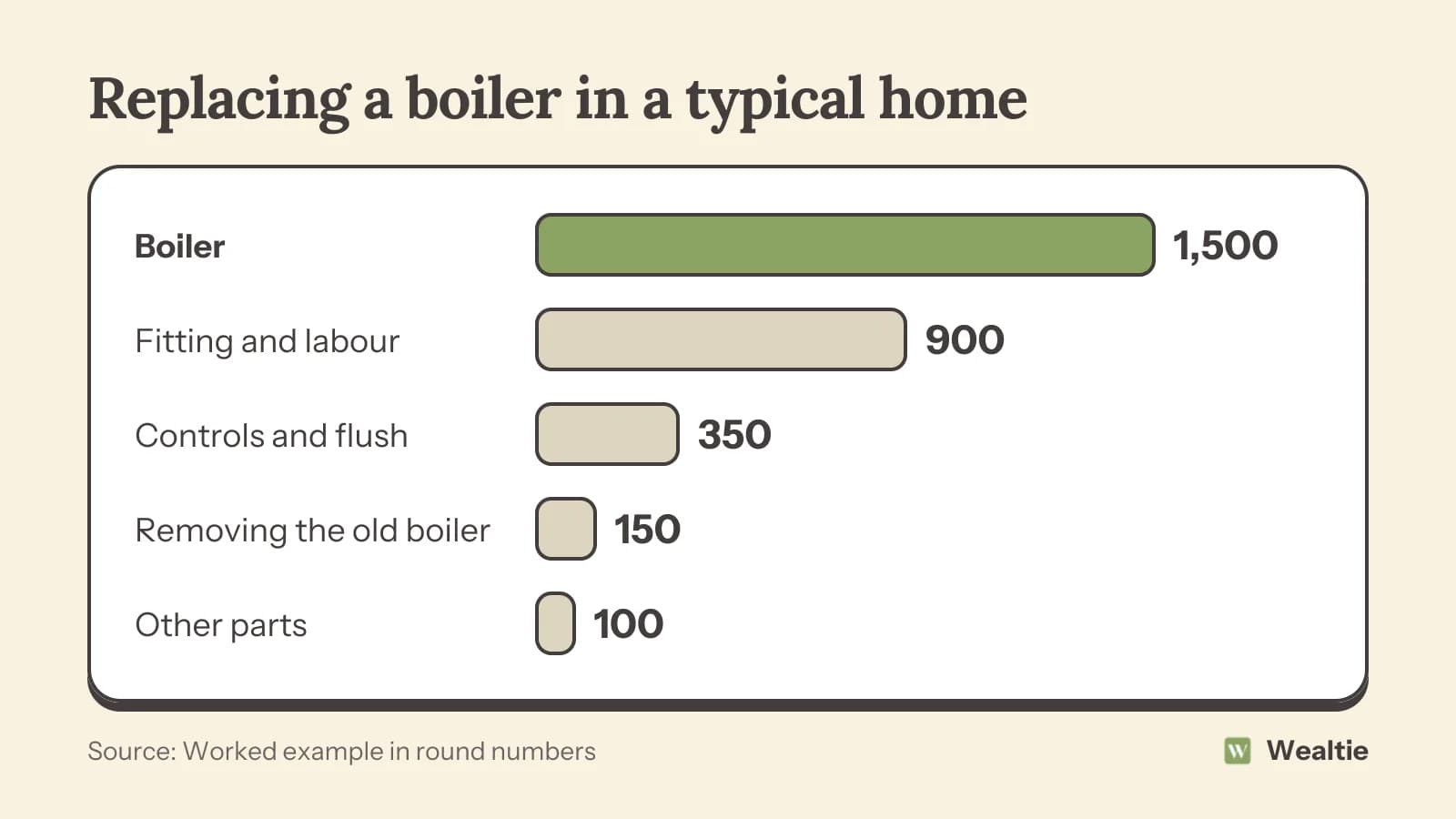
A like-for-like swap in the same place usually costs less. Changing to a different type of boiler, or moving it to another room, costs more because of the extra pipework.
What affects the new boiler cost?
Type and size
Boilers come in different types, suited to different homes. A larger home with more bathrooms usually needs a bigger, more expensive boiler. An installer can tell you which type suits your home and hot water needs.
Fitting
Labour is a large part of the cost. A straightforward swap might take a day, while a full change of system can take several.
Extra work
Flushing the system to clear sludge, fitting new controls, upgrading pipes or replacing radiators all add to the bill. Some of this is needed to protect the new boiler and keep its warranty valid.
Warranty
Longer warranties are sometimes included in a higher price. A long warranty can save money on repairs later, so compare it when looking at quotes.
When should you replace a boiler?
Not every problem means a new boiler. A repair is often cheaper if the boiler is fairly new and the fault is small. Signs it may be time to replace include frequent breakdowns, parts becoming hard to find, rising energy bills and an old boiler that's much less efficient than modern ones. Repair or replace covers how to decide for any big item.
Get at least three quotes
Prices vary a lot between installers. Ask for written quotes that list the boiler model, the work included, the warranty and how long the job will take. Check that the installer is properly qualified and registered where that's required.
How do you save for a new boiler?
The best time to plan for a new boiler is before the old one fails. If your boiler is likely to need replacing in about ten years, saving 25 a month builds 3,000 by then. This works like a sinking fund: a small amount set aside regularly for a cost you know will come. The home maintenance budget covers how much to set aside for upkeep in general.
What if it breaks before you've saved enough?
Some installers offer finance, but it can be expensive. Check the total cost of any payment plan before you agree, and compare it with other options. An emergency fund is the cheapest way to cover a sudden cost.
Keep the old boiler going longer
A yearly service by a qualified engineer spots small problems before they become big ones and keeps the boiler running efficiently. It costs far less than an emergency call-out in midwinter, and some warranties require it. Bleeding radiators, checking the pressure and keeping the area around the boiler clear are simple jobs you can do yourself. None of this makes a boiler last forever, but it can add useful years and give you more time to save for the replacement.
Cut the running costs too
A new, efficient boiler can lower your energy bills, especially if the old one was very inefficient. Good controls, like a thermostat with a timer, help too. How to save money on heating has more ideas, and first-year homeowner costs covers other costs new owners face.
How do you plan for a new boiler in Wealtie?
Set up a savings goal for home repairs and add a monthly transfer to it as a recurring transaction, so it logs itself on its date. Track energy bills and repairs in their own expense categories, and set a budget for home costs, so a breakdown fits into the plan.
Questions people ask
In a worked example, replacing a boiler in a typical home costs about 3,000, including the boiler, fitting, controls and removing the old one.
A bigger or different type of boiler, moving it to a new spot, and extra work like new pipes, controls or radiators.
Repair if the boiler is fairly new and the fault is small. Replace if it breaks often, parts are hard to find or it's very inefficient.
Set aside a small amount each month. In a worked example, 25 a month builds 3,000 over ten years.
This article is general information, not financial, tax or legal advice. Your situation is your own; check the numbers that apply to you before you act on them.