Saving: Repair or replace? How to decide what's worth fixing
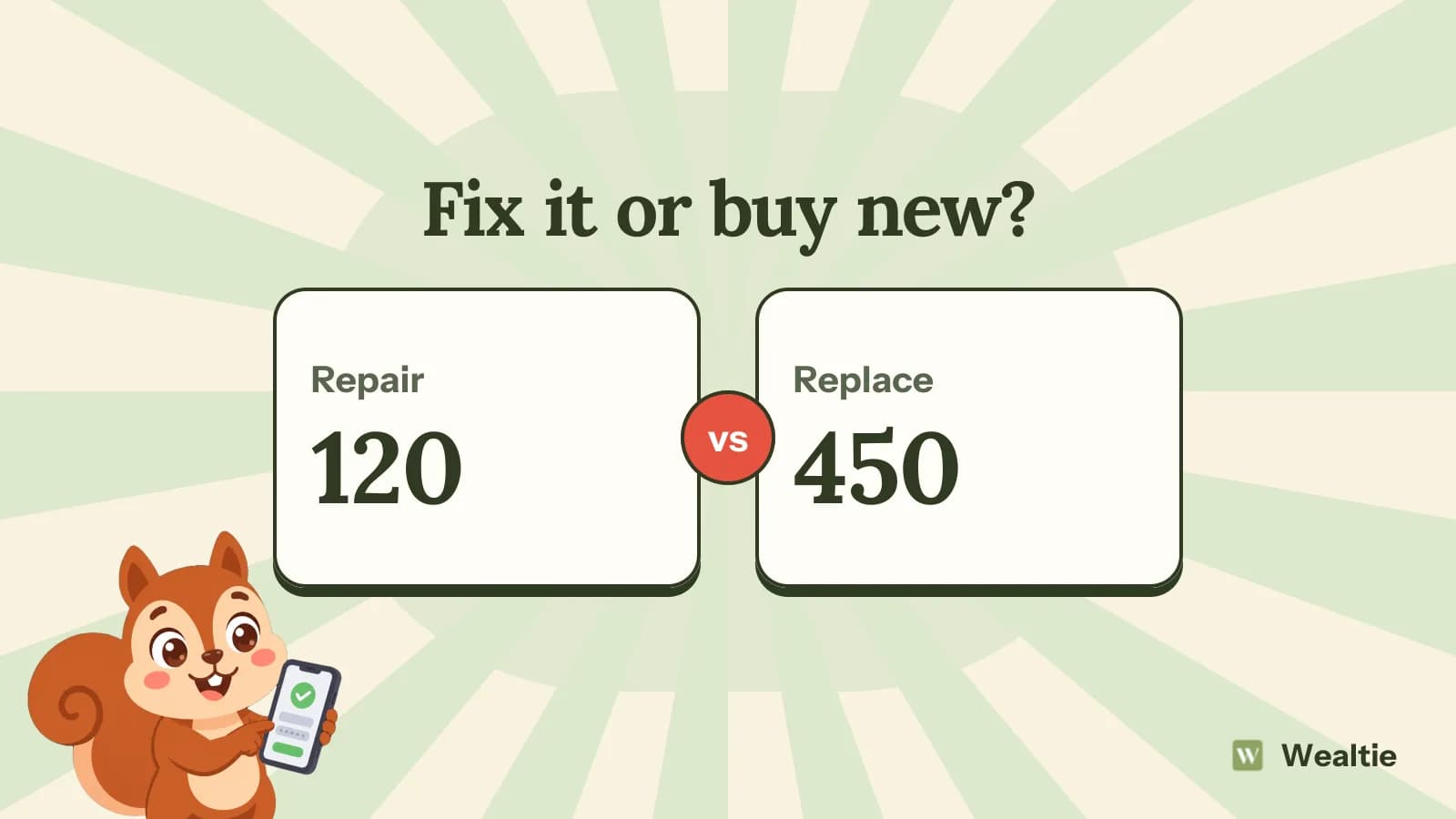
To decide whether to repair or replace something, compare the repair cost with the price of a replacement and how many more years the item is likely to last. In a worked example, a 120 repair on a washing machine with five good years left beats a 450 new one.
 By Wealtie Team · 3 min read
Key takeaways
- Compare the repair cost with a replacement and how long each will last.
- In a worked example, a 120 repair with five years left costs 24 a year, against 45 a year for a new machine.
- Repairs often make sense for well-built items that are still in good condition.
- Replace when repairs keep coming, parts are unavailable or running costs are high.
Should you repair or replace?
Compare what each option costs for every year of use you'll get from it. When something breaks, buying a new one can feel easier, and adverts make new models tempting. But a repair is often far cheaper, and many well-made items can keep working for years after a fix. Other times, a repair only delays the inevitable, and paying for it wastes money.
A simple calculation helps you decide calmly, rather than in the frustration of the moment.
How do you compare the cost?
Divide each option's cost by the years of use you expect. Here's a worked example for a washing machine, in round numbers that work in any currency:
| Option | Cost | Expected years | Cost per year |
|---|---|---|---|
| Repair | 120 | 5 | 24 |
| Replace | 450 | 10 | 45 |
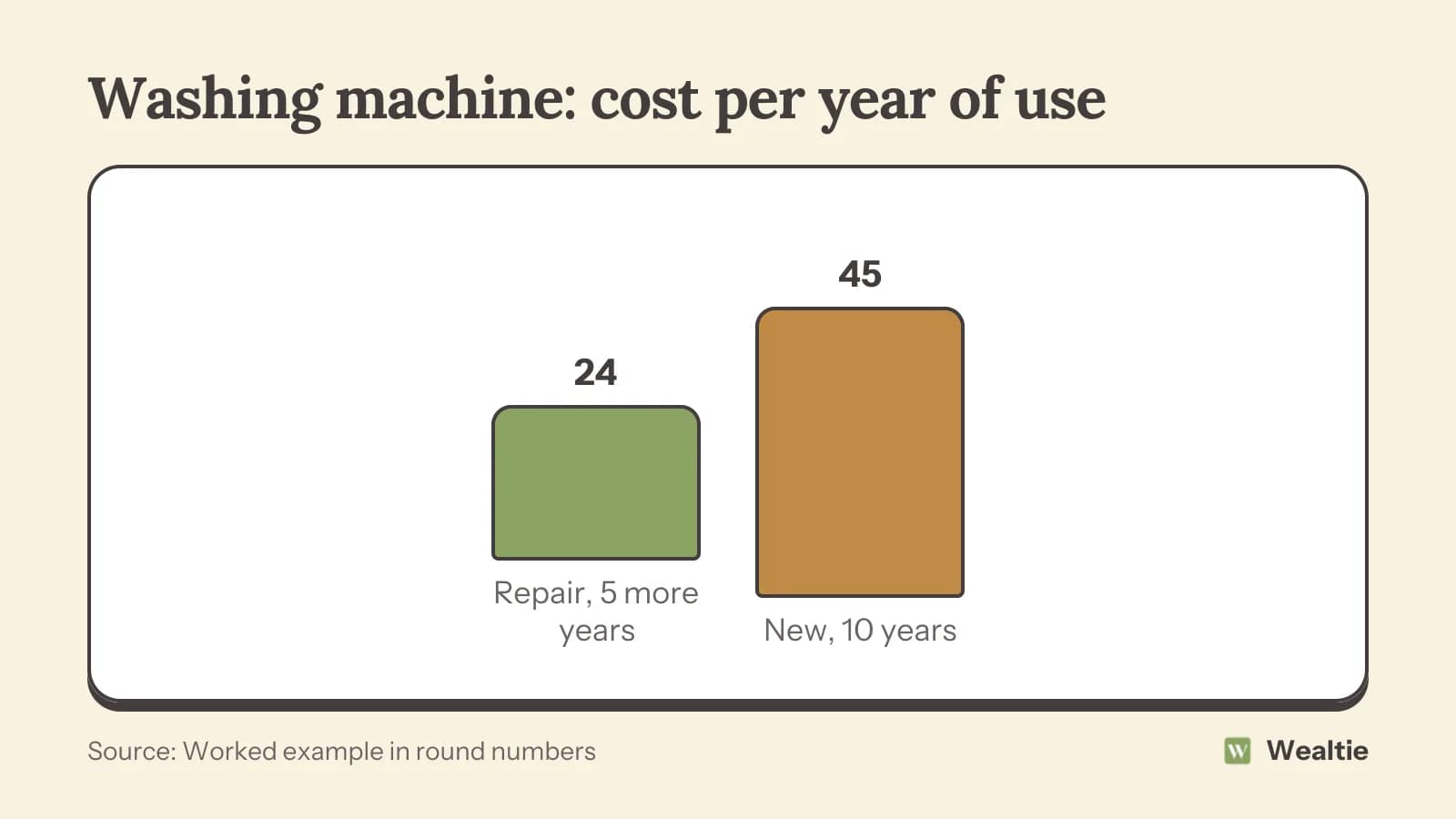
In this example, the repair costs 24 for each year of use, against 45 for a new machine. Repairing is better value, as long as the machine is likely to last another five years. Cost per use explains this way of comparing in more detail.
When does repairing make sense?
Repairing is often worth it when:
- The item is well made and otherwise in good condition
- The fault is a single, common part, like a belt, seal or battery
- A replacement of similar quality would cost much more
- You like the item and it does what you need
- Parts and repairers are easy to find
Older, sturdy appliances and furniture are often better built than cheaper new versions, which makes them worth fixing. Repairing also avoids the cost of delivery, installation and disposing of the old item, which can add to the price of a replacement.
Try the simple fixes first
Many problems have easy fixes: a blocked filter, a loose connection, a reset or a cheap part. Searching the fault and model number often finds a guide. Community repair groups and repair cafés, where volunteers help fix items for free or a small donation, exist in many towns. Fixing something yourself also teaches skills that save money the next time.
When is replacing the better choice?
Replace when:
- Repairs keep coming, so the total is adding up
- Parts are no longer available, or cost close to the price of a new item
- The item is very old and other parts are likely to fail soon
- A newer model would save a lot on running costs, like energy or water
- The repair wouldn't make it safe
If you're on your second or third repair in a short time, the next one is often a signal to stop.
Selling or recycling the old item
If you do replace something, an old appliance or device may still be worth selling for parts, or the retailer may take it away for free. Some shops offer a trade-in discount, which lowers the real cost of the new one.
How do you get a fair repair quote?
Ask for a quote before work starts, and check what it includes: parts, labour and any call-out fee. Get a second quote for bigger jobs. Ask how long the repair is likely to last and whether it comes with a guarantee. Check whether the item is still under warranty first, since the repair might be free. Your home insurance may also cover some breakdowns or accidental damage. Is an extended warranty worth it covers when extra cover helps.
What about cars?
The same idea works, with bigger numbers. Compare the repair with the car's value and the cost of a replacement, and think about how reliable the car is likely to be after the fix. Setting aside a little each month for repairs means you can make the choice on value, not on what you can afford that week. The car repair fund covers how much to save.
How do you plan for repairs and replacements?
Expect them. Appliances, electronics, furniture and cars all wear out, so a small monthly amount set aside means a breakdown doesn't become a crisis. The home maintenance budget covers saving for upkeep around the home. When you do replace, choosing a well-made item that can be repaired later saves money over the long run.
How do you track repairs in Wealtie?
Give repairs their own line in your expense categories, so you can see what you spend fixing things over a year. Tracking repairs by item shows when something has become a money pit and it's time to replace it. A monthly limit in the budget tracker keeps repair costs from crowding out the rest of your spending.
Questions people ask
Compare the cost per year of each option. In a worked example, a 120 repair with five years left beats a 450 new machine.
When repairs keep coming, parts are unavailable, the item is near the end of its life or a new one would save a lot on running costs.
Try simple fixes from online guides, community repair cafés and independent repairers, and check the warranty first.
Ask what it includes, get a second quote for bigger jobs and ask how long the repair should last.
This article is general information, not financial, tax or legal advice. Your situation is your own; check the numbers that apply to you before you act on them.