Budgeting: New front door cost: materials, fitting and savings
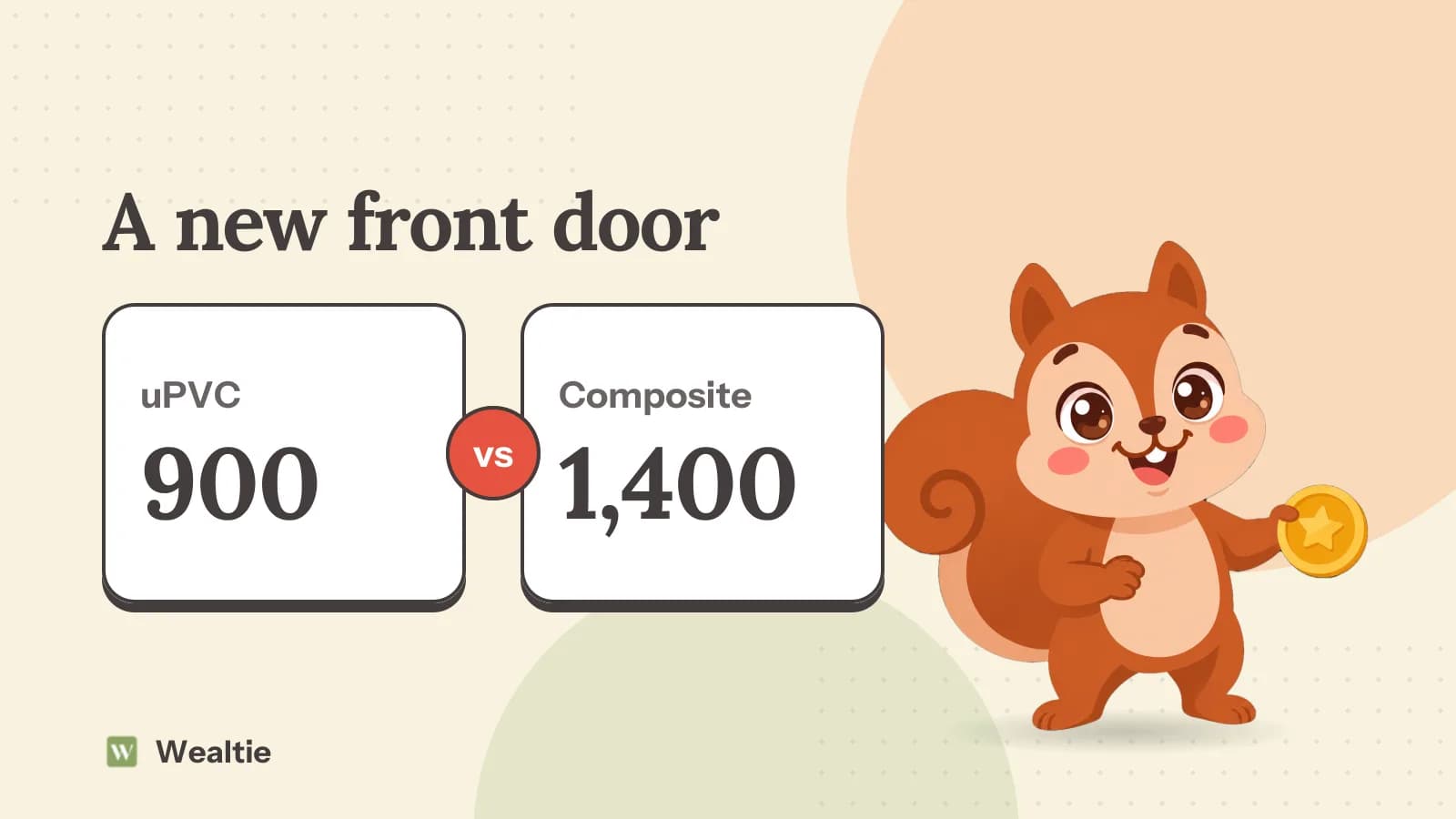
New front door cost depends mostly on the material, with uPVC the cheapest and solid timber the most expensive. In a worked example, a fitted composite door costs 1,400, against 900 for uPVC.
 By Wealtie Team · 3 min read
Key takeaways
- New front door cost depends mainly on the material and fitting.
- Composite doors cost more than uPVC but are sturdier and better insulated.
- Locks, glass and frames add to the price.
- A draughty old door can be cheaper to repair or draught-proof than replace.
How much does a new front door cost?
A front door keeps your home secure and warm, and it's one of the first things visitors and buyers notice. Over time, doors can warp, let in draughts, become hard to lock or look tired. New front door cost depends mostly on the material, the size and style, the type of glass, the locks and whether the frame needs replacing too.
Here's a worked example of fitted doors, in round numbers that work in any currency:
| Material | Cost, fitted |
|---|---|
| uPVC | 900 |
| Composite | 1,400 |
| Solid timber | 2,000 |
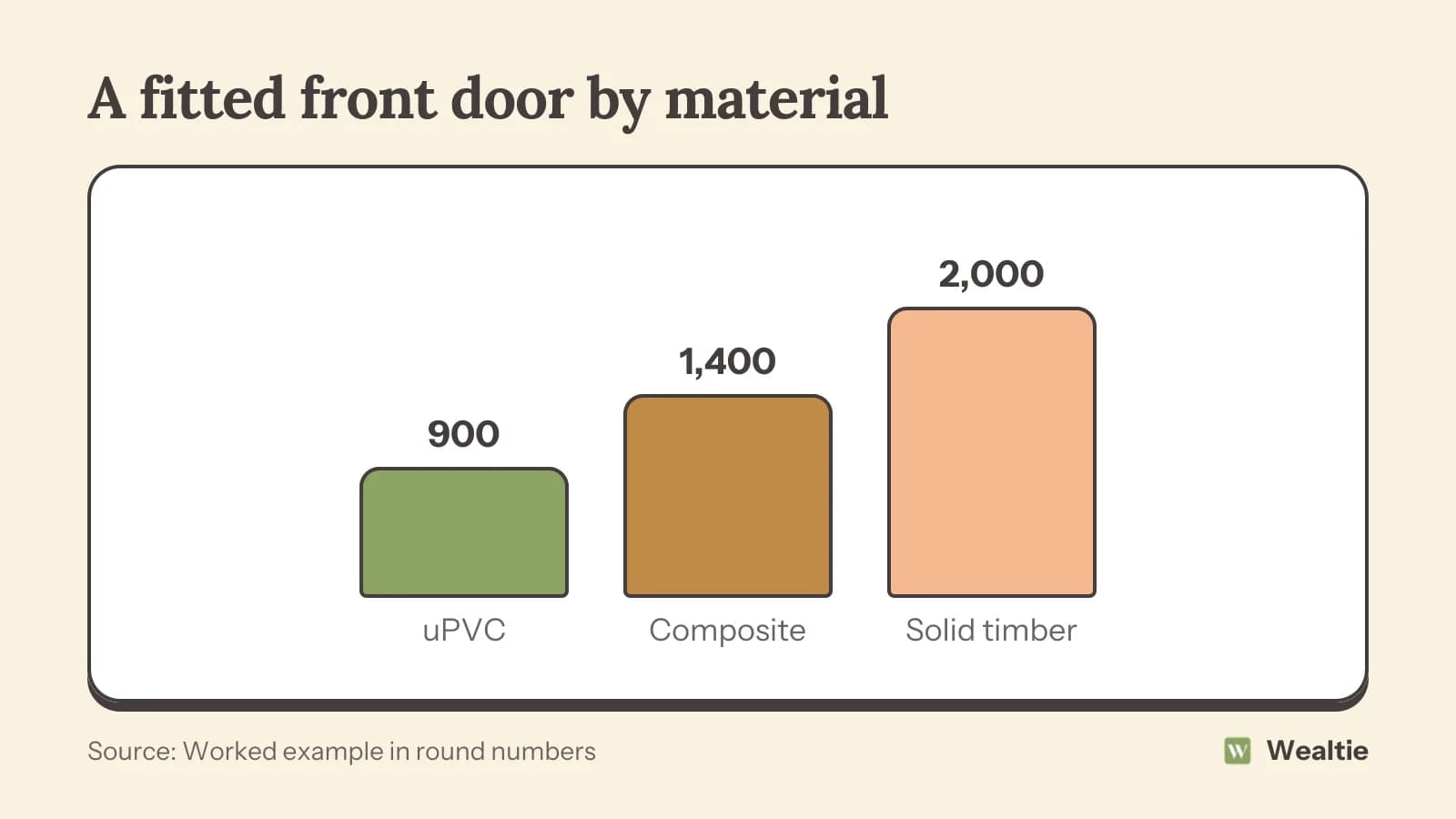
A uPVC door is the cheapest option. Composite doors, made from several materials pressed together, cost more but are sturdier and often better insulated. Solid timber doors look traditional and can last a long time, but cost the most and need regular care. Prices vary a lot by area, size and supplier, so get several local quotes.
How do the materials compare?
uPVC
Affordable, low maintenance and reasonably well insulated. It can look plainer and may be less sturdy than other options.
Composite
A popular middle option. Composite doors resist warping, look like painted timber and offer good security and insulation.
Timber
Classic and attractive, especially for period homes. Timber needs repainting or treating every few years and can warp if not maintained.
Steel and aluminium
Strong and secure, often used for modern homes. Prices vary widely.
What adds to the cost?
The frame
Replacing the frame as well as the door costs more but often gives a better fit and seal.
Glass panels
Decorative or security glass adds cost. Less glass usually means better insulation and privacy.
Locks and hardware
Good multi-point locks improve security and may be required by your insurer. Handles, letterboxes and knockers add a little more.
Colour and style
Special colours, finishes and custom sizes cost extra.
Does a new door save money on heating?
A badly fitting door can let in cold air and push up heating bills. A new, well-fitted door can help, though the saving on its own rarely pays for the door quickly. If your door is sound but draughty, draught-proofing strips and a brush on the letterbox might cost around 50 and make a big difference. How to save money on heating covers other ways to keep heat in.
Should you repair or replace?
If the door still closes well and the frame is sound, repairs like adjusting hinges, replacing a lock or repainting can extend its life cheaply. Replacement makes sense when the door is warped, rotten, insecure or very draughty. Repair or replace covers how to decide.
How do you save on a new front door?
Get several quotes
Compare at least three suppliers, checking exactly what's included, like fitting, frame, locks and removal of the old door.
Choose a standard size and style
Standard sizes and popular colours usually cost less than custom options.
Check security requirements
Make sure the locks meet your insurer's requirements, so you don't need to upgrade later. How to save money on home insurance covers what insurers often ask for.
Time it with other work
If you're replacing windows or renovating, doing the door at the same time can save on fitting and decorating.
How do you budget for it?
Add the door to your home maintenance plan and save towards it, rather than waiting until it fails. How to plan a home maintenance budget covers setting aside money for repairs and replacements, and how to plan a home renovation budget covers bigger projects.
Think about the style of your home when choosing. A door that suits the building's age and character can add kerb appeal, while one that clashes may put off buyers if you sell. Many suppliers offer composite and uPVC doors in traditional designs, which can give a period look without the upkeep of timber. Looking at doors on similar houses nearby is a quick way to get ideas.
Ask about lead times, too. Made-to-measure doors can take several weeks to arrive, so ordering well before winter avoids living with a draughty or insecure door through the coldest months. Some suppliers offer lower prices in quieter seasons.
Check the guarantee on the door, the locks and the fitting. A long guarantee from a reputable company protects you if the door drops, sticks or the lock fails in the first years.
If you rent, any door replacement is usually the landlord's responsibility, so report problems in writing rather than paying for a new door yourself.
Finally, keep the paperwork. Many places require replacement doors to meet building rules, and buyers may ask for certificates when you sell.
How can Wealtie help you plan home costs?
Log home repairs and replacements in a home expense category, and set a monthly budget for upkeep. Saving a little each month means a new door doesn't come as a shock.
Questions people ask
In a worked example, a fitted uPVC door cost about 900, a composite door 1,400 and a solid timber door 2,000.
For many homes, yes. Composite doors cost more than uPVC but are sturdier, better insulated and resist warping.
It can help if your old door is draughty, though draught-proofing may give much of the benefit for far less.
Get several quotes, choose a standard size and style, check insurer lock requirements and time it with other work.
This article is general information, not financial, tax or legal advice. Your situation is your own; check the numbers that apply to you before you act on them.