Budgeting: How to save money on home insurance without losing cover
Here's how to save money on home insurance: compare quotes at every renewal, check that the sum insured and excess suit you, and pay yearly if you can. In a worked example, that takes a 420 policy down to 330.
 By Wealtie Team · 3 min read

Key takeaways
- Comparing quotes at renewal is usually the biggest single saving on home insurance.
- In a worked example, switching, paying yearly and raising the excess take a 420 policy down to 330.
- Check the sum insured matches what it would cost to rebuild or replace, since too little cover is a false saving.
- Don't cut cover you need, like accidental damage on expensive items, just to lower the price.
How do you save money on home insurance?
Shop around at renewal and check what you're paying for. Home insurance often goes up when it renews, and many people let it roll over without looking. A few quotes and a careful read of the policy usually find a saving without giving up the cover that matters.
What saves the most?
Here's a worked example of a yearly policy, in round numbers that work in any currency:
| Change | Saved a year |
|---|---|
| Switching to a cheaper insurer at renewal | 50 |
| Paying yearly instead of monthly | 25 |
| Raising the voluntary excess | 15 |
| Total, from 420 to | 330 |
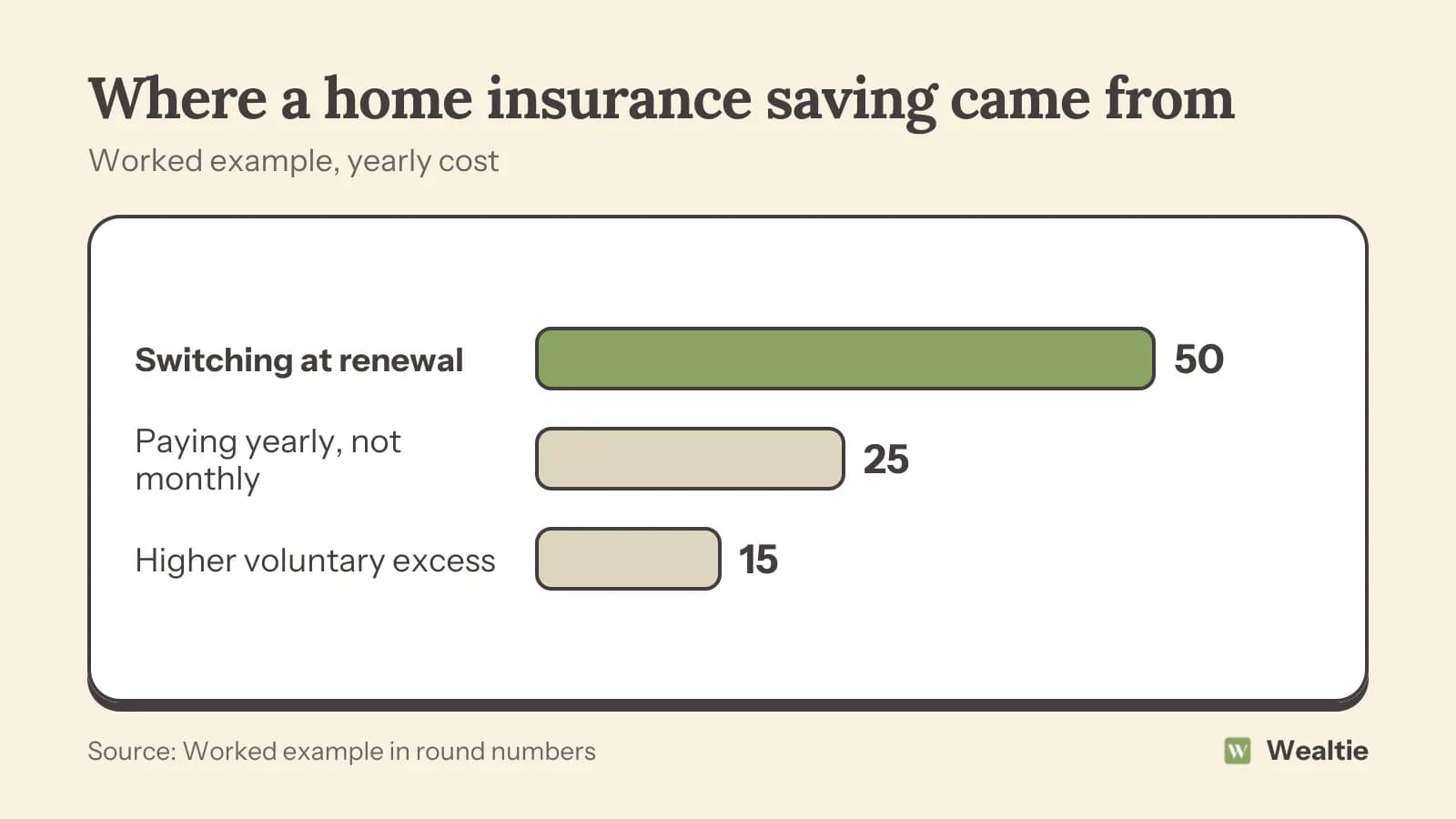
Your own figures will differ, but switching at renewal is usually the biggest one. Insurers often price new customers more keenly than existing ones, so a loyal customer can end up paying more for the same cover.
When should you compare quotes?
About three to four weeks before renewal. Your renewal notice shows the new price and often last year's, so compare those first. Then get quotes from other insurers for the same level of cover.
Use the same cover level for each quote: the same excess, sum insured and extras. Otherwise the cheapest quote may just be the thinnest cover. Note your renewal date and last year's price, so you can see how much it's changed.
If you find a cheaper quote, you can ask your current insurer to match it. Sometimes they will. If not, switch, and check there's no gap between the old policy ending and the new one starting.
What should you check in the policy?
The parts that decide what you're covered for:
- Sum insured: for buildings cover, this should reflect the cost of rebuilding, which can be different from the market value. For contents, add up what it would cost to replace everything.
- Excess: what you pay towards a claim. A higher voluntary excess lowers the premium, but only choose one you could afford to pay.
- Single-item limits: expensive things like jewellery, bikes or laptops may need listing separately.
- Accidental damage: useful if you've got children or expensive electronics, but it costs more.
- What's excluded: floods, unoccupied periods, or items taken out of the house.
Take photos of valuable items and keep receipts, which make a claim much easier. Too little cover is a false saving. If the sum insured is too low, a claim might only be paid in part.
Does paying yearly save money?
Often. Paying monthly can include interest or a fee, because the insurer is in effect lending you the rest of the year's cost. Ask what the monthly option costs in total over the year, since the difference is the price of spreading it. If you can afford the yearly price, paying once is usually cheaper.
If paying all at once is hard, set aside a monthly amount in a pot and pay the year from that. How to budget for annual expenses shows how.
What else can lower the price?
A few things, depending on your insurer:
- Better locks and an alarm, if the insurer offers a discount for them
- A claims-free history, so think twice about claiming for small amounts
- Combining buildings and contents in one policy
- Removing cover you don't need, like extras you'd never use
Check whether your bank account, a credit card or your employer already includes cover you're paying for twice, like gadget or legal cover. Be honest on applications. Wrong information can make a claim fail, which costs far more than any saving.
Should you remove cover to save money?
Only cover you're sure you won't need. Dropping accidental damage when you've got a toddler and a new television is a saving you might regret. Cutting legal cover you already have through another policy is a sensible one. Check before you change anything, and keep the cover that protects you from losses you couldn't afford. Review the policy after big changes too, like a renovation, an expensive purchase or someone moving in.
What if you rent?
You usually only need contents insurance, since the building is the landlord's responsibility. It's often inexpensive and covers your belongings against theft, fire and water damage. Check your lease, since some require it.
How do you keep track of insurance in Wealtie?
Set the policy up as a yearly recurring transaction with the bill tracker, so it logs itself on the renewal date and you can see it coming. When you switch or the price changes, edit the rule, and every payment after that uses the new amount. A monthly limit in the budget tracker shows how the renewal month looks.
Questions people ask
Compare quotes at renewal, pay yearly if you can, check the sum insured and excess, and ask about discounts for security. Switching at renewal usually saves the most.
Yearly is often cheaper, because monthly payments can include interest or a fee. Set aside a monthly amount if paying at once is hard.
Usually, yes, but only choose an excess you could afford to pay if you made a claim.
Check the renewal price first and compare quotes. Insurers often price new customers more keenly than existing ones.
This article is general information, not financial, tax or legal advice. Your situation is your own; check the numbers that apply to you before you act on them.



