Saving: How to make a home renovation budget that survives the surprises
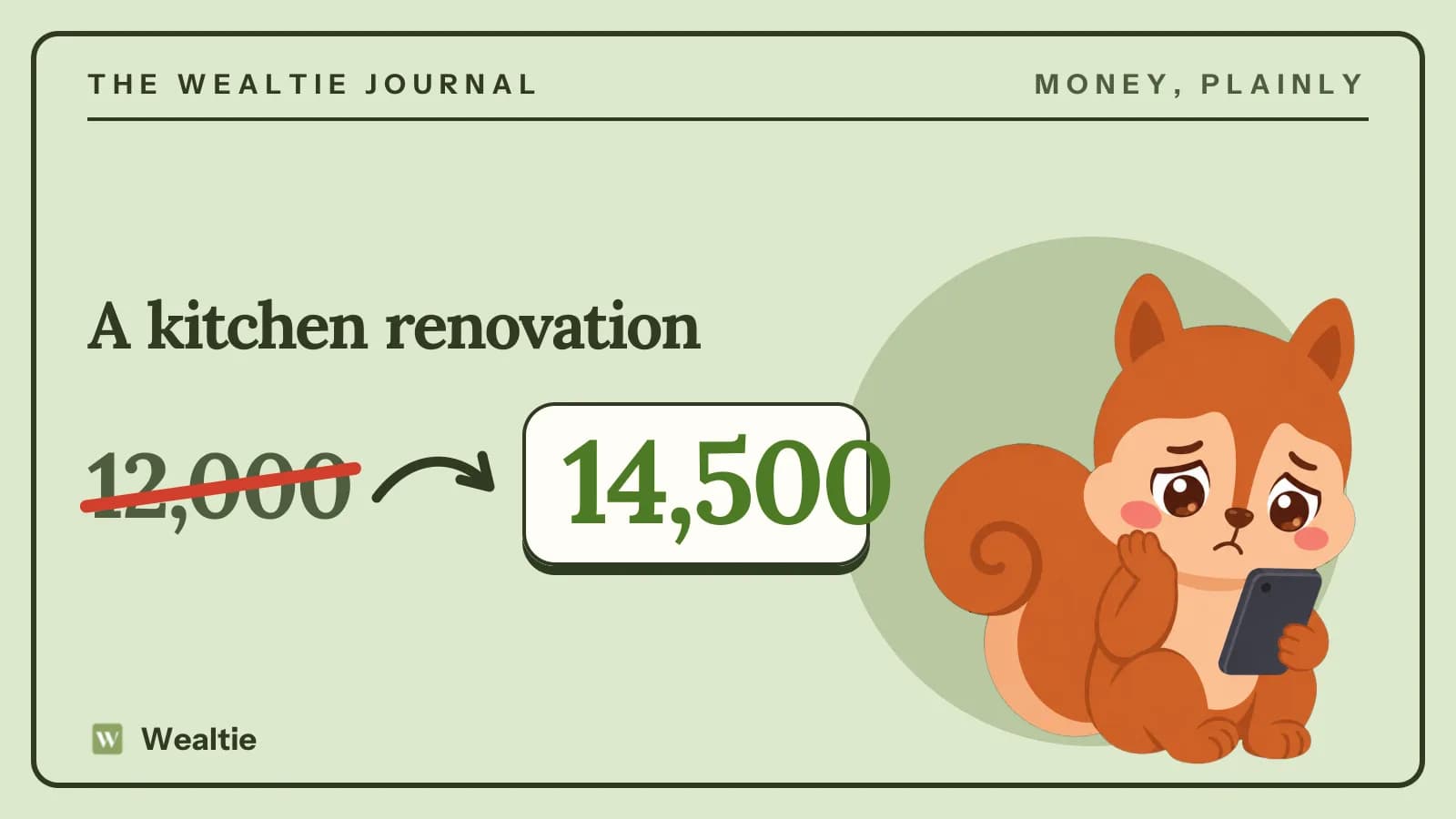
A home renovation budget needs three parts: quotes for each job, a contingency for surprises, and the extras people forget, like skip hire and living elsewhere. In a worked example, a 12,000 kitchen becomes 14,500 once those are added.
 By Wealtie Team · 3 min read
Key takeaways
- Build a home renovation budget from written quotes for each job, not from estimates or online averages.
- Add a contingency for surprises, such as about a sixth of the quotes for an older home.
- In a worked example, a 12,000 kitchen becomes 14,500 with extras and contingency.
- Pay in stages linked to completed work, not a large amount upfront.
How do you make a home renovation budget?
Start with written quotes for each part of the job, add the extras that aren't in the quotes, then add a contingency for surprises. Renovations go over budget so often that planning for it is part of planning the job. The goal is a figure you can pay without borrowing more than you'd planned.
What should go into the budget?
Here's a kitchen renovation, in round numbers that work in any currency:
| Line | Amount |
|---|---|
| Units, worktops and appliances | 6,500 |
| Fitting and labour | 3,500 |
| Electrics and plumbing | 1,200 |
| Flooring and decorating | 800 |
| Quotes | 12,000 |
| Skip hire, waste and extra cleaning | 400 |
| Eating out and takeaways while the kitchen's out | 300 |
| Extras | 700 |
| Contingency for surprises | 1,800 |
| Total | 14,500 |
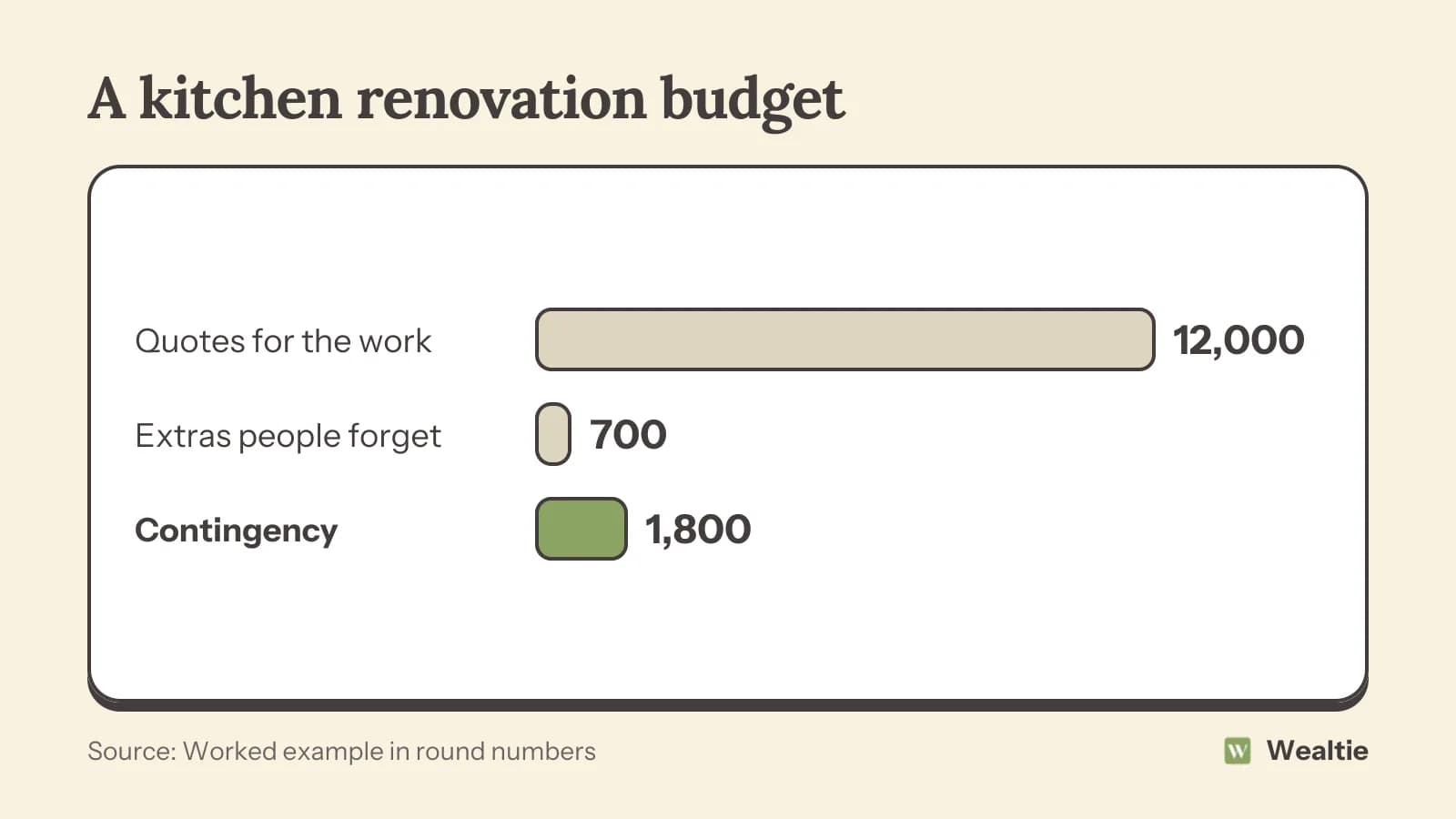
The extras are where people get caught. Furniture and finishing touches for the new room are easy to forget too, so decide whether they're in this budget or a later one. Living without a kitchen for two weeks means more takeaways. A bathroom renovation might mean using a gym for showers. Bigger jobs can mean moving out for a while.
How much contingency should you add?
Enough to cover what you might find once walls and floors are opened up. In this example, 1,800 is a bit under a sixth of the quotes. Older homes usually need more, because hidden problems like old wiring, damp or rotten joists are more likely. A newer home with a simple job might need less.
If you don't use it, it can go to the next job or back into savings. Keep the contingency for real surprises, not upgrades. If you decide halfway through that you'd like a better worktop, that's a change to the plan, and it needs its own money.
How do you get reliable quotes?
Get at least three, in writing, for the same specification. Each quote should say what's included and what isn't, like waste removal, making good after electrics, or decorating. A low quote that leaves out half the work isn't cheaper.
Ask how long each quote is valid and whether material prices could change before work starts. Ask for references and look at past work. Check whether the job needs permission, building regulations sign-off or a qualified tradesperson for certain parts, like gas or electrics. Rules vary by country, and getting it wrong can cost more later.
How should you pay?
In stages, linked to work that's done. A small deposit to secure the booking and pay for materials is normal. Paying most of the money upfront is a risk, because you lose leverage if the work isn't finished or isn't right.
Agree the payment stages in writing before work starts, and keep a record of every payment. Avoid paying cash without a receipt, since it leaves you with no record if something goes wrong. Hold back a small amount until the job's signed off and any snags are fixed.
How do you pay for it without overstretching?
Save as much as you can in advance. Decide the total, then work out how long it'll take to save. A 14,500 project saved at 600 a month takes about two years, so you might phase the work instead: the essentials now, the nice-to-haves later.
If the start date slips by months, get the quotes confirmed again, since prices can move. If you're borrowing, compare the total cost of the options, including fees, and borrow only what the plan needs. Is a debt consolidation loan worth it shows how to compare loans by total cost.
Keep your emergency fund separate. If the renovation uses it, you'll have nothing left for an unrelated emergency. How much should be in an emergency fund helps set it.
What order should the work happen in?
Structure and services first, finishes last. Fix the roof, damp, wiring and plumbing before you redecorate, so you're not paying to redo new paint. If you're doing the house room by room, plan the order so work in one room doesn't damage another. Keep permits and sign-off certificates on file, since you'll need them when you sell.
How do you track a renovation in Wealtie?
Add a savings account for the renovation fund and move money in as transfers, which aren't counted as spending. Log each payment to tradespeople, and materials you buy yourself, in a Renovation category, so your expense categories show the running total against your budget. Your net worth tracker shows the fund as you save. Home maintenance budget covers the smaller ongoing costs after the work's done.
Questions people ask
Add written quotes for each job, extras like waste removal and living costs, and a contingency for surprises. A worked kitchen example goes from 12,000 in quotes to 14,500.
Enough for surprises found once work starts, often more for an older home. In a worked example, 1,800 on 12,000 of quotes.
In stages linked to completed work, with a small deposit and a final amount held back until the job's signed off. Agree the stages in writing first.
It's better not to. Keep the emergency fund separate, and save for the renovation in its own pot.
This article is general information, not financial, tax or legal advice. Your situation is your own; check the numbers that apply to you before you act on them.