Budgeting: Locksmith cost: locked out, lost keys and lock changes
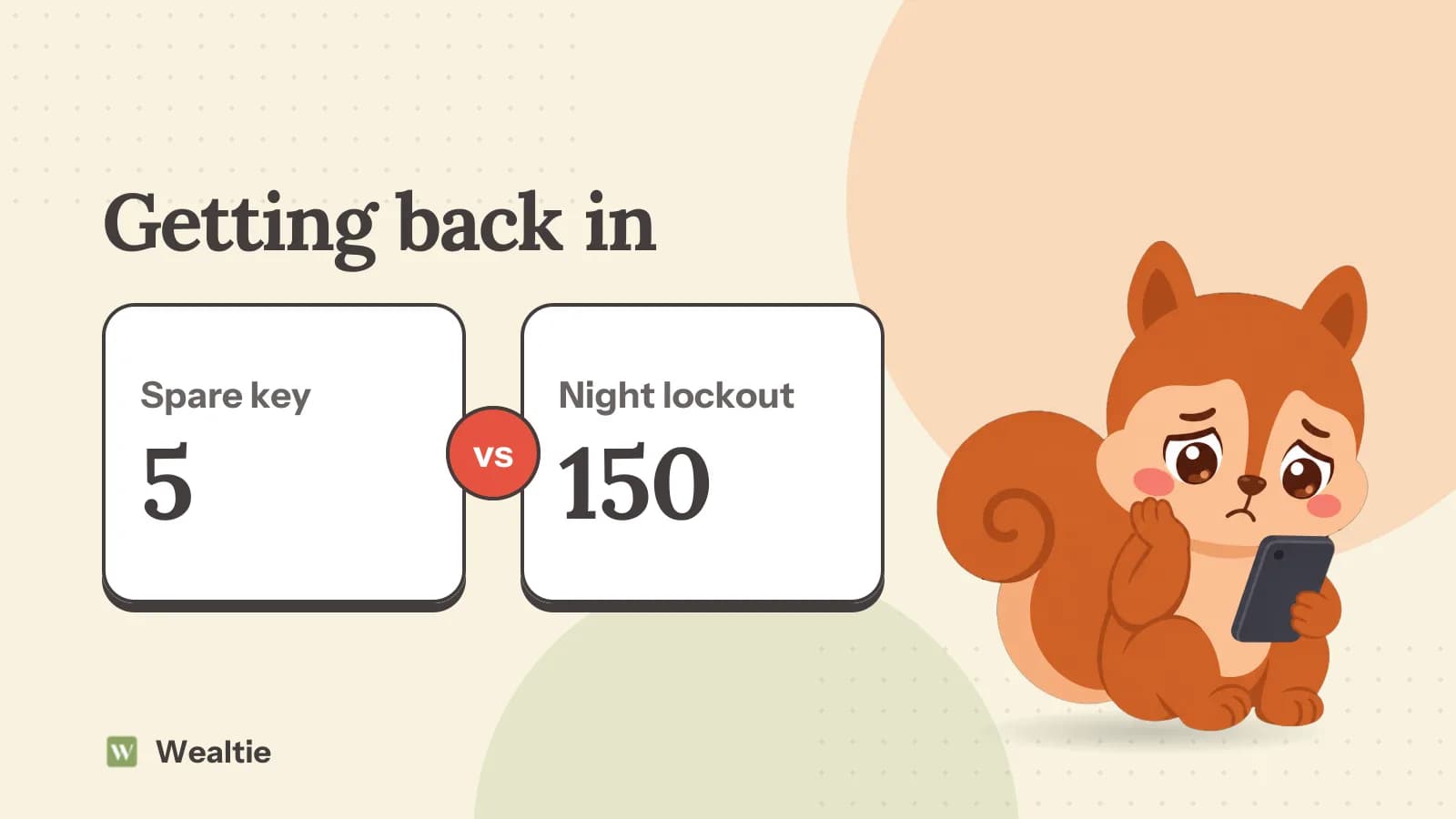
Locksmith cost is highest for emergency lockouts at night, and much lower for planned lock changes. In a worked example, a night-time lockout costs 150, while a planned lock change costs 90.
 By Wealtie Team · 3 min read
Key takeaways
- Locksmith cost is highest for out-of-hours emergency lockouts.
- A spare key with someone you trust can save a big bill.
- Ask for a full price before the locksmith starts work.
- Changing locks after moving home is a sensible planned cost.
How much does a locksmith cost?
Being locked out of your home is stressful, especially late at night, in bad weather or with children. Calling a locksmith is often the quickest way back in, but locksmith cost varies a lot depending on the time of day, the type of lock and whether the job is an emergency. Planned jobs, like changing locks after moving home, usually cost much less.
Here's a worked example of common jobs, in round numbers that work in any currency:
| Job | Cost |
|---|---|
| Spare key cut | 5 |
| Planned lock change | 90 |
| Night-time lockout | 150 |
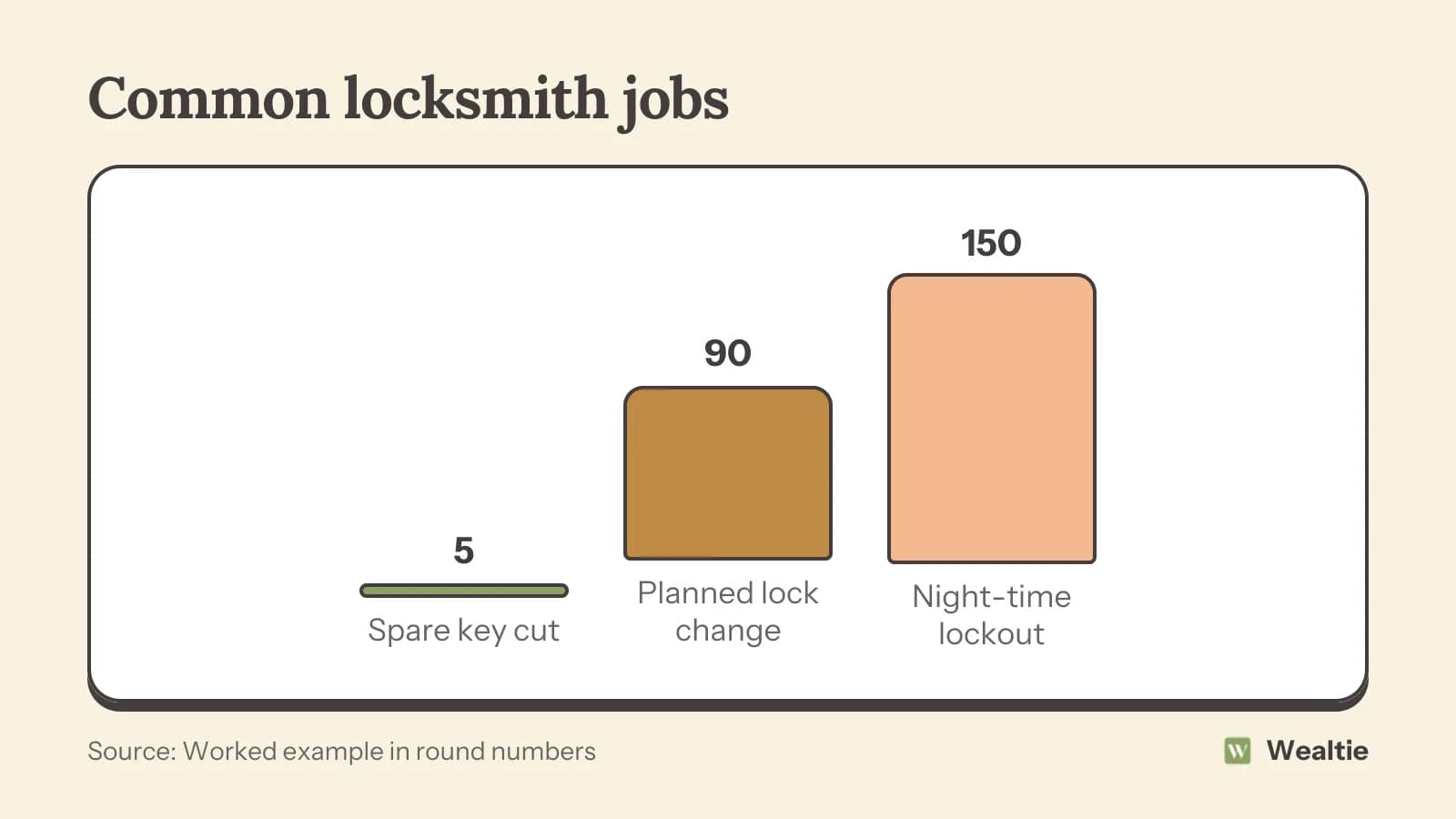
A spare key costs very little, while a night-time lockout can cost 150 or more. Prices vary by area, lock type and company, so it's worth knowing a trusted local locksmith's rates before you need one.
What affects the cost?
Time of day
Evenings, nights, weekends and holidays usually cost more.
Type of lock
High-security locks and smart locks can be more expensive to open or replace.
Whether the lock is damaged
Opening a lock without damage is cheaper. If the lock needs drilling and replacing, the cost rises.
Distance
Some locksmiths charge more for travel, especially in rural areas.
How do you avoid an emergency lockout?
Leave a spare key with someone you trust
A neighbour, friend or family member nearby can save you a big bill. Avoid hiding keys under mats or plant pots, where burglars look first.
Use a key safe
A key safe fixed to the wall, with a code, gives access without a hidden key. It may need insurer approval, so check your policy.
Make it a habit
Keeping keys in the same place and checking before you close the door helps prevent lockouts.
Consider a smart lock
Smart locks let you open the door with a phone or code, though they cost more upfront.
How do you avoid rogue locksmiths?
Get a full price first
Ask for the total cost, including call-out, labour and parts, before work starts.
Check reviews and credentials
Look for local reviews and membership of a recognised trade body where available.
Be wary of very low prices
Some adverts quote a low price, then add large charges on arrival. How to avoid money scams covers similar tactics.
Ask for non-destructive entry
Many locks can be opened without drilling. Ask before the locksmith starts.
When should you change your locks?
After moving home
You don't know how many keys previous owners or tenants have. Changing the locks is a sensible planned cost when you move. Moving house costs covers other costs to plan for, and first-year homeowner costs covers the year after buying.
After losing keys
If your keys are lost with your address, changing locks protects your home.
After a break-in
A damaged or compromised lock should be replaced. Home insurance may cover some of the cost.
Does insurance cover locksmiths?
Some home insurance policies include cover for lost keys or home emergencies, which may pay for a locksmith. How to save money on home insurance covers what's often included. An emergency fund helps with surprise bills that aren't covered.
If you're locked out, it's worth trying a few free options first. Check whether anyone else in your household has a key, call the friend or neighbour with your spare, or check whether a back door or window was left open, as long as it is safe and legal to get in that way. If you rent, your landlord or letting agent may have a spare key and be able to help, though they may charge for the call-out.
Locks also need occasional maintenance. A stiff or sticking lock can fail at the worst moment, leaving you locked out or unable to lock up. A little lubricant made for locks, or a quick service by a locksmith during a planned visit, can prevent a more expensive emergency later.
Good locks can also lower your home insurance premium. Some insurers ask for specific types of lock on external doors and windows, and having them can reduce the price or be required for cover. Check your policy when choosing new locks.
If you lose your car keys too, the cost can be much higher, since modern car keys often need programming. Keeping a spare car key safe at home is one of the best ways to avoid a big bill.
Finally, save a trusted locksmith's number in your phone now, so you're not searching online in a panic if it happens.
How can Wealtie help with surprise home costs?
Log locksmith and repair costs in a home maintenance expense category, and set a monthly budget for upkeep. Seeing these occasional costs over a year helps you keep enough aside for the next surprise.
Questions people ask
In a worked example, a night-time lockout cost about 150, a planned lock change 90 and a spare key about 5.
Leave a spare key with someone you trust, use a key safe or smart lock and keep keys in the same place.
Get a full price before work starts, check reviews, be wary of very low quotes and ask for non-destructive entry.
Yes. You don't know how many keys previous owners or tenants have, so changing locks is a sensible planned cost.
This article is general information, not financial, tax or legal advice. Your situation is your own; check the numbers that apply to you before you act on them.