Budgeting: How much does it cost to move house?
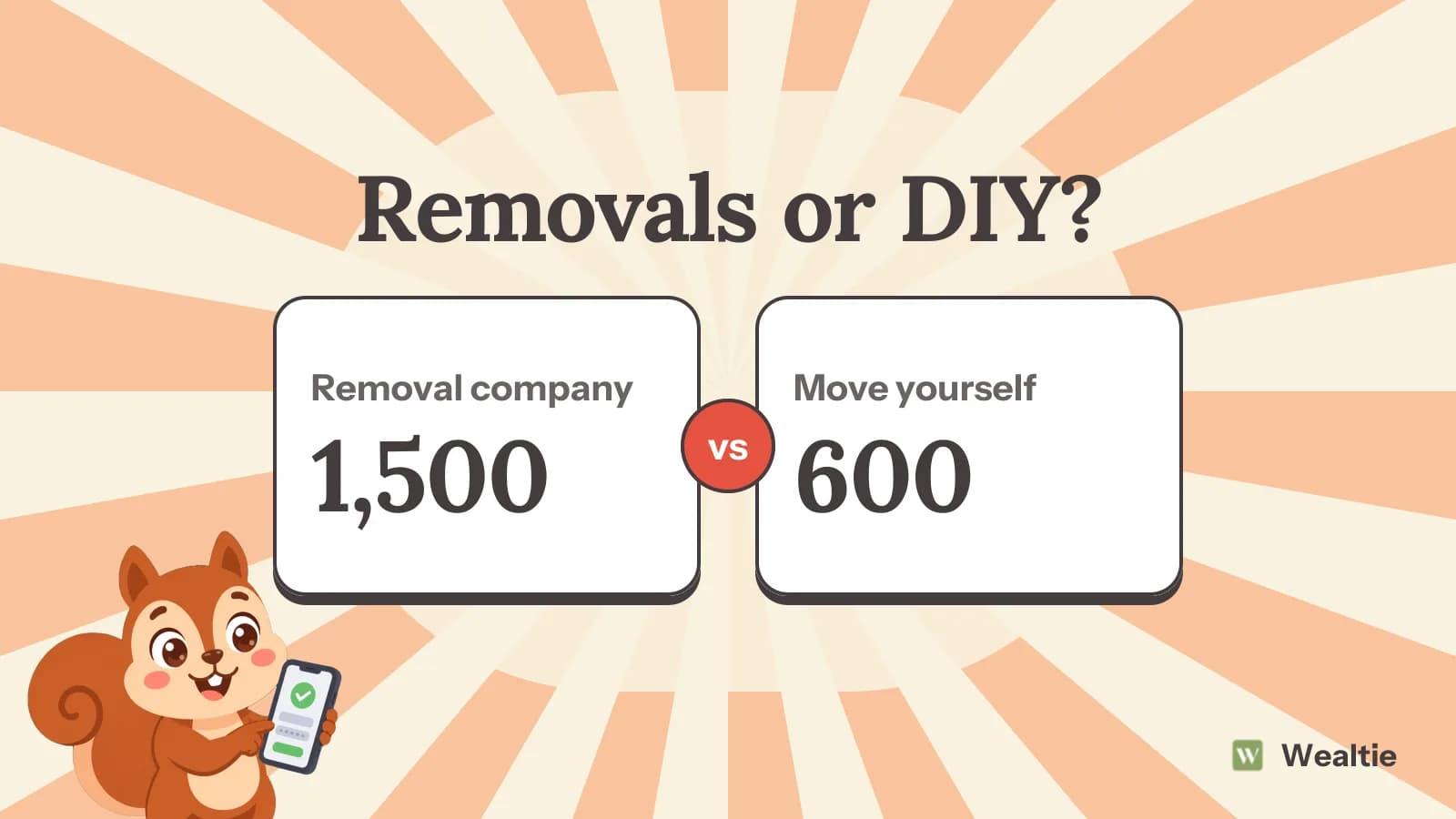
How much does it cost to move house? More than the removal van, since packing, cleaning, overlapping bills and setting up the new place all add up, and in a worked example a two-bedroom move costs about 1,500 with removals or about 600 if you move yourself.
 By Wealtie Team · 3 min read
Key takeaways
- Moving house costs more than removals: packing, cleaning, overlapping bills and setup add up.
- In a worked example, moving a two-bedroom home costs about 1,500 with removals, or 600 moving yourself.
- Moving midweek or outside busy periods is often cheaper.
- Decluttering before you move cuts packing, removal and storage costs.
How much does it cost to move house?
It depends on how much you're moving, how far and whether you hire help. The removal van is usually the biggest cost, but it's not the only one. Packing materials, cleaning, overlapping rent or bills, time off work and setting up your new home all add to the total. Planning the whole move, not just the van, keeps it from stretching your budget. It also helps you choose between options, like hiring removals or moving yourself, with the full numbers in front of you.
What does a move cost?
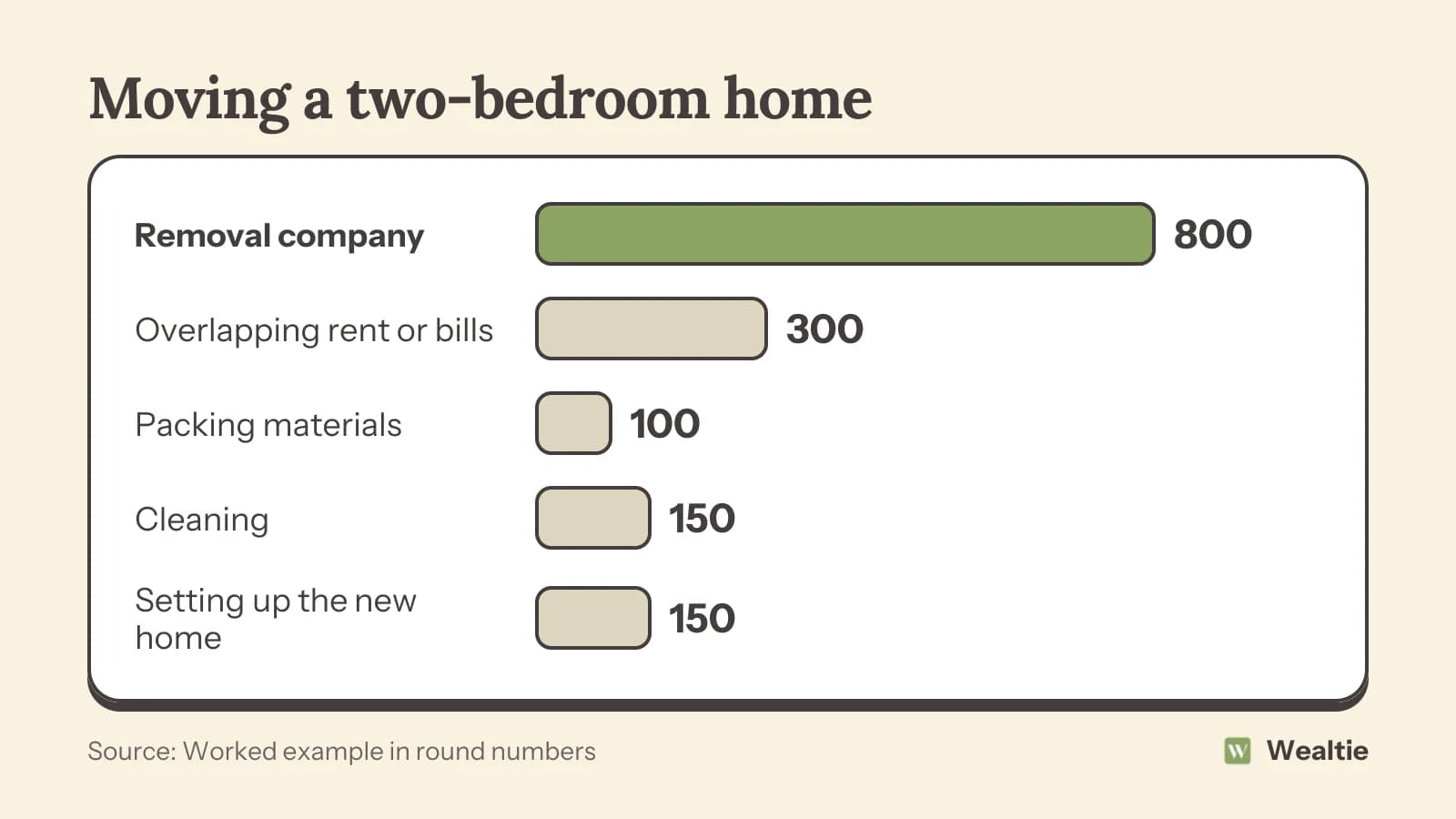
Here's a worked example for moving a two-bedroom home locally, in round numbers that work in any currency:
| Cost | With removals | Moving yourself |
|---|---|---|
| Removal company or van hire and fuel | 800 | 200 |
| Overlapping rent or bills | 300 | 0 |
| Packing materials | 100 | 100 |
| Cleaning | 150 | 150 |
| Setting up the new home | 150 | 150 |
| Total | 1,500 | 600 |
Your own costs depend on the size of your home, the distance, the time of year and how much help you have. Long-distance moves cost much more.
Should you hire removals or move yourself?
Removal companies save time and effort, and they're insured for damage. Moving yourself, with a hired van and help from friends, costs much less but takes more work. Many people choose a middle option, like hiring a man-and-van service for the big items and moving boxes themselves. If you move yourself, check whether your home insurance covers items in transit.
Getting removal quotes
Get at least three quotes, and give each company the same details about what you're moving. Ask whether the price includes packing, insurance, parking permits and any extra charges for stairs or long carries. Fixed quotes are easier to budget for than hourly rates. Booking early, especially for the end of the month when many people move, gives you more choice.
How do you save on moving costs?
Small choices make a big difference:
- Declutter first. Every item you sell or give away is one you don't pay to move. How to sell things you don't use has tips.
- Move midweek or outside busy periods, when removal firms often charge less.
- Get free boxes from supermarkets, friends or local groups.
- Pack yourself, rather than paying for a packing service.
- Avoid overlap by timing your move to match the end of one tenancy and the start of the next, where possible.
What other costs should you plan for?
Moving often brings costs people forget:
- Cleaning the old place, especially if you rent and want your deposit back
- Time off work for the move
- Takeaways for the first few days while the kitchen is in boxes
- New keys, locks or small repairs
- Redirecting post
- Furniture or items that don't fit the new home
Setting aside a buffer of a few hundred covers these without stress. Packing an essentials box with kettle, mugs, snacks and basic toiletries saves buying them on moving day. Buying second-hand furniture, or waiting a few weeks to see what you need, keeps that cost down.
Storage between homes
If there's a gap between moving out and moving in, you may need storage. Keep it short, choose the smallest unit and declutter first, since storage costs add up every month.
Moving with children or pets
Moving day with children or pets brings extra costs, like childcare, a pet sitter or a night at a friend's. Planning these in advance keeps the day calmer and avoids last-minute spending. Some families move in stages, with one person setting up the new home first.
How do you set up bills in the new home?
Take meter readings when you leave and arrive, so you only pay for what you use. Tell energy, water, internet and council or local tax providers your moving date. Compare deals for the new home rather than moving your old ones automatically, since you may find something cheaper. Order internet early, since installation can take weeks.
How do you plan the move financially?
List every cost, get quotes and save ahead if you can. A 1,500 move saved over five months is 300 a month. If you're moving for a job, the relocation budget covers costs specific to work moves. Some employers help with moving costs for new jobs, so it's worth asking.
How do you track moving costs in Wealtie?
Log removals, packing, cleaning and setup costs in a moving line in your expense categories, so you can see the full cost. Update your recurring bills in the bill tracker once you've set them up in the new home, so your monthly picture stays accurate.
Questions people ask
In a worked example, about 1,500 for a two-bedroom home with removals, or about 600 moving yourself.
Declutter first, move midweek, get free boxes, pack yourself and avoid paying rent on two homes at once.
Hiring a van is usually much cheaper, but takes more effort and isn't insured in the same way.
Cleaning, time off work, takeaways, new locks, post redirection and items that don't fit the new home.
This article is general information, not financial, tax or legal advice. Your situation is your own; check the numbers that apply to you before you act on them.