Saving: First year homeowner costs: what to budget for after you buy
First year homeowner costs go beyond the mortgage: insurance, property taxes, maintenance, furniture and the repairs nobody spotted. In a worked example on a 250,000 home, the first year adds about 7,900 on top of mortgage payments.
 By Wealtie Team · 3 min read

Key takeaways
- First-year homeowner costs include insurance, property taxes, maintenance, furniture and repairs, on top of the mortgage.
- In a worked example on a 250,000 home, those add about 7,900 in the first year.
- The first year often brings repairs the survey didn't catch, so keep a repair fund from day one.
- Spread furniture purchases over the year instead of buying everything at once.
What are the first year homeowner costs?
Everything beyond the mortgage payment that comes with owning a home. Many first-time buyers plan carefully for the deposit and the mortgage, then find the first year brings a run of other bills. Knowing them in advance means the first year is exciting instead of stressful.
What does the first year cost?
Here's a worked example on a 250,000 home, in round numbers that work in any currency:
| Cost | First year |
|---|---|
| Property tax or local taxes | 2,500 |
| Buildings and contents insurance | 600 |
| Maintenance and repairs | 2,500 |
| Furniture and setup | 1,800 |
| Moving and small fixes | 500 |
| Total | 7,900 |
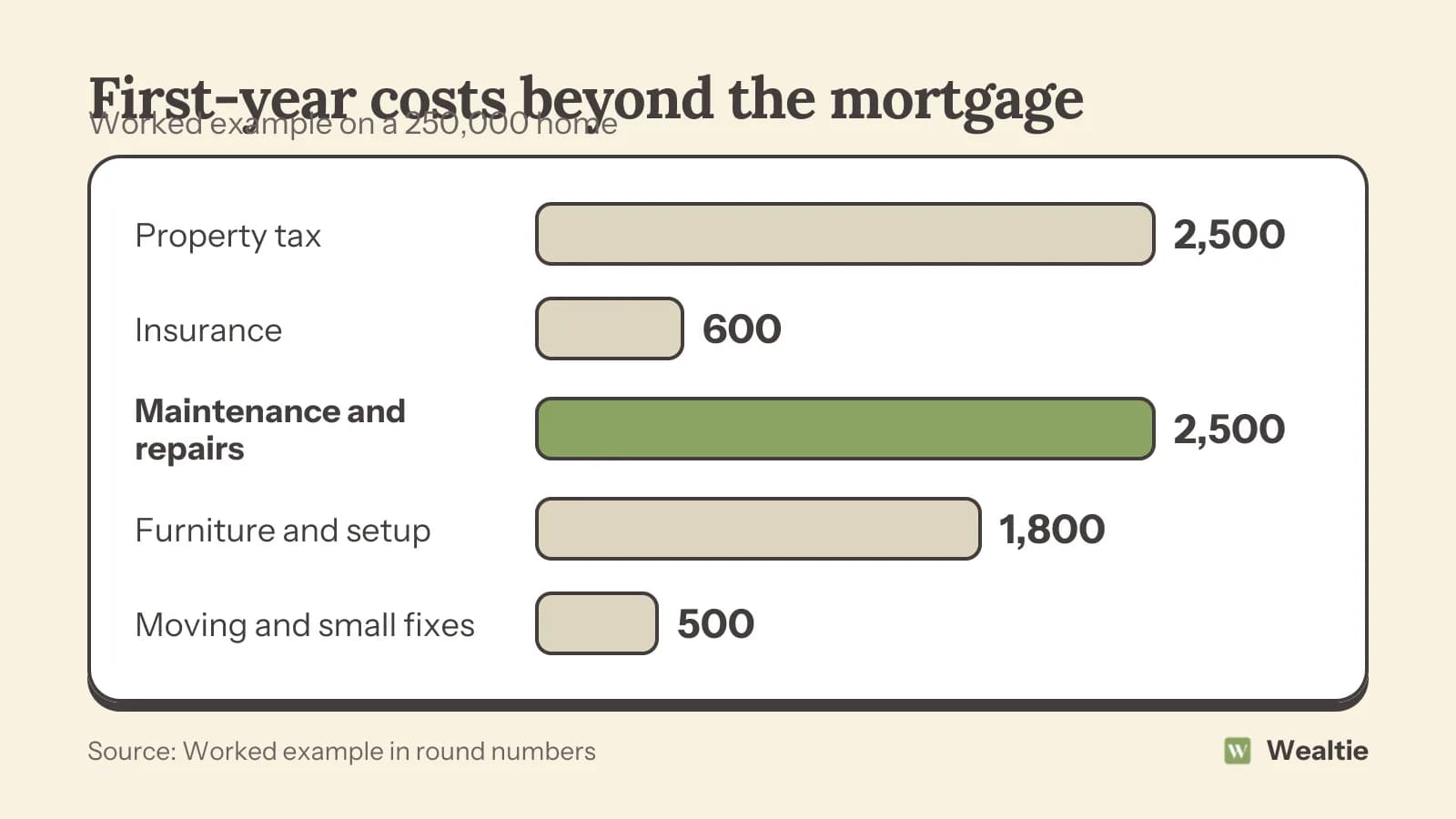
That's about 658 a month on top of the mortgage. Property taxes in particular vary enormously between countries and areas, so use local figures. Service charges or building fees apply too if you own a flat.
Which costs start on day one?
The regular ones: mortgage, insurance, property taxes and utilities. Some of these were included in rent before, like building insurance or water, so check what's new. Set them up as bills from the start, and move bill dates to just after payday where you can. Put the utilities in your name from the day you get the keys and take meter readings, so you don't pay for the previous owner's use. Register early for local services like bin collection and parking permits.
How to organize bills helps you get them in one place.
What repairs turn up?
Usually a few you didn't expect. A survey can't check everything, and problems often show up once you're living there: a leaking tap, a boiler that needs servicing, a window that doesn't close, a gutter that overflows. The amount varies a lot depending on the home's age and condition.
Keep the survey and go through its recommendations, since it often lists things that will need doing within a few years. Check too whether you'll now pay for things a landlord used to handle, like boiler servicing or garden care. A common rule of thumb is to budget about one in every hundred of the home's value each year for maintenance, which is 2,500 here. Home maintenance budget explains how to adjust it for older homes.
Keep a repair fund separate from your emergency fund. A broken boiler is an expected kind of cost for a homeowner, not an emergency in the same sense as losing your job.
How should you handle furniture and setup?
Spread it out. You don't need to furnish every room in the first month. Buy what you need to live comfortably, like a bed, a sofa and kitchen basics, then add the rest over the year as you learn how you use the space. Second-hand furniture and family hand-me-downs can cut costs a lot. Measure rooms and doorways before buying big items, so nothing has to go back.
Avoid store finance for furniture if you can, since it turns a one-off cost into a monthly payment on top of the mortgage.
What should you set aside after the deposit?
Before you buy, try to keep some savings beyond the deposit and buying costs: an emergency fund, and a first-year cushion for repairs and setup. Emptying every account to complete the purchase leaves you exposed if something breaks in the first month.
If your mortgage payment will change when an introductory rate ends, note the date and plan for the new amount. If you've already bought and haven't got a cushion, start one now with a monthly transfer, even a small one.
How do you plan the first year month by month?
Add the regular costs to your monthly budget, set aside a monthly amount for maintenance, and keep a list of things you'd like to buy or fix, with rough prices. Tackle the list in order of importance as money allows. After a year, you'll know your real costs and can set a proper long-term budget.
Should you rent or buy a house covers the costs of owning in more detail if you're still deciding.
How do you track homeowner costs in Wealtie?
Set yearly bills, like insurance and property tax, up as recurring transactions with the bill tracker, so they log themselves on their due dates. Add a repair fund as its own account and move a monthly amount into it as a transfer, which isn't counted as spending. Your net worth tracker shows the fund alongside your other accounts.
Questions people ask
Insurance, property taxes, maintenance and repairs, furniture and setup, on top of the mortgage. A worked example on a 250,000 home adds about 7,900.
A common rule of thumb is about one in every hundred of the home's value each year, more for an older home.
No. Buy what you need to live comfortably and spread the rest over the year, ideally without store finance.
An emergency fund plus a cushion for first-year repairs and setup, beyond the deposit and buying costs.
This article is general information, not financial, tax or legal advice. Your situation is your own; check the numbers that apply to you before you act on them.