Saving: How to avoid money scams and protect your savings
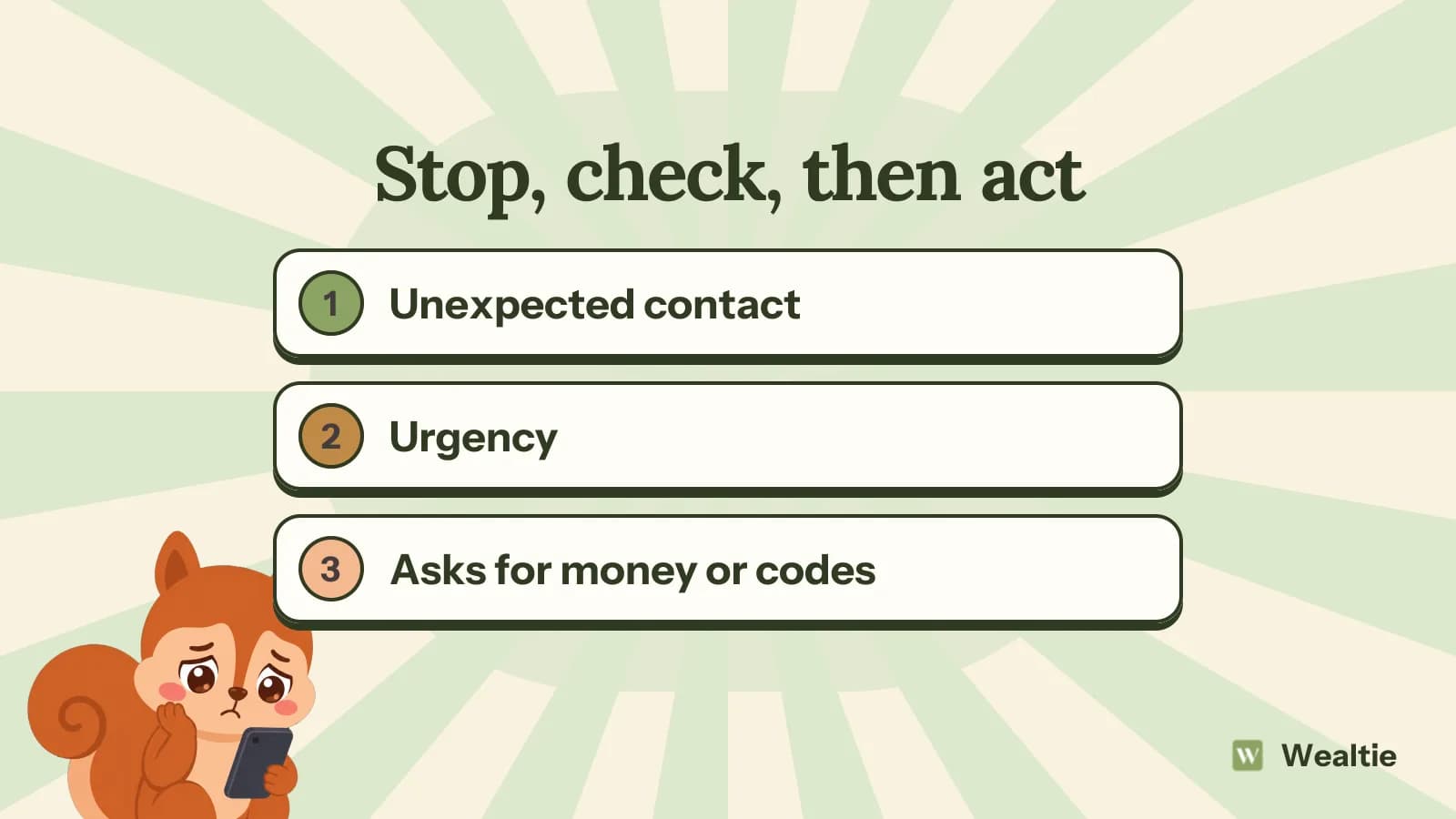
To avoid money scams, be wary of anyone who contacts you unexpectedly, creates urgency or asks you to move money or share codes. Your bank will never ask you to transfer money to a "safe account", and pausing to check with a trusted source stops most scams.
 By Wealtie Team · 3 min read
Key takeaways
- Be wary of unexpected calls, messages or emails, especially ones that create urgency.
- Banks and official organisations won't ask you to move money to a "safe account" or share a one-time code.
- Investment offers promising high, guaranteed returns are a common scam.
- If you think you've been scammed, contact your bank straight away using a number you trust.
How do you avoid money scams?
Slow down and check before you act. Most scams rely on getting you to move money, share details or click a link quickly, before you have time to think. Taking a pause, and checking with someone you trust or the organisation directly, stops most of them. Anyone can be targeted, and scams are often convincing, so it's worth knowing the signs.
What are the warning signs?
Common ones include:
- Unexpected contact: a call, text, email or message you weren't expecting
- Urgency: pressure to act now, or something bad will happen
- Requests to move money: especially to a "safe account" or a new payee
- Requests for codes or passwords: one-time passcodes, PINs or login details
- Too good to be true: high, guaranteed returns or prizes you didn't enter for
- Secrecy: being told not to tell your bank or family
If you see any of these, stop and check.
What are common types of scam?
A few that come up often:
- Fake bank or police calls: someone claims your account is at risk and asks you to move money. Your bank will never ask you to transfer money to a "safe account".
- Delivery and payment texts: messages about a missed parcel or an unpaid bill, with a link to a fake site.
- Investment scams: offers of high, guaranteed returns, often in crypto or schemes promoted on social media.
- Romance scams: someone builds an online relationship, then asks for money.
- Impersonation of family: a message from an "unknown number" claiming to be a child or relative needing money urgently.
- Marketplace scams: buyers or sellers asking to pay outside the platform, or sending fake payment confirmations.
How do you check if something is real?
Contact the organisation directly, using a number or website you find yourself, not one in the message. Hang up on a suspicious call and call back from a different phone, or wait a few minutes, since some scammers keep the line open. For a message from a "family member", call them on the number you already have.
Never share one-time codes with anyone. They're meant only for you.
How do you protect your accounts?
A few habits help a lot:
- Use strong, unique passwords and two-factor sign-in where available
- Keep your phone and apps updated
- Be careful about what you share online, like your date of birth
- Check your bank statements regularly for anything you don't recognise
- Set up alerts for payments and logins
How to read a bank statement explains how to spot unfamiliar charges.
What if you think you've been scammed?
Act quickly. Contact your bank straight away using a number you trust, like the one on the back of your card. The sooner you report it, the better the chance of stopping payments or recovering money. Change passwords for any accounts that may be affected, and report the scam to the authorities where you live.
Don't feel embarrassed. Scams are designed to fool people, and reporting them helps stop others being targeted.
What are the signs a website or seller is fake?
Look for unusually low prices, poor spelling, pressure to pay by bank transfer, and contact details that are hard to find. Check the web address carefully, since fake sites often copy a real name with a small change. Paying by card, rather than bank transfer, usually gives more protection if something goes wrong. Search the company's name with "scam" or "reviews" before buying from somewhere unfamiliar.
On marketplaces, stay on the platform for messages and payments, and be wary of buyers who overpay and ask for a refund, or sellers who want payment before you've seen the item. If a deal feels rushed or too good, walk away.
How do you help family members?
Talk about scams openly, especially with older relatives and teenagers. Agree a family rule, like always calling back on a known number before sending money, or a code word for real emergencies. Sharing examples of scams you've seen helps everyone recognise them.
How can tracking your money help?
Logging your spending and checking your balances regularly makes unfamiliar charges easier to spot. In Wealtie, recording what you spend means a payment you don't recognise on your bank statement stands out when you compare. Wealtie doesn't move money, so it's a record, and your bank remains the place to report anything suspicious. Your net worth tracker and expense categories give you a clear picture of where your money goes.
Questions people ask
Be wary of unexpected contact and urgency, never share one-time codes, and check with the organisation directly using a number you find yourself.
No. That's a common scam. Hang up and call your bank on a number you trust.
Contact your bank straight away on a trusted number, change affected passwords and report it to the authorities.
Be wary of offers promising high, guaranteed returns, pressure to invest quickly or schemes promoted by strangers online.
This article is general information, not financial, tax or legal advice. Your situation is your own; check the numbers that apply to you before you act on them.