Saving: What financial independence means, and how to start working towards it
Financial independence means having enough money that you don't depend on a paycheck, a partner or anyone else to cover your life. It comes in levels, and in a worked example someone with costs of 2,000 a month builds from one month of savings towards a year of freedom.
 By Wealtie Team · 3 min read

Key takeaways
- Financial independence means not depending on a paycheck or anyone else to cover your life.
- It comes in levels, from no debt stress to work becoming optional.
- In a worked example, costs of 2,000 a month mean a year of freedom needs 24,000.
- Lower costs and steady saving are the two biggest levers.
What is financial independence?
Financial independence means having enough money, from savings, investments or other income, that you don't depend on a paycheck, a partner or anyone else to cover your life. For some people, it means retiring early. For others, it means the freedom to change careers, work part-time, take a break or leave a bad situation without money stopping them.
It's not an all-or-nothing goal. Most people move towards it in stages, and each stage brings more freedom and less stress.
What are the levels of financial independence?
A useful way to think about it is in steps:
- No debt stress: bills are paid on time and high-interest debt is under control
- A month ahead: you have enough savings to cover a month of costs
- Several months of savings: a solid emergency fund that covers a job loss
- A year of freedom: enough to take a year off or change direction
- Work optional: savings and investments could cover your costs indefinitely
Each step makes the next one easier, and many people find the middle steps change their lives the most. Even reaching the second or third level reduces money stress dramatically.
How do you work out your number?
Start with your monthly costs. Your savings milestones are multiples of that figure. Here's a worked example for someone with costs of 2,000 a month, in round numbers that work in any currency:
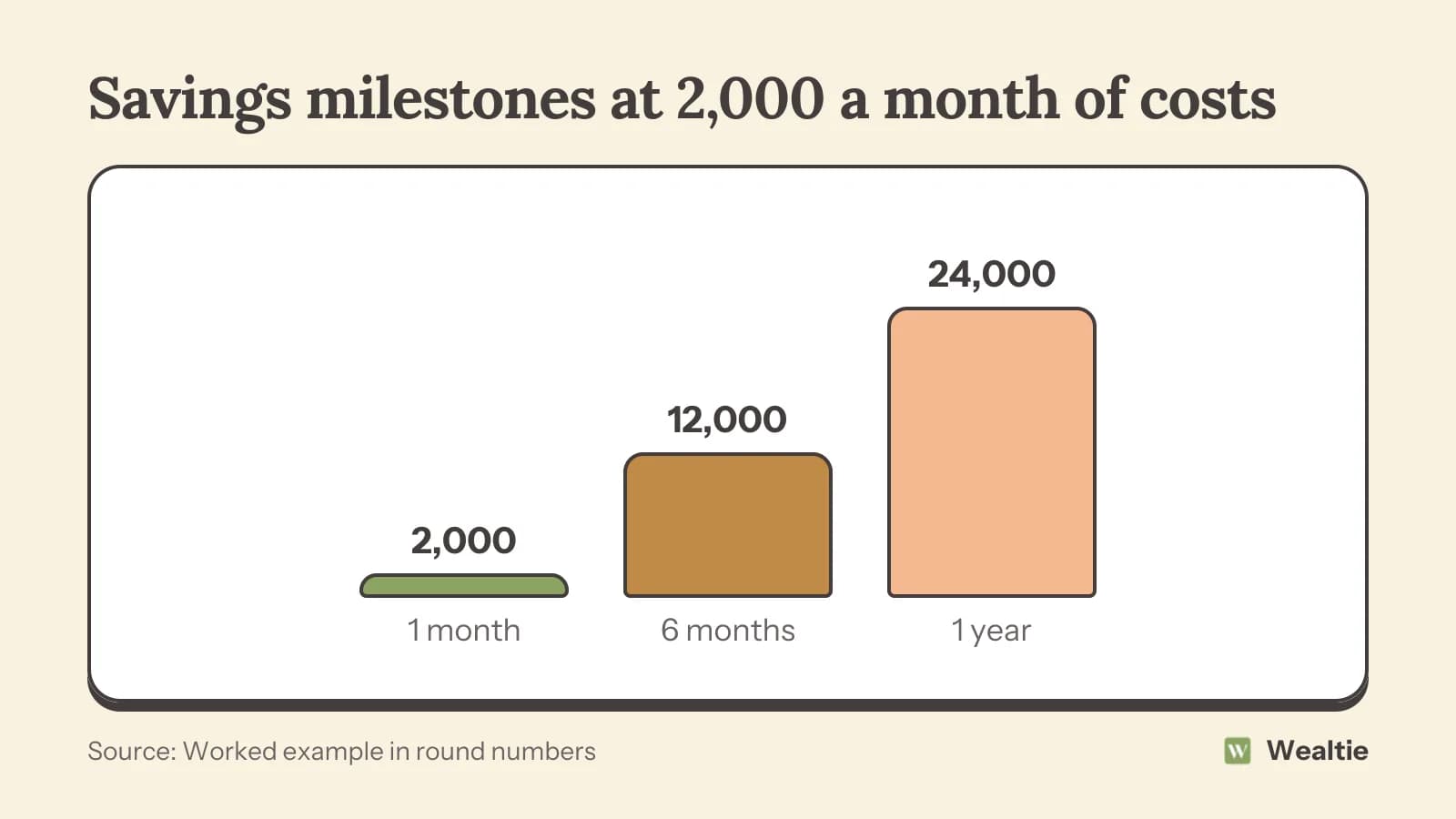
One month of freedom needs 2,000, six months needs 12,000 and a year needs 24,000. The final level, where work is optional, needs much more and usually involves long-term investing. A financial adviser can help you work out that figure for your situation. Most people focus first on the earlier milestones, which are within reach for many households.
Lower costs, smaller number
Because your milestones are based on your costs, lowering costs helps twice: you save more each month, and you need less to reach each level. That's why controlling lifestyle creep matters so much. A cut of 200 a month in costs lowers the one-year milestone by 2,400. Lifestyle creep explains how costs tend to rise with income.
How do you start?
Focus on the basics:
- Know your costs. Track your spending so you know what your life costs each month.
- Clear high-interest debt, which works against you every month.
- Build an emergency fund, starting with one month of costs. How to build an emergency fund has a plan.
- Save a steady share of income, and raise it with each pay rise. How much of your income to save helps you choose.
- Invest for the long term, once you have a cushion. Should I save or invest covers the basics.
Does financial independence mean extreme frugality?
No. Some people follow very strict budgets to reach independence quickly, but you don't have to. A balanced approach, spending on what you value and cutting what you don't, still moves you forward. The key is that your savings rate is steady and your costs don't grow faster than your income. Enjoying life along the way also makes the plan easier to stick with for years.
Income matters too
Raising your income, through a pay rise, new skills or a side income, speeds up every milestone, as long as costs don't rise to match. Putting most of any increase towards savings is one of the fastest ways to move up a level, and it doesn't require cutting anything you already enjoy.
What about independence within a relationship?
Financial independence also means each partner having some money of their own and understanding the household finances. Even in a happy relationship, knowing you could cope on your own brings security. Couples can work towards shared independence while each keeping some personal savings. Talking about what independence means to each of you helps set shared goals.
How do you stay motivated?
Set milestones and celebrate them, in small ways that don't undo your progress, like a favourite meal at home or a day out. Reaching one month of savings, then three, then six, gives a real sense of progress. How to set financial goals helps you break a big goal into steps. Writing your current level on a note, and updating it as you move up, keeps progress visible.
How do you track progress in Wealtie?
Add your accounts, savings and investments so your net worth is in one place, and watch it grow. Track spending in your expense categories to know your monthly costs, and use the budget tracker to keep spending steady while your savings build.
Questions people ask
Having enough money that you don't depend on a paycheck or anyone else to cover your life.
No debt stress, a month ahead, several months saved, a year of freedom and finally work being optional.
Multiples of your monthly costs. In a worked example, a year of freedom at 2,000 a month needs 24,000.
No. Spending on what you value and keeping costs from growing faster than income still moves you forward.
This article is general information, not financial, tax or legal advice. Your situation is your own; check the numbers that apply to you before you act on them.