Saving: How much house can I afford? A test based on your real budget
How much house can I afford comes down to a monthly payment that fits your budget with room to spare, not just what a lender will offer. In a worked example, take-home of 4,000 supports a payment of about 1,100 alongside other costs and savings.
 By Wealtie Team · 3 min read
Key takeaways
- Work out what monthly payment fits your budget, rather than relying on the maximum a lender will offer.
- In a worked example, take-home of 4,000 supports a mortgage payment of about 1,100 alongside owning costs, living costs and savings.
- Add the costs of owning, like property tax, insurance and maintenance, to the mortgage payment.
- Keep an emergency fund after the deposit and buying costs, so the first repair doesn't go on credit.
How much house can I afford?
The answer that matters is the one your budget can carry comfortably, which is often less than a lender will offer. Lenders look at your income and debts to decide how much they'll lend. Your budget also needs to cover everything else in your life, with savings and a buffer for surprises. Starting from your own numbers helps you avoid a home that leaves you stretched every month. It also gives you a clear price range before you start viewing, which makes it easier to say no to homes that are just out of reach.
How do you work out a comfortable payment?
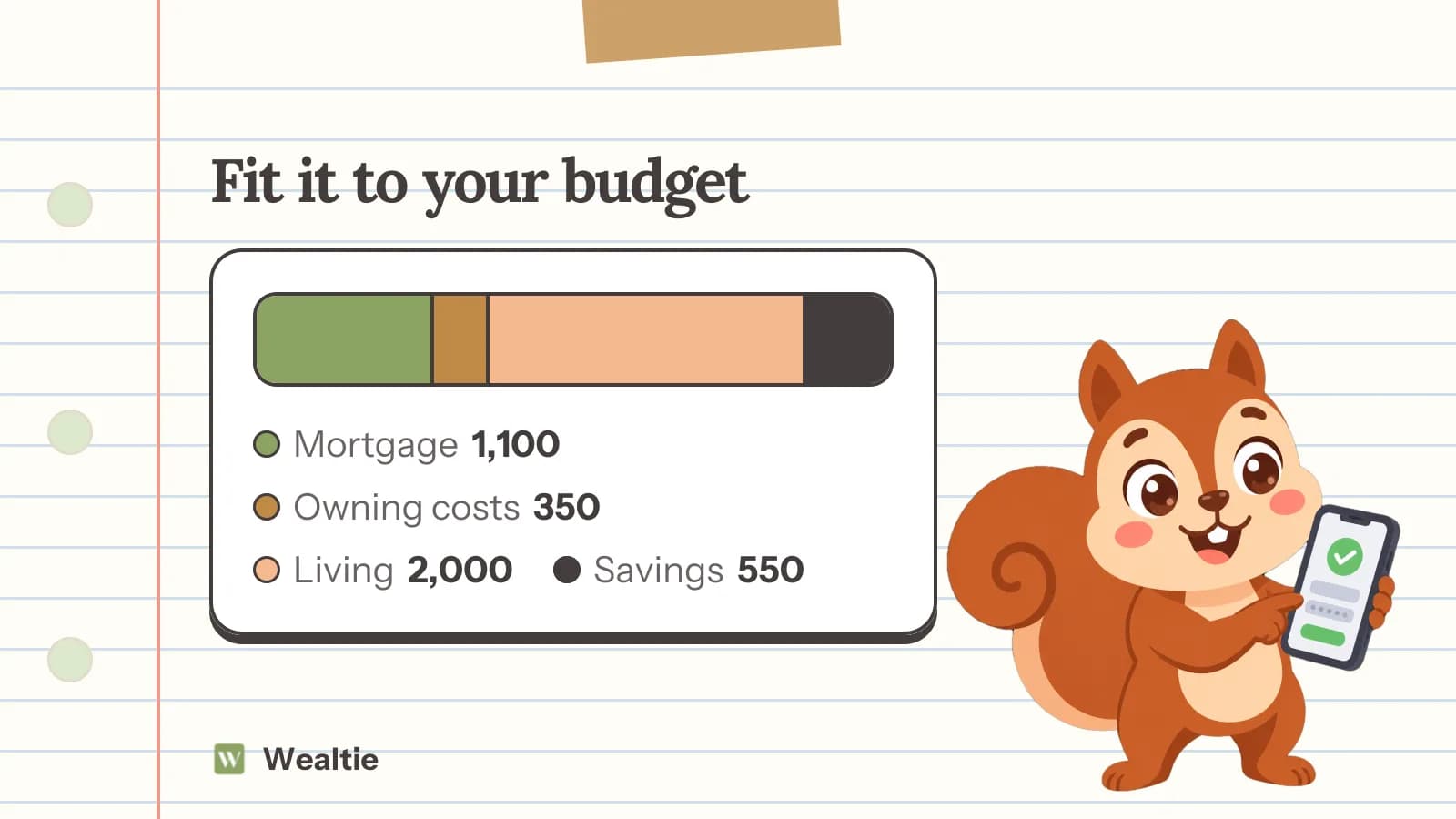
Start from your take-home pay and work down. Here's a worked example on take-home of 4,000 a month, in round numbers that work in any currency:
| Line | Monthly |
|---|---|
| Mortgage payment | 1,100 |
| Owning costs: property tax, insurance, upkeep | 350 |
| Everything else: bills, food, transport, fun | 2,000 |
| Savings | 550 |
| Total | 4,000 |
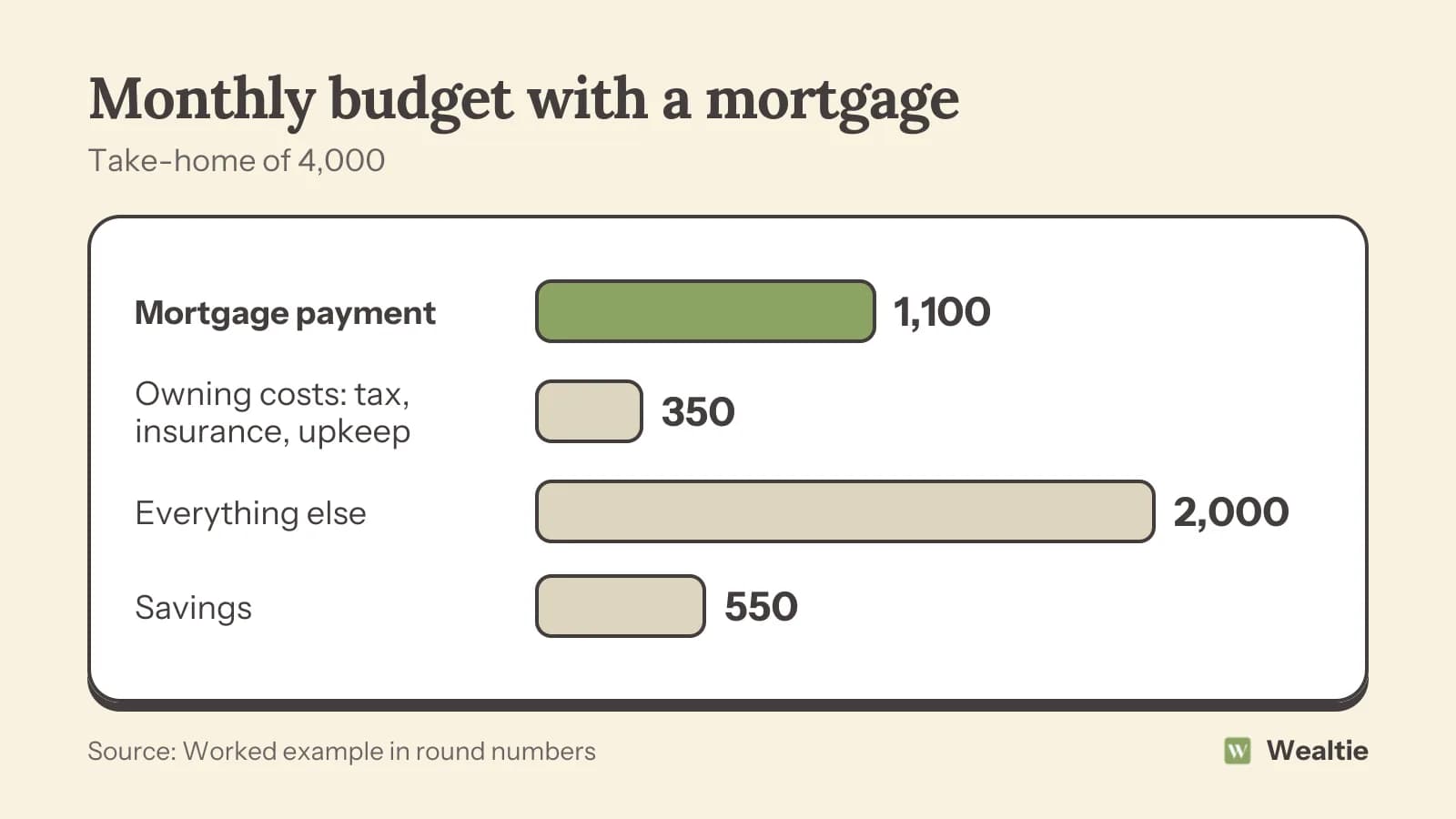
Here, a mortgage payment of about 1,100 fits, with savings still going in. Your own figures will depend on your other costs and how much you want to keep saving. If you've got children, a car loan or other debts, the mortgage line needs to shrink to fit. Use your real spending from the last few months, not a hopeful estimate, since a budget built on real numbers holds up better.
Why not borrow the maximum offered?
Because the maximum doesn't account for your goals, your lifestyle or future changes. A loan that's just affordable today could become hard if rates rise when a fixed deal ends, if your income drops, or if you have children. Leaving room in the budget gives you a buffer, and it means you can keep enjoying life outside the home rather than putting everything into it.
Ask what your payment would be if the rate were higher, and check you could still manage. If not, a smaller loan or a longer wait might be wiser. Think about plans for the next few years too, like a career change or starting a family, since a payment that's fine on two incomes can be hard on one.
What costs come on top of the mortgage?
More than many first-time buyers expect:
- Property taxes or local taxes
- Buildings and contents insurance
- Maintenance and repairs
- Service charges or fees, if it's a flat
- Higher bills, if the home is bigger than where you live now
A common rule of thumb for maintenance is about one in every hundred of the home's value each year. First year homeowner costs goes through these in detail.
How much deposit do you need?
As much as you can comfortably save, while keeping an emergency fund. A bigger deposit usually means a smaller loan, lower payments and sometimes a better rate. But putting every penny into the deposit leaves nothing for buying costs, moving and the first repairs.
Budget for the costs of buying too, like legal fees, surveys, taxes on the purchase and moving. Furniture and small repairs in the first months add up as well, so keep a cushion for those. How to save money for a house has a plan for building the deposit.
How do you test the budget before you buy?
Live on it for a few months. If your future mortgage and owning costs would be higher than your current rent, put the difference into savings each month. If you manage comfortably, the budget works, and you've added to your deposit. If it's a struggle, you've learned that before committing. A few months of this test also shows a lender a steady savings pattern, which can help with an application.
What else should you think about?
How long you'll stay, since buying and selling costs are high. Job security, since a mortgage is a long commitment that usually runs for decades. And whether renting is better for now. Should you rent or buy a house compares the true costs, and how much rent can I afford checks the renting side.
How do you plan a home purchase in Wealtie?
Add a savings account for the deposit and move money into it each month as a transfer, which isn't counted as spending. Your net worth tracker shows it growing. To test a future budget, set the monthly limit in the budget tracker as if you were paying the mortgage and owning costs, and see whether Budget Health stays on track.
Questions people ask
Enough that the mortgage payment and owning costs fit your budget with savings and a buffer left. A worked example on take-home of 4,000 supports a payment of about 1,100.
Usually not. The maximum doesn't account for your goals or future changes, and leaves little room if rates or income change.
Property taxes, insurance, maintenance, service charges for flats and possibly higher bills.
Live on the future budget for a few months, saving the difference between your rent and the expected mortgage and owning costs.
This article is general information, not financial, tax or legal advice. Your situation is your own; check the numbers that apply to you before you act on them.