Saving: What to do with a bonus so it doesn't disappear by next month
What to do with a bonus starts before it arrives: check what you'll take home after tax, then decide where each part goes. In a worked example, a 3,000 bonus becomes 2,000 after tax, split between a card, the emergency fund, a goal and some to enjoy.
 By Wealtie Team · 3 min read
Key takeaways
- Check what you'll take home after tax, since bonuses are often taxed and can look smaller than expected.
- Decide the split before the money arrives, so it doesn't get absorbed into everyday spending.
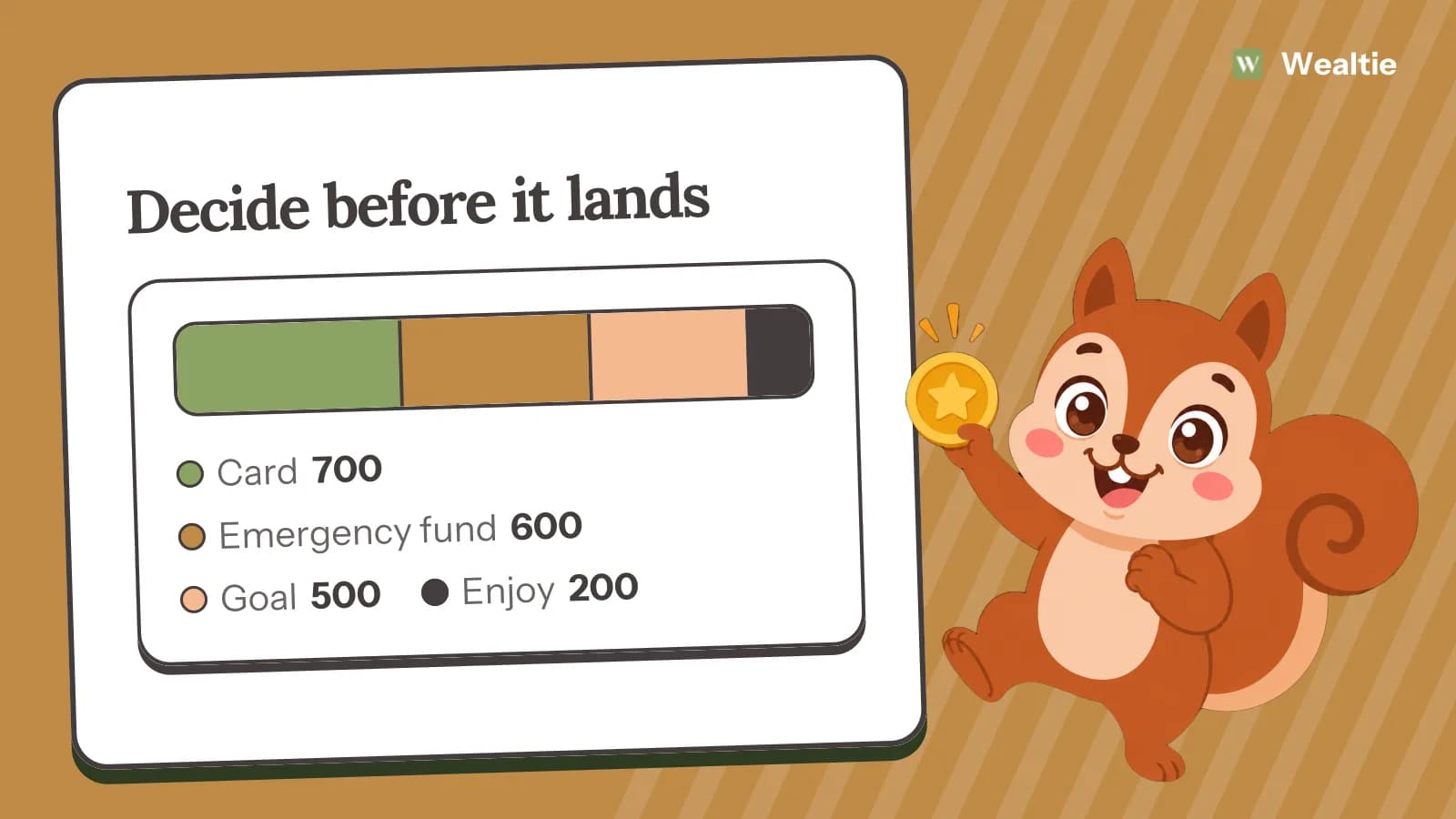
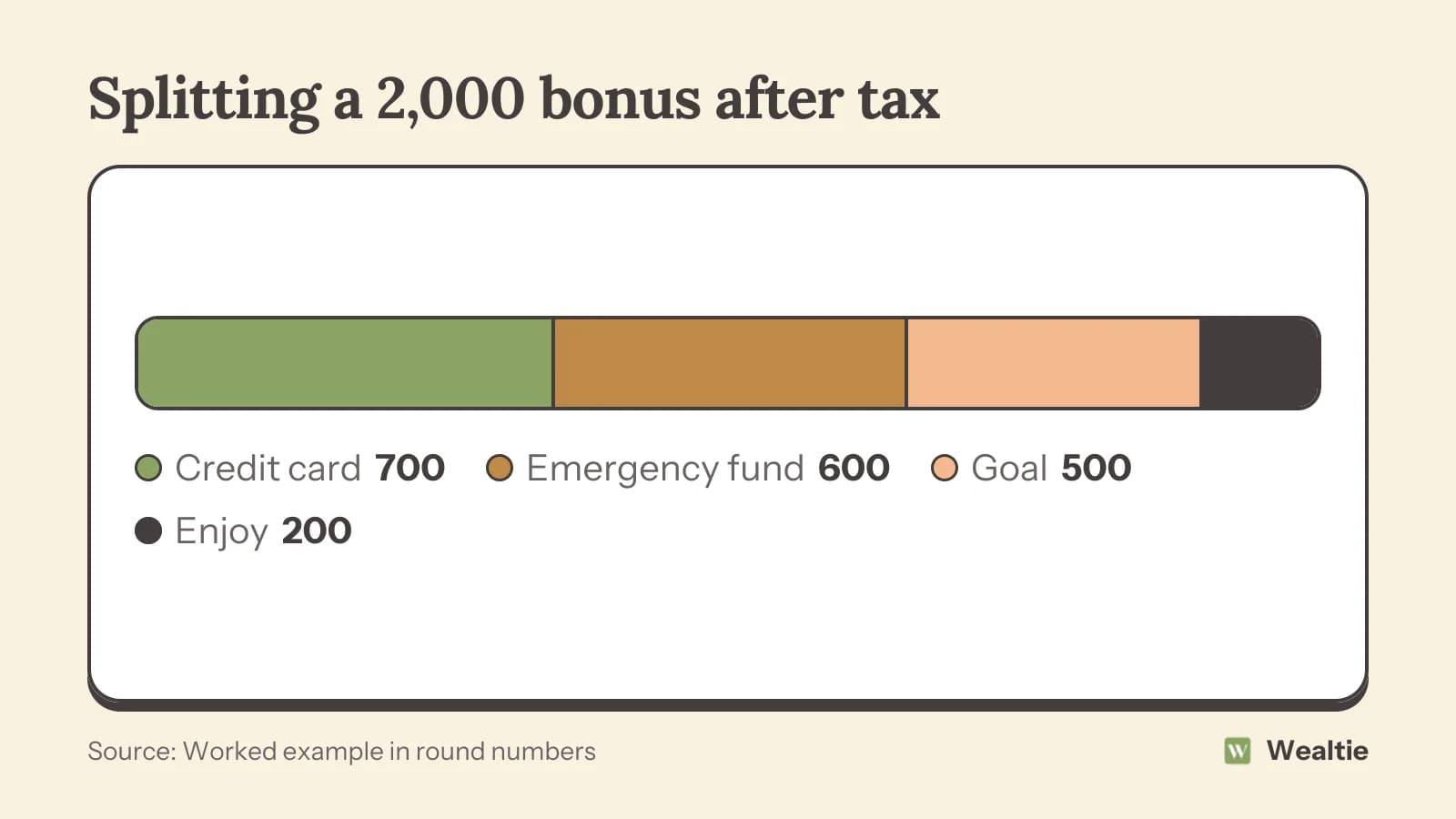
- In a worked example, 2,000 after tax goes 700 to a card, 600 to the emergency fund, 500 to a goal and 200 to enjoy.
- Treat a bonus as one-off money, not a reason to raise your regular spending.
What should you do with a bonus?
Decide before it arrives, and give most of it a job. A bonus feels like extra money, and that's exactly why it tends to disappear: a few dinners, some shopping, and it's gone. Planning the split in advance means it goes where you'd want it to go, with a part left to enjoy. Write the plan down with an amount next to each line, so when the money arrives there's nothing left to decide.
How much will you take home?
Probably less than the headline figure. Bonuses are usually taxed, and other deductions, like pension contributions, may apply too. In some systems, a bonus paid in one month can be taxed at a higher rate in that payslip. Check your payslip or ask your payroll team before planning. In this worked example, in round numbers that work in any currency, a 3,000 bonus becomes 2,000 after tax.
Gross vs net income explains how deductions work.
How should you split it?
Work down an order until the money runs out. Here's one way to split 2,000:
| Where it goes | Amount | Why |
|---|---|---|
| Credit card balance | 700 | Stops costly interest |
| Emergency fund | 600 | Builds the cushion |
| A goal, like a holiday or deposit | 500 | Something you're saving for |
| Yours to enjoy | 200 | A reward for the work |
If you've got no costly debt, the first line goes to the emergency fund or a goal. If your emergency fund is full, the money can go further toward a goal or longer-term saving. Pay off debt or save explains the order.
Why keep some to enjoy?
Because a plan you enjoy is a plan you'll follow. A bonus is often a reward for hard work, and spending a part of it on something meaningful is reasonable. Decide the amount in advance, so it stays at that. If you share finances with a partner, agree the split together, especially if the bonus is going toward shared goals.
Should a bonus change your budget?
No. A bonus is one-off money, and it might not come every year, or might be smaller next time. Raising your regular spending because of it can leave you short later. Keep your monthly budget based on your regular pay, and use the bonus for one-off goals. If bonuses are a regular part of your pay, plan for them as a yearly lump sum that funds goals, rather than an extra that props up monthly spending. That way, a smaller bonus one year doesn't leave a hole in your budget.
What if the bonus is paid in shares?
Some employers pay bonuses in company shares. These can be worth a lot or a little depending on the company's performance, and holding a large part of your savings in your employer's shares ties your job and your savings to the same company. Find out the rules for selling them and any tax due, and consider getting advice from a regulated adviser before deciding what to keep.
If your pay itself has gone up, that's a different decision. What to do with a pay rise covers that.
What if you were expecting a bigger bonus?
It happens, and it's another reason not to spend a bonus before it arrives. If you'd planned for more, go back to the order and fund the top lines first, like the card and the emergency fund, and trim the goal or the treat. Planning on a cautious estimate in future, and treating anything above it as a bonus on the bonus, avoids the disappointment.
What about pension contributions?
Some employers let you put part or all of a bonus into your pension, which can reduce the tax you pay on it, depending on where you live. If you're saving for retirement, it can be a tax-efficient option. Check the rules with your employer or a regulated adviser. If your employer matches pension contributions, putting part of a bonus in can be especially good value.
How do you make sure the money goes where you planned?
Move it within a day or two of it arriving. Pay the card, make the transfer to savings and move the goal money to its own pot. Leave only the enjoy amount in your everyday account. Money that sits in a current account tends to drift into ordinary spending without anyone choosing to spend it. The same applies to other windfalls, like a tax refund.
How do you record a bonus in Wealtie?
Log the take-home amount as income in the account it lands in, which the income tracker counts toward that month's total. Moving money to savings is a transfer, so it isn't counted as spending, and your net worth tracker shows the difference once the money's in place.
Questions people ask
Check your take-home amount, pay down costly debt, build your emergency fund, put some toward a goal and keep a small part to enjoy.
Save most of it unless you have costly debt, which comes first. Keeping a small part to enjoy makes the plan easier to follow.
Bonuses are usually taxed like pay, and in some systems a bonus in one month can be taxed at a higher rate in that payslip.
No. A bonus is one-off money, so keep your monthly budget based on your regular pay.
This article is general information, not financial, tax or legal advice. Your situation is your own; check the numbers that apply to you before you act on them.