Saving: How much does smoking cost you, and what could the money do instead?
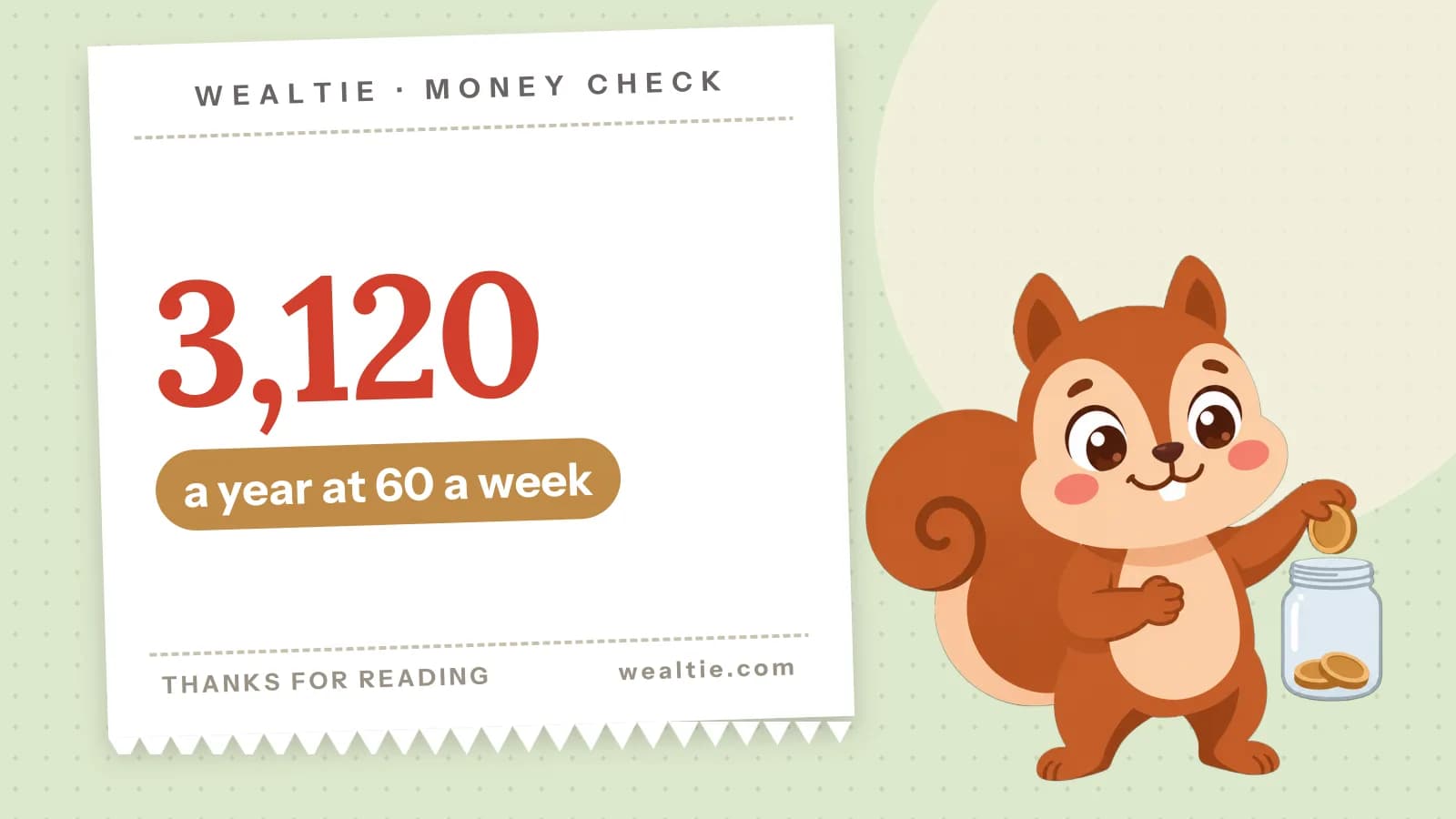
How much does smoking cost? The price of a pack times how many you buy: At 12 a pack, five packs a week come to 60 a week, or 3,120 a year, and moving that money to savings as you cut down makes the progress easy to see.
 By Wealtie Team · 3 min read
Key takeaways
- Work out your yearly cost by multiplying what you spend in a week by 52.
- In a worked example, five packs a week at 12 each cost 60 a week, or 3,120 a year.
- Moving the money you'd have spent into savings each week makes the saving visible.
- Support to quit is often free, so ask your doctor, pharmacist or a local service.
How much does smoking cost?
More than most people add up. The cost of a single pack or refill feels small, but it's spent several times a week, every week. Multiplying it out to a year shows the real figure, and it's often a surprise.
This post is about the money. If you're thinking about cutting down or quitting, support from a doctor, pharmacist or local stop-smoking service is often free and makes a big difference.
How do you work out your figure?
Take what you spend in a typical week and multiply by 52. Here's a worked example in round numbers that work in any currency:
| Weekly spend | Per month | Per year |
|---|---|---|
| 30 | 130 | 1,560 |
| 60 | 260 | 3,120 |
| 90 | 390 | 4,680 |
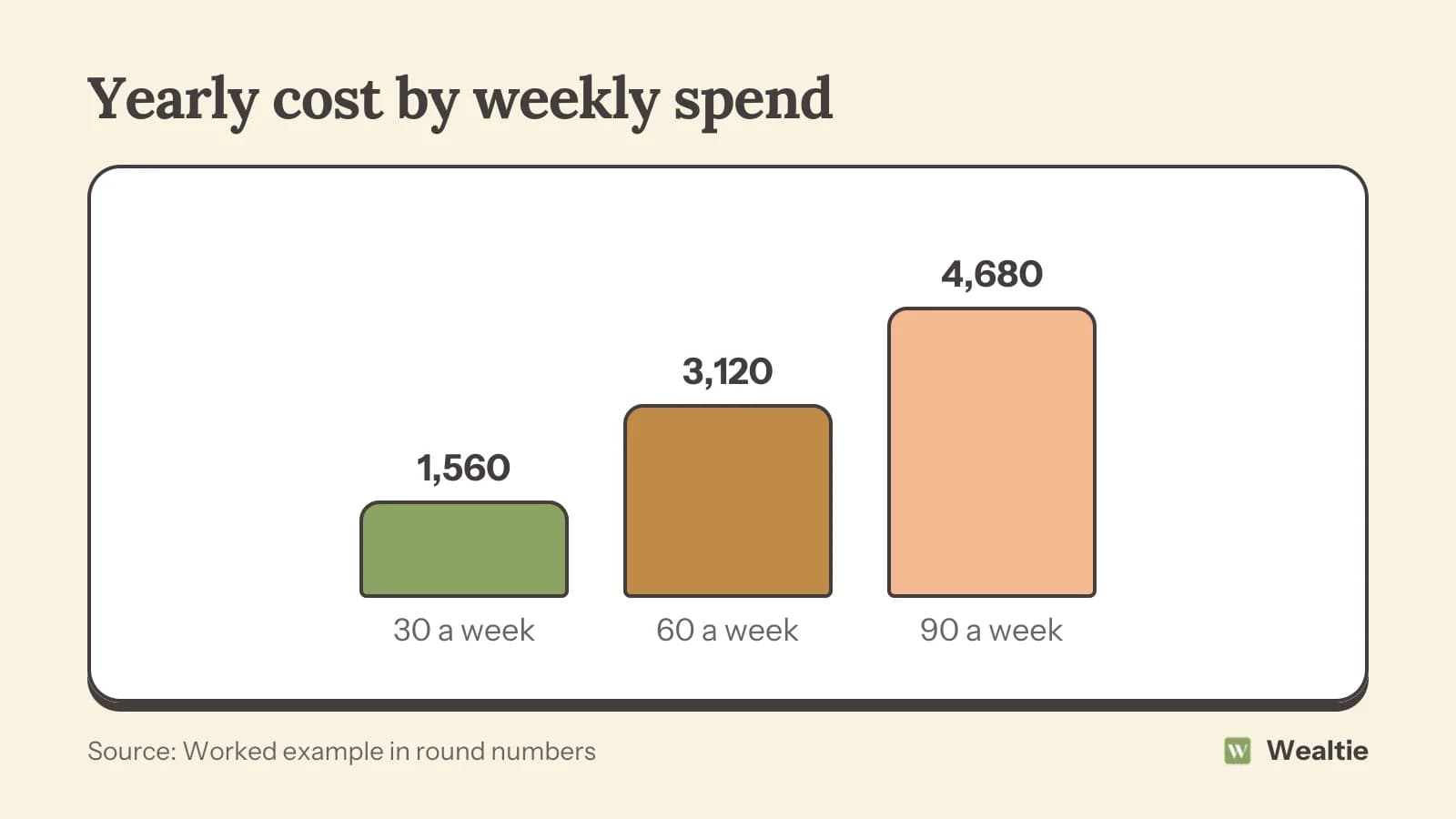
At 12 a pack and five packs a week, that's 60 a week, or 3,120 a year. Vaping works the same way: refills or disposables at 25 a week come to 1,300 a year.
Include the extras too, like lighters, papers, filters, devices and replacement parts. They can add a fair amount over a year. If you're not sure what you spend, check a month of bank statements for the shops you buy from, or keep a tally in a note for two weeks. Many people find the real figure is higher than they'd guessed, because small top-up purchases are easy to forget.
What could the money do instead?
Put it next to something you'd like. 3,120 a year could be:
- A full emergency fund for many people
- A holiday for two
- A good chunk of a car or a home deposit
- Paying off a credit card balance
Seeing the money as something specific makes it easier to stay motivated if you decide to cut down. Some people work out the cost per day, which makes each decision feel more concrete: at 60 a week, that's about 8.50 a day, or the price of a meal. How to build an emergency fund and how to save for a vacation show how to put it to work.
How do you make the saving visible?
Move it. Each week, transfer the amount you'd have spent into a separate savings account. If you're cutting down rather than stopping, move the difference between what you used to spend and what you spend now. Watching the balance grow is far more motivating than a vague sense of saving.
Money you don't spend on something tends to drift into other spending if you don't move it. A standing order every Monday for the amount means it happens without thinking.
What about the cost of quitting aids?
Count them, but compare them with what you'd spend otherwise. Many stop-smoking services offer free support and sometimes free or cheaper aids, depending on where you live. Even if you pay for them, they usually cost less than continuing to smoke, and the cost ends once you've quit.
Ask your doctor or pharmacist what's available, since help is often free or subsidised.
What if you share the cost with a partner?
If you both smoke or vape, the household cost doubles, and so does the possible saving. At 60 a week each, that's 6,240 a year between you. Agree together what the savings will go toward, since a shared goal makes it easier to support each other. If only one of you smokes, agree whether it comes from personal or shared money, so it doesn't cause tension.
Are there other money effects?
Sometimes. In some countries, life insurance and some health cover cost more for smokers, so stopping can lower premiums after a period. Some people also find they spend less on other things, like drinks, when they stop smoking. Check your insurance terms if you've quit, since you may be able to update your status after a set time.
How do you keep going?
Set a target for what the savings will pay for, and check the pot weekly. Tell someone you trust about your goal. If you slip, don't throw away the progress: carry on moving the money from the next day. Every week counts. Many people take several attempts before they stop for good, and each attempt saves money along the way. Celebrating milestones, like the first month or the first 500 saved, with a small treat from the pot keeps the goal feeling rewarding.
How do you track the savings in Wealtie?
Add a savings account for the money and move each week's amount into it as a transfer, which isn't counted as spending. Your net worth tracker shows it growing. If you're cutting down, log what you still spend in its own line in your expense categories, so you can see the trend.
Questions people ask
Multiply your weekly spend by 52. At 60 a week, that's 3,120 a year.
Work it out the same way. Refills or disposables at 25 a week come to about 1,300 a year, plus devices and parts.
Move what you'd have spent into a separate savings account each week, so the saving is visible and doesn't drift into other spending.
Often, depending on where you live. Ask your doctor, pharmacist or local stop-smoking service.
This article is general information, not financial, tax or legal advice. Your situation is your own; check the numbers that apply to you before you act on them.