Budgeting: Digital bank vs traditional bank: which suits you?
In the digital bank vs traditional bank choice, digital banks often win on fees, travel costs and budgeting tools, while traditional banks offer branches and wider services. In a worked example, a frequent traveller saves 120 a year with a digital bank.
 By Wealtie Team · 3 min read
Key takeaways
- Digital banks often have lower fees and better budgeting tools.
- Traditional banks offer branches, cash services and wider products.
- Many people use both: a digital account for spending and a traditional one for the rest.
- Check deposit protection and support before switching.
Digital bank vs traditional bank: what's the difference?
Traditional banks have branches, phone lines and a long history, and they usually offer the full range of products, from current accounts and mortgages to business banking. Digital banks, sometimes called app-only or online banks, run mostly through a phone app, with no branches. They often offer instant notifications, spending categories, savings pots and cheaper spending abroad.
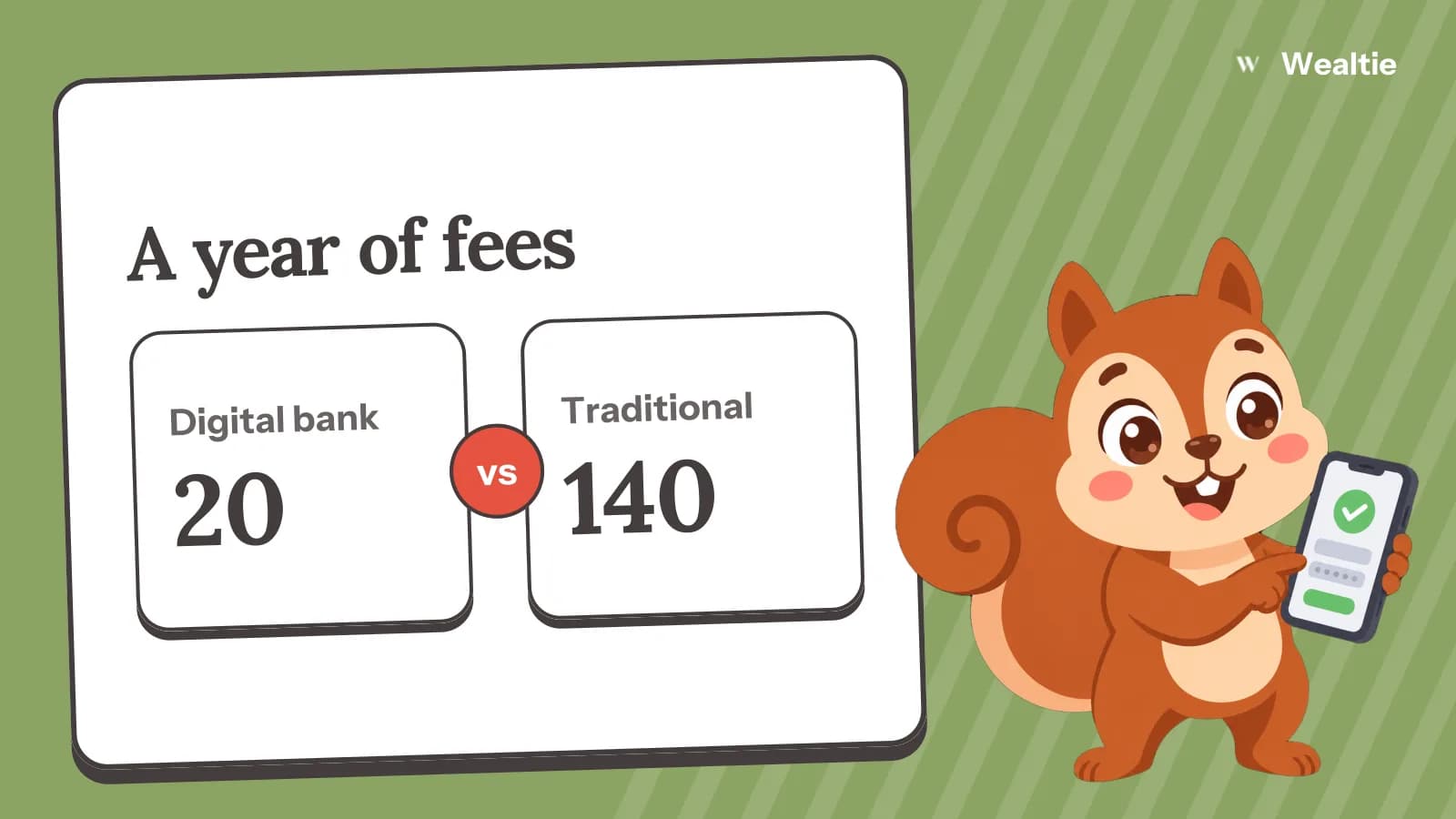
Neither is better for everyone. Here's a worked example of a year's fees for someone who travels abroad several times a year, in round numbers that work in any currency:
| Bank | Yearly fees |
|---|---|
| Digital bank | 20 |
| Traditional bank | 140 |
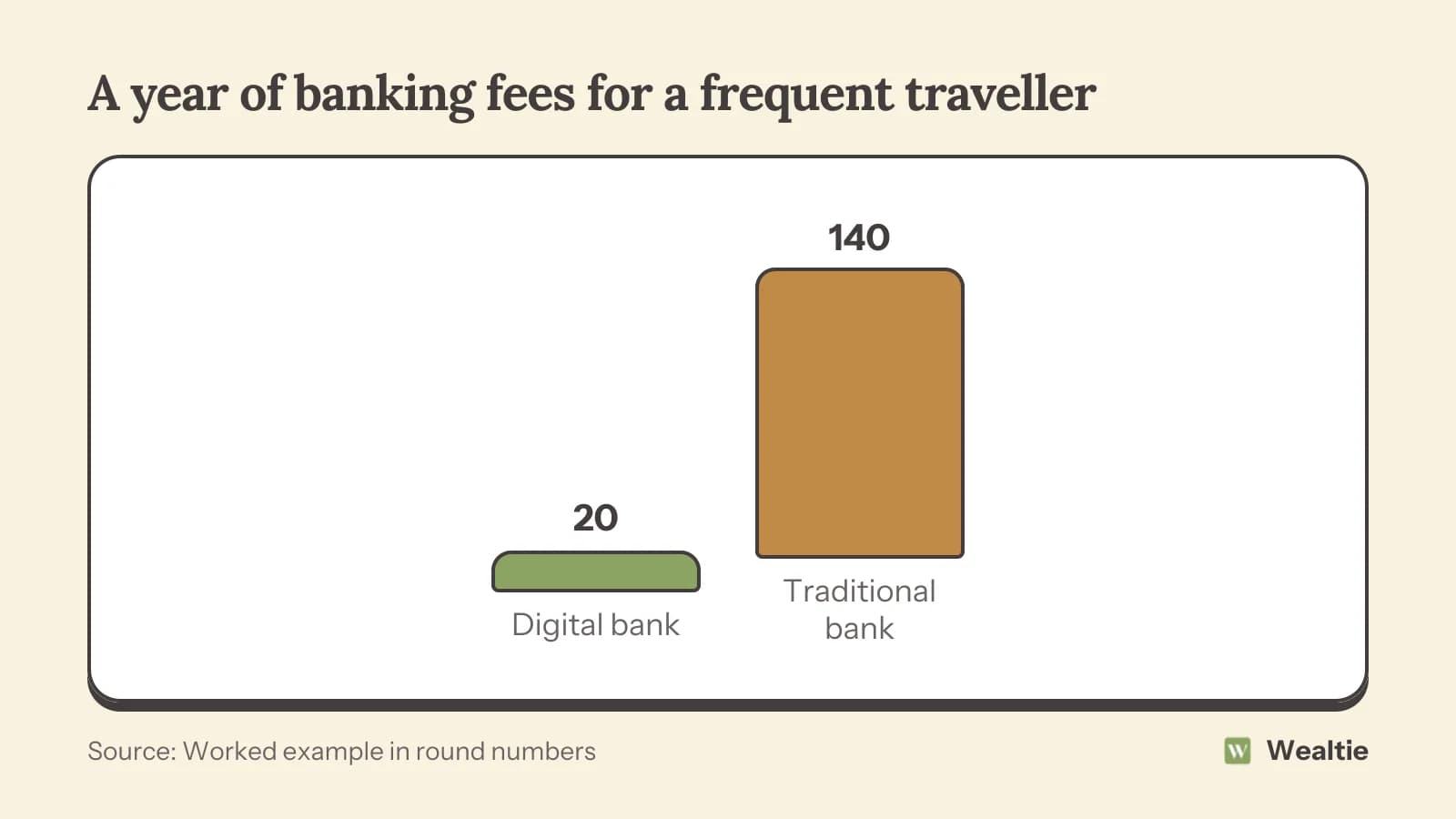
With the traditional bank, foreign card fees and transfer charges add up to around 140 a year. With a digital bank offering fee-free spending abroad, the cost drops to around 20 for occasional cash withdrawals. That's a saving of 120 a year. Someone who rarely travels might see little difference.
What are the advantages of digital banks?
Low or no fees
Many digital banks charge no monthly fees and low or no fees for spending abroad. Foreign transaction fees covers why that matters.
Budgeting tools
Instant notifications, automatic spending categories and savings pots make it easy to see where money goes.
Quick to open
Accounts can often be opened in minutes from a phone.
Multi-currency features
Some digital banks let you hold several currencies, which helps travellers and people paid in other currencies. Is a foreign currency account worth it? covers that.
What are the advantages of traditional banks?
Branches and face-to-face help
Some people prefer to speak to someone in person, especially for complex issues.
Cash services
Depositing cash and getting cash services is usually easier with a traditional bank.
Wider products
Mortgages, business accounts and other products may be easier to get from an established bank.
Familiarity
Some people value a long relationship with one bank.
Should you use both?
Many people do. A common setup is a traditional bank for salary, bills and savings, and a digital account for everyday spending or travel. That way, you get branch access and broad services along with modern tools and low travel fees. Moving money between them takes seconds. How to send money abroad cheaply covers another way digital services can save money.
What should you check before switching?
Deposit protection
Check whether your money is protected by a deposit guarantee scheme, and up to what amount.
Customer support
Look at how support works, like in-app chat or phone, and read reviews about how problems are handled.
Fees and limits
Check fees for cash withdrawals, transfers and spending abroad, and any limits that might affect you.
Security
Use strong passwords and two-step login, and be wary of scams that impersonate banks. How to avoid money scams covers common tricks.
How do you switch?
Many countries have switching services that move your payments and close your old account for you. You can also open a digital account alongside your existing one and move gradually. How to switch bank accounts covers the steps.
Think about how you use your bank day to day. If you mostly pay by card, check your balance on your phone and rarely visit a branch, a digital bank may suit you well. If you regularly deposit cash, need help with complex issues or value face-to-face advice, a traditional bank may be a better fit. Many people's needs fall in between, which is why using both is so common.
Older relatives may find digital banking less familiar. If you help someone else with their money, consider whether an app-only bank would make things easier or harder for them. Some traditional banks also have good apps, so you don't always have to choose between modern tools and a branch.
It's also worth checking how each bank handles problems. Read reviews about customer support, how quickly disputes are resolved and how easy it is to reach a real person. Good support matters most when something goes wrong, like a lost card or a payment that didn't arrive.
Finally, remember that switching doesn't have to be all or nothing. Opening a digital account alongside your existing one, and moving one part of your spending to it, lets you try it without risk. If it works well, you can move more over time.
Whichever you choose, turn on notifications so you see every payment as it happens.
How can Wealtie help with multiple accounts?
Wealtie lets you track several accounts, and Free includes two. Logging spending from each account in your expense categories gives you one view of your money, and Wealtie supports multiple currencies if one account holds a different currency.
Questions people ask
Neither is best for everyone. Digital banks often win on fees and budgeting tools, while traditional banks offer branches and wider products.
Many are regulated and covered by deposit protection schemes. Check the bank's protection and security before opening an account.
Yes. Many people use a traditional bank for salary and bills and a digital account for spending or travel.
For frequent travellers, the savings on foreign fees can be significant. In a worked example, it saved 120 a year.
This article is general information, not financial, tax or legal advice. Your situation is your own; check the numbers that apply to you before you act on them.