Multi-currency & travel: Do you need a foreign currency account? Who it helps and what to check
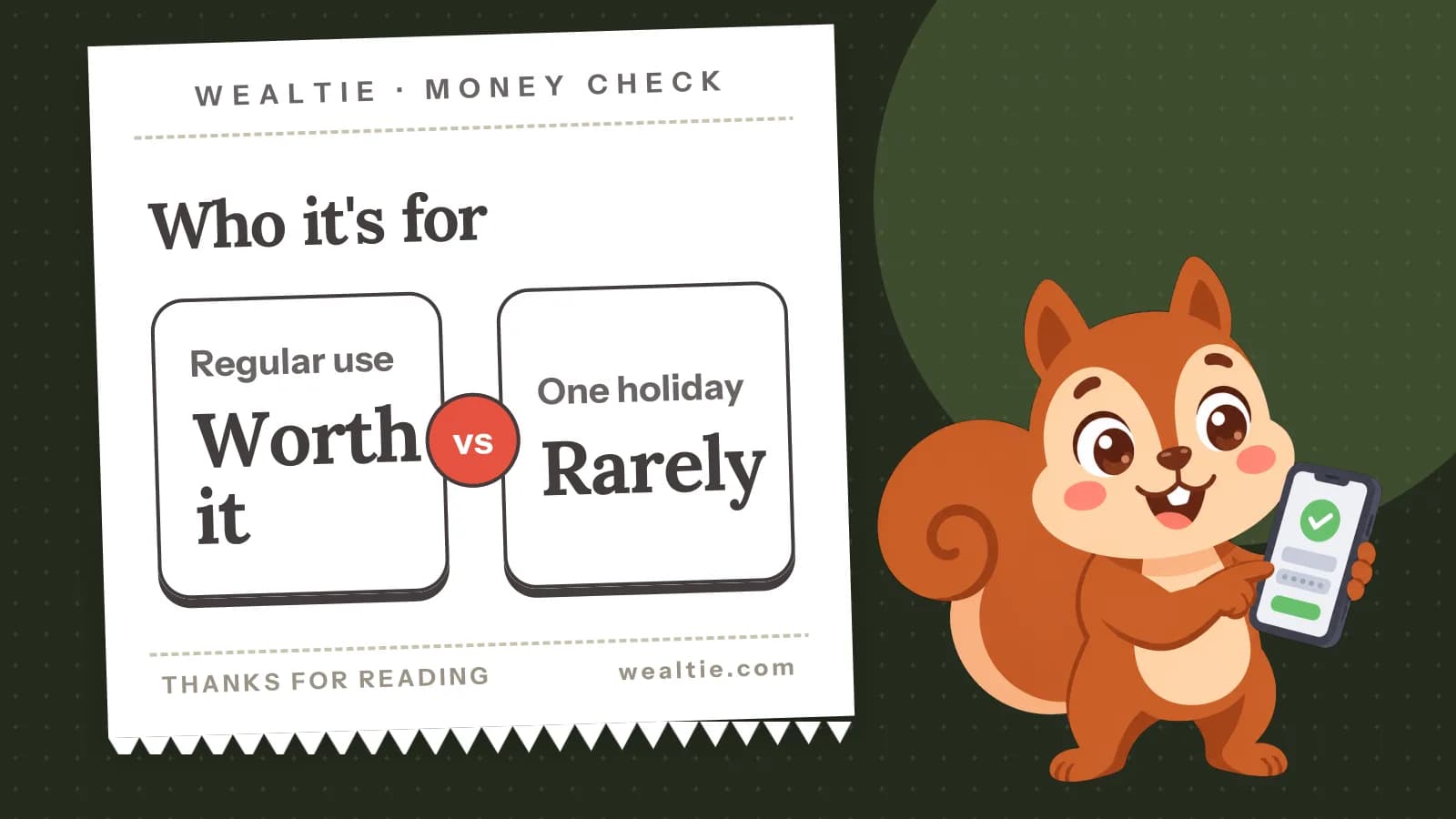
A foreign currency account lets you hold money in another currency without converting it. It helps if you earn or spend regularly in that currency, because you convert only when you choose, and it's rarely worth it for an occasional holiday.
 By Wealtie Team · 3 min read
Key takeaways
- A foreign currency account holds money in another currency, so you only convert when you choose.
- It helps people who earn or spend regularly in that currency, like freelancers with foreign clients or people with costs abroad.
- Holding a currency means its value in your home currency moves every day.
- Check fees, conversion margins and deposit protection before opening one.
What is a foreign currency account?
An account that holds a currency other than your home one. Some are single-currency accounts at a bank, and some are multi-currency accounts that let you hold several balances side by side. Either way, the money stays in that currency until you decide to convert it.
That matters because every conversion has a cost, and converting twice, once when money arrives and again when you spend it in the same currency, pays that cost twice.
Who does a foreign currency account help?
People with a regular flow of money in another currency:
- Freelancers paid by clients abroad
- People with a salary or pension in one currency and some costs in another
- Anyone paying regular bills abroad, like rent on a second home or a child's university
- Frequent travellers to one country
- People sending money to family abroad regularly
If you're moving abroad, an account in the new currency set up before you go can make the first weeks easier, since rent deposits and bills often need local payment details.
For a one-off holiday, it's rarely worth setting up. A card with low foreign fees does the job with less effort. Foreign transaction fees explains what to look for.
How does it avoid converting twice?
Say you're a freelancer who spends euros, paid 1,500 dollars a month by a US client, and you pay 300 dollars a month for software priced in dollars. Without a dollar account, the 1,500 is converted to euros when it arrives, and then euros are converted back to dollars to pay the software. With one, you pay the 300 straight from the dollar balance and convert only the 1,200 you need in euros.
That's less money lost to conversion, and you choose when to convert the rest.
What does holding a foreign currency do to your money?
It ties part of your savings to the exchange rate. A dollar balance is worth a different number of euros every day. Over a few months that can move up or down by a noticeable amount, without you spending anything.
That's fine if you've got costs in that currency, since the balance and the costs move together. It's riskier if you're holding the currency hoping it'll rise. Is a higher exchange rate better explains which way a move helps you.
What should you check before opening one?
A few things that vary a lot between providers:
- Fees: monthly charges, fees for receiving payments, and fees for sending them
- Conversion margin: how far the rate is from a reference rate
- Deposit protection: whether the money is covered by a deposit guarantee scheme, which can differ between a bank and an electronic money provider
- Account details: whether you get local account details, so clients can pay you as a domestic transfer
- Card: whether you can spend directly from each currency
Ask how quickly you can move money out if you need to, and whether there are limits. Protection is worth a careful look if you'll hold large amounts. Read the provider's terms, and don't keep more there than you'd want to risk if the protection is limited.
When should you convert?
Mostly when you need to, in amounts that cover your costs. Converting enough for each month's spending and tax, and leaving the rest only if you've got costs in that currency, is a calm approach. Trying to time the market is a bet.
If you're paid in a foreign currency, budget on a rate a little worse than today's, so your plan still works if the rate moves. The guide on how to budget on irregular income helps when foreign payments arrive unevenly.
What about tax?
Interest earned and gains from currency movements can be taxable in some countries, and income usually needs reporting in your home currency. Keep records of what came in, when, and what you converted, and keep the account's statements with your other financial records. Check your tax authority's guidance.
How do you track a foreign currency account in Wealtie?
Add it as its own account in that currency. Each account keeps its own currency, and your totals are converted into a display currency at each day's rate. Moving money from the foreign account to your home-currency account is a transfer, which shows both amounts and isn't counted as spending. The multi-currency budget app supports 68 currencies on the Free plan, and your net worth tracker shows the account alongside everything else.
Questions people ask
Only if you earn or spend regularly in another currency, such as a freelancer with foreign clients. For an occasional holiday, a card with low foreign fees is usually enough.
Its value in your home currency changes every day, so your balance can fall without you spending anything. Deposit protection may also differ from a normal bank account.
It lets you hold money in the currency you'll spend it in, so you avoid converting twice and choose when to convert the rest.
Not always in the same way as a bank account, since banks and electronic money providers can be covered differently. Check the terms before holding large amounts.
This article is general information, not financial, tax or legal advice. Your situation is your own; check the numbers that apply to you before you act on them.