Budgeting: The cost of vinyl collecting: turntable to records
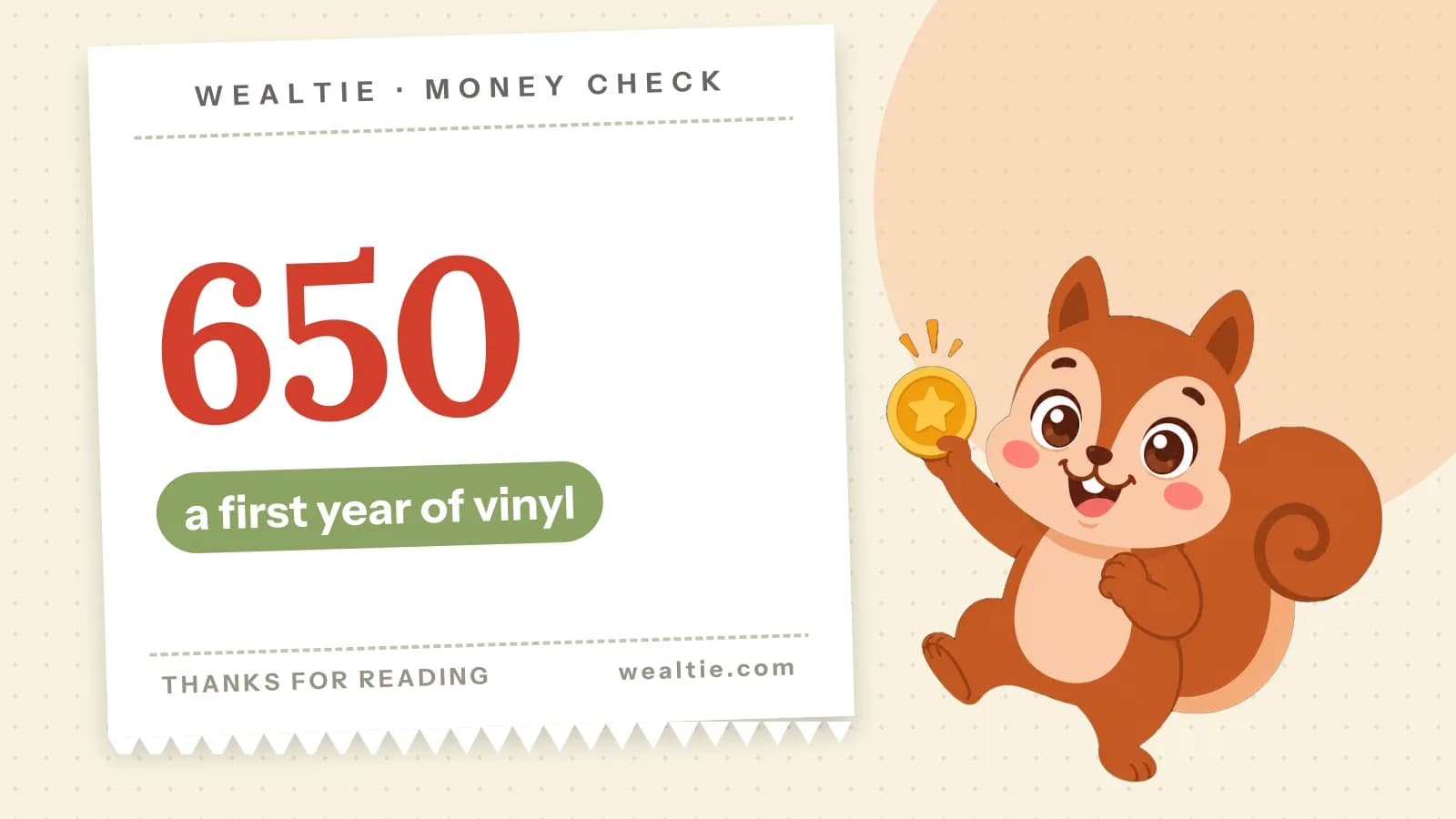
The cost of vinyl collecting starts with a turntable and speakers, but records are the ongoing cost and new pressings aren't cheap. In a worked example, a first year costs 650, including a 300 starter setup and 30 records.
 By Wealtie Team · 3 min read
Key takeaways
- The cost of vinyl collecting is mostly records once you have a setup.
- Second-hand records cost far less than new pressings.
- A modest turntable is fine to start; upgrade later if you love it.
- Set a monthly record budget so the collection doesn't run away with you.
What is the cost of vinyl collecting?
Vinyl records have made a big comeback, and many people enjoy the ritual of choosing a record, the artwork and the sound. The cost of vinyl collecting has two parts: the equipment to play records and the records themselves. Equipment is mostly a one-off cost, while records are the ongoing expense, and new pressings can cost much more than streaming the same album.
Here's a worked example of a first year, in round numbers that work in any currency:
| Item | Cost |
|---|---|
| Turntable | 150 |
| Records: 20 second-hand, 10 new | 350 |
| Speakers or amplifier | 150 |
| Total | 650 |
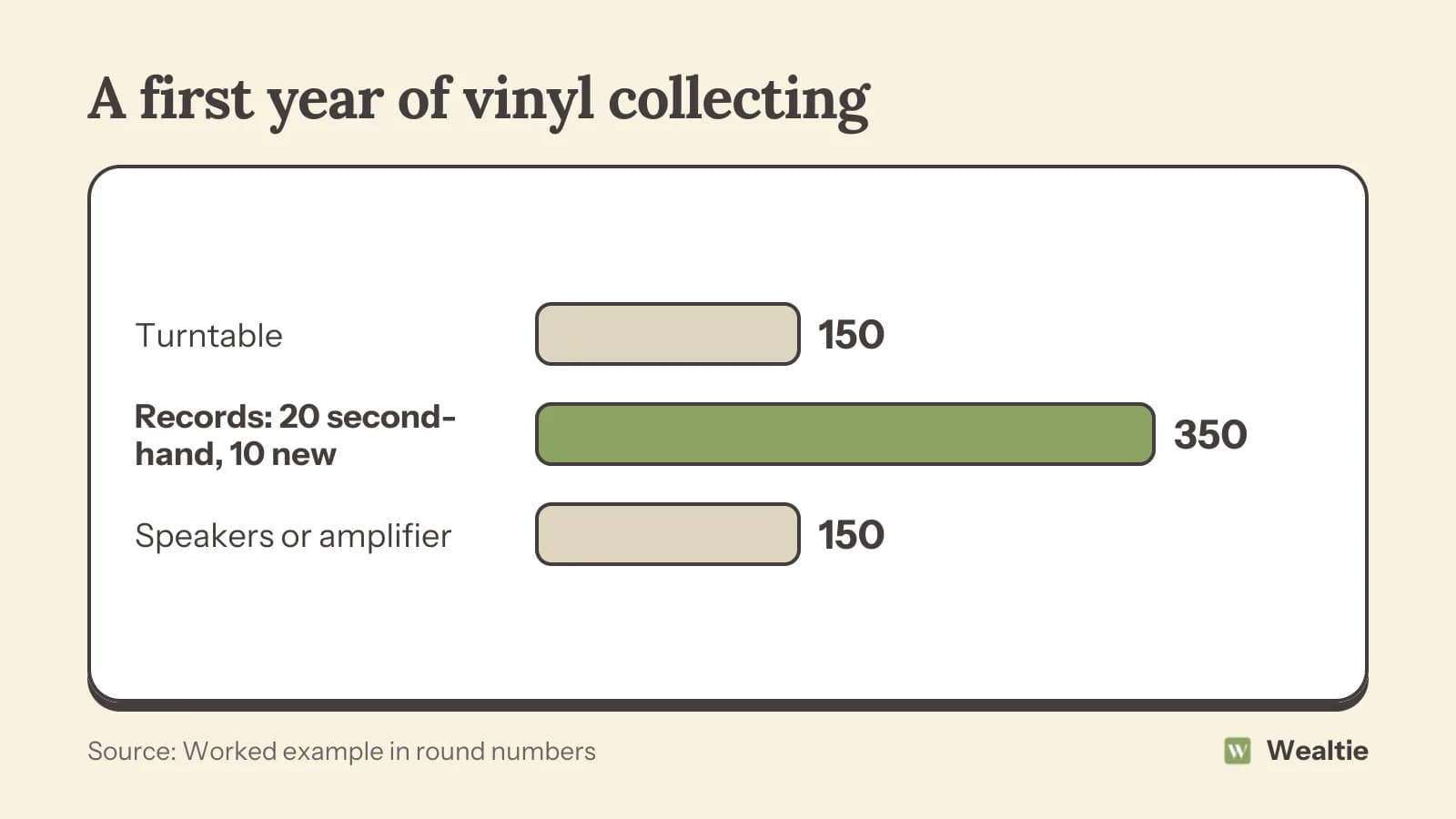
A modest setup costs around 300, and 30 records, mostly second-hand, add 350. After the first year, the main cost is records, which depends entirely on how much you buy.
What equipment do you need to start?
A turntable
Entry-level turntables are fine for most people starting out. Avoid the very cheapest all-in-one players, which can sound poor and wear records faster. A decent, basic turntable from a known brand is a good balance.
Speakers and amplifier
Some turntables have a built-in preamp and can connect to powered speakers. Others need an amplifier. Using speakers or a stereo you already own can save a lot.
A few accessories
A record brush, inner sleeves and somewhere to store records upright keep them in good condition.
How much do records cost?
New records
New pressings, especially special editions and coloured vinyl, can be expensive. Buying a few favourites new and the rest second-hand keeps costs down.
Second-hand records
Charity shops, record fairs, car boot sales and second-hand shops often sell records for much less. Check for scratches and warping before buying.
Rare records
Collecting rare or first pressings can become very expensive. It's easy to get drawn in, so set a limit if you go down this path.
How do you keep a vinyl collection affordable?
Set a monthly record budget
Decide how much you'll spend on records each month, like 30, and stick to it. A budget turns collecting into a planned pleasure rather than impulse buying. How to stop impulse buying has more tips.
Buy what you'll play
Focus on albums you love and will play often, rather than buying to complete a collection. Cost per use is a useful check.
Shop second-hand first
Second-hand shops and fairs offer the best value. Many collectors find the hunt is part of the fun.
Trade and sell
Sell or swap records you no longer play. How to sell things you don't use covers selling online.
Upgrade equipment slowly
Wait until you know you love the hobby before buying expensive equipment. Many people are happy with a modest setup for years.
Is vinyl worth it compared with streaming?
Streaming gives you access to almost all music for a monthly fee, while vinyl means paying for each album. For many collectors, vinyl isn't about saving money but about the experience of owning and playing music. If that's part of the appeal, it can be good value. If you mainly want to listen to lots of music, streaming is cheaper. How to save money on entertainment covers comparing entertainment costs, and how to save money on a hobby covers keeping collecting under control.
Looking after your records protects the money you've spent. Store them upright, away from heat and sunlight, and keep them in inner and outer sleeves. Handle them by the edges, clean them gently before playing and replace a worn stylus when needed, since a damaged stylus can harm your records. Well-kept records can last decades and hold more of their value if you ever sell them.
Record fairs and shops are also great places to meet other collectors. Many share tips on where to find bargains, which pressings are worth paying more for and which aren't. Some shops run swap events or offer store credit for records you no longer want, which helps keep the collection fresh without spending more.
If you're buying records as gifts, a voucher for a local record shop lets the recipient choose something they'll love, which avoids duplicates and makes the gift go further.
Finally, remember that the music matters more than the format. Many collectors keep a streaming subscription for discovering new music and buy records only for albums they love most, which keeps spending focused and the collection meaningful.
How can Wealtie help you track a collection?
Log equipment and records in a hobby expense category, and set a monthly budget for records. Seeing your spending each month makes it easier to enjoy collecting without overspending.
Questions people ask
In a worked example, a first year cost about 650, including a 300 turntable and speaker setup and 30 records.
Yes. Second-hand records often cost much less than new pressings. Check for scratches and warping before buying.
A basic turntable from a known brand is a good start. Avoid the very cheapest all-in-one players, which can sound poor and wear records.
Set a monthly record budget, buy albums you'll play often, shop second-hand and sell or trade records you no longer want.
This article is general information, not financial, tax or legal advice. Your situation is your own; check the numbers that apply to you before you act on them.