Budgeting: How to save money on a hobby without losing the fun
To save money on a hobby, work out what it costs over a year, then buy second-hand, borrow or share equipment, and set a monthly amount you're happy with. Most savings come from the gear you buy and don't use.
 By Wealtie Team · 3 min read
Key takeaways
- Add up a year of spending on your hobby, including kit, fees, travel and extras.
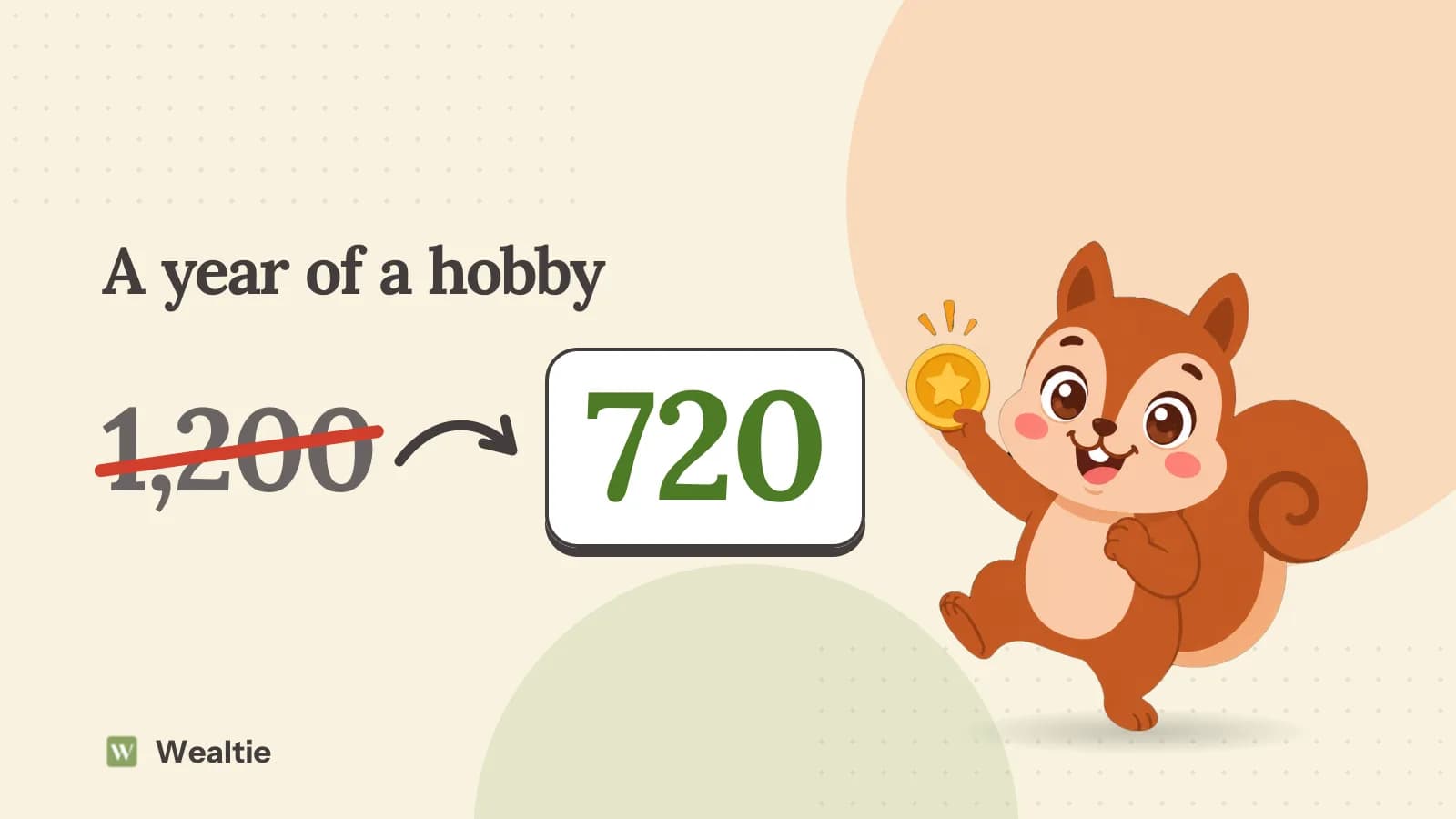
- In a worked example, a hobby costing 1,200 a year drops to 720 with second-hand kit and a monthly limit.
- Unused equipment is often the biggest waste, so rent or borrow before you buy.
- A monthly amount for your hobby keeps it guilt-free and stops it creeping up.
How do you save money on a hobby?
Find out what it costs, then cut the parts that don't add to the enjoyment. Hobbies are worth spending on, since they're a big part of what makes free time good, and cutting one entirely often leads to spending the money somewhere less satisfying. The aim isn't to stop, but to stop paying for things you don't use.
How much does your hobby cost?
Add up a year. Here's a worked example in round numbers that work in any currency:
| Line | Before | After |
|---|---|---|
| Kit and equipment | 600 | 250 |
| Club fees, classes or entry | 300 | 300 |
| Travel | 200 | 120 |
| Extras: magazines, apps, accessories | 100 | 50 |
| Total | 1,200 | 720 |
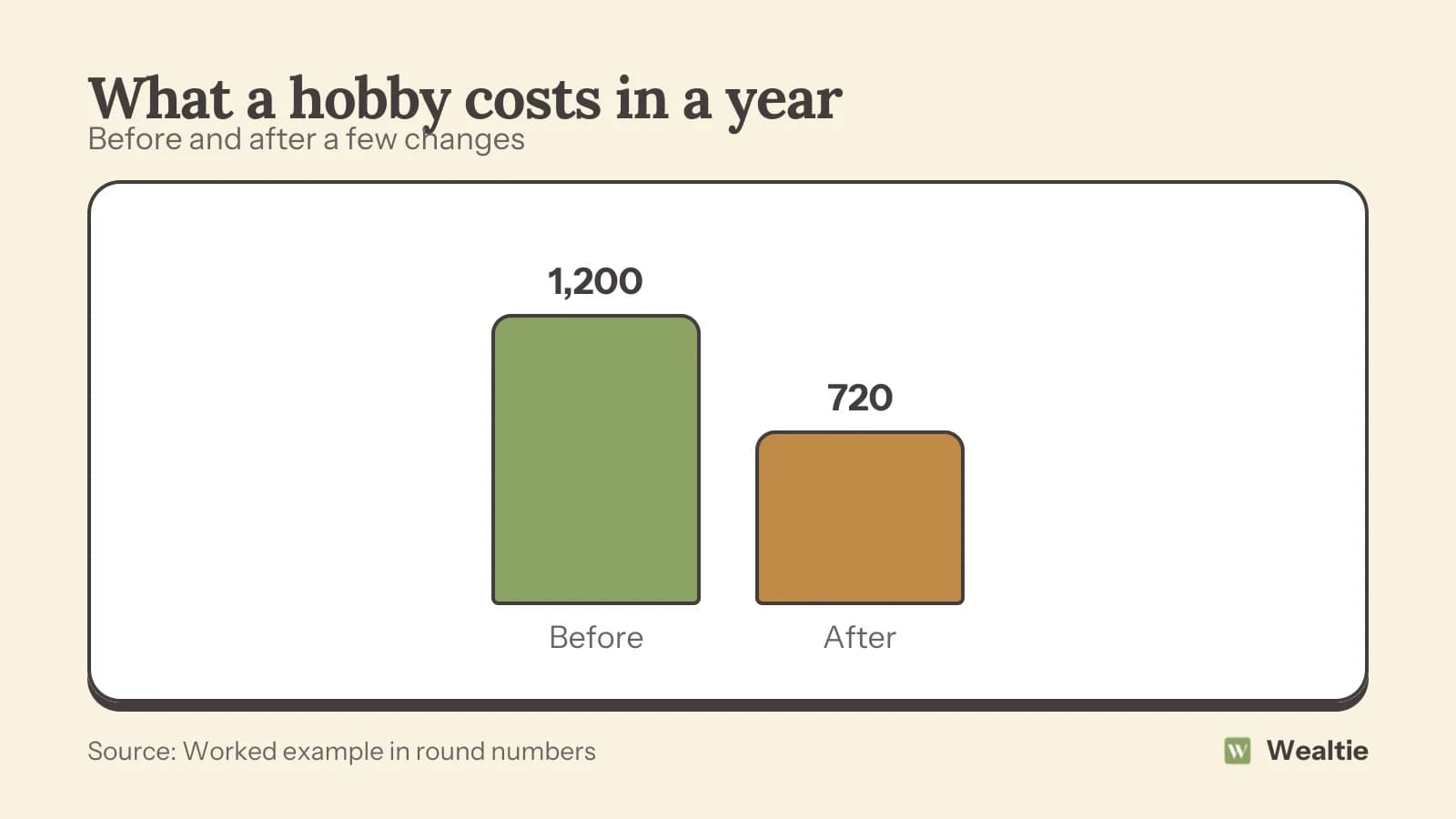
The club fees stayed the same, because that's often the heart of the hobby. The savings came from kit, travel and extras. Include subscriptions to apps or platforms related to the hobby, which are easy to forget, and look at how the cost has changed over a few years, since it often creeps up once you're committed.
Where does the biggest saving come from?
Kit you buy and don't use. New hobbies come with a long list of equipment, and it's tempting to buy the good stuff from the start. Many people then lose interest, or find they prefer a different version of the hobby.
Before buying, try it first. Rent or borrow equipment, take a beginners' class that provides kit, or buy second-hand. If you're still enjoying it after a few months, upgrade the one or two things that make a real difference. Some hobbies, like photography, cycling or gaming, have a constant stream of new gear. Decide in advance what would change your enjoyment, and ignore upgrades that only change numbers on a spec sheet. Online marketplaces, club noticeboards and local selling groups are good places to look. Keep a wish list instead of buying straight away, since after a month many items no longer seem necessary.
How else can you spend less?
A few ideas, depending on the hobby:
- Share equipment with a friend or club, especially big items used occasionally
- Join a club, which can give access to equipment and discounts
- Use the library for books, magazines and sometimes equipment
- Car share to events or practices
- Buy consumables, like paint, yarn or fishing tackle, in larger amounts when they're on offer
- Choose group lessons over one-to-one, and ask about discounts for booking a block
- Look for free community groups related to your hobby, which often share skills and kit
Avoid buying extras just because they appear in your feed. A new accessory is fun for a week, but it rarely changes how much you enjoy the hobby itself, so ask whether you'd still want it next month. How to stop impulse buying has a waiting rule that helps.
Should you set a hobby budget?
Yes. A monthly amount, like 60, gives you freedom to spend on your hobby without guilt, and stops it creeping up. If you want something bigger, like new equipment, save for it from the monthly amount over a few months. If your hobby has a season, set a yearly amount and divide it by the months you're active. Asking for hobby gear as a birthday or holiday gift helps too.
Agree it with your partner if you share finances, so it's not a source of tension. How much spending money per month helps you fit it in.
Can your hobby pay for itself?
Sometimes. Selling things you make, teaching beginners, or selling equipment you've upgraded from can offset some costs. Learning to repair and maintain your own kit saves money and makes it last longer. If you start earning regularly, check whether it counts as income for tax purposes. How to declare side hustle income explains the rules in the US and UK.
What about kit you no longer use?
Sell it. Equipment from hobbies often holds value well, and the money can go toward what you use now. Clear photos, an honest description and a price based on what similar items have sold for usually find a buyer quickly. Selling soon after you stop using something gets a better price, before newer models arrive.
How do you track hobby spending in Wealtie?
Give your hobby its own line in your expense categories, so you can see what it costs over a year. Give it a share of your monthly limit in the budget tracker, and the share fills separately as you spend, so you'll see when you're close to your amount.
Questions people ask
Buy kit second-hand, rent or borrow before buying, share equipment, join a club and set a monthly amount for the hobby.
Whatever fits your budget after bills and savings. A set monthly amount keeps it guilt-free and stops it creeping up.
Usually not straight away. Try it with rented, borrowed or second-hand kit first, and upgrade once you know you'll stick with it.
Sometimes, through selling things you make or teaching. Check whether regular earnings count as taxable income.
This article is general information, not financial, tax or legal advice. Your situation is your own; check the numbers that apply to you before you act on them.