Budgeting: How to save money on entertainment without staying in every night
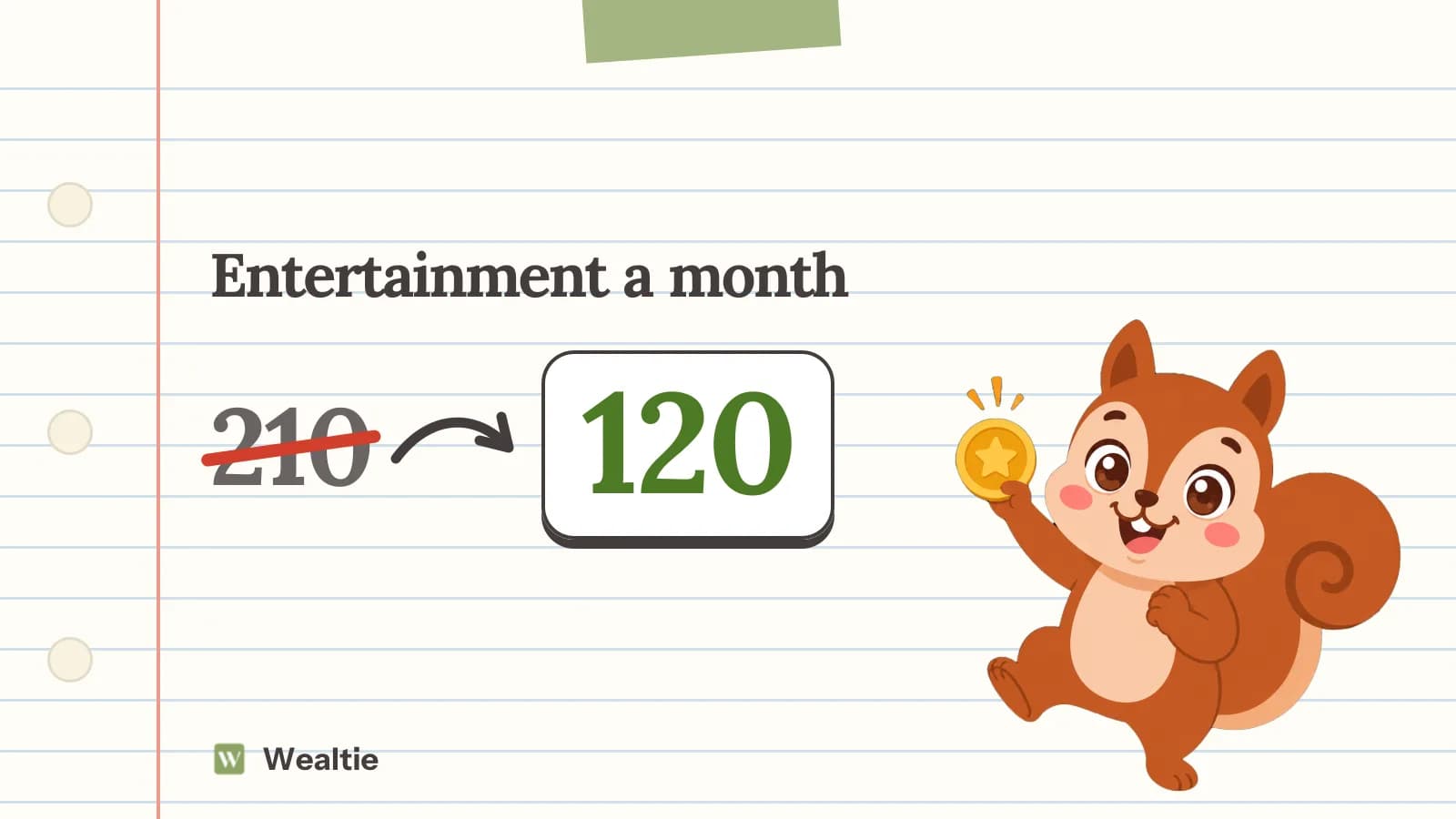
To save money on entertainment, add up streaming, nights out, events and games, cut what you don't use, and look for cheaper ways to do what you enjoy. In a worked example, 210 a month drops to 120 without giving up going out.
 By Wealtie Team · 3 min read
Key takeaways
- Add up a month of entertainment: streaming, nights out, events, games and apps.
- In a worked example, cutting unused subscriptions and choosing cheaper nights out takes 210 a month to 120.
- Rotating streaming services, one or two at a time, can cut subscription costs without losing much.
- Free and low-cost entertainment, like parks, libraries and free events, is easy to overlook.
How do you save money on entertainment?
Find out what you spend, cut what you don't enjoy, and find cheaper ways to do what you do. Entertainment is one of the easiest areas to overspend without noticing, because it's spread across many small payments: a subscription here, a round of drinks there, a game, a ticket. The aim isn't to stop having fun, but to stop paying for fun you're not having. Most people find that a few changes cover most of the saving, and the things they enjoy most stay exactly as they were.
How much do you spend on entertainment?
Look at a month of bank and card statements, and a second month if the first was unusual. Birthdays, holidays and one-off concerts can make a single month look higher than normal, so an average gives a fairer starting point. Some entertainment hides in other places, like food at the cinema or taxis home, so include those. Here's a worked example in round numbers that work in any currency:
| Item | Before | After |
|---|---|---|
| Streaming and subscriptions | 45 | 20 |
| Nights out | 100 | 60 |
| Events and tickets | 40 | 30 |
| Games and apps | 25 | 10 |
| Total | 210 | 120 |
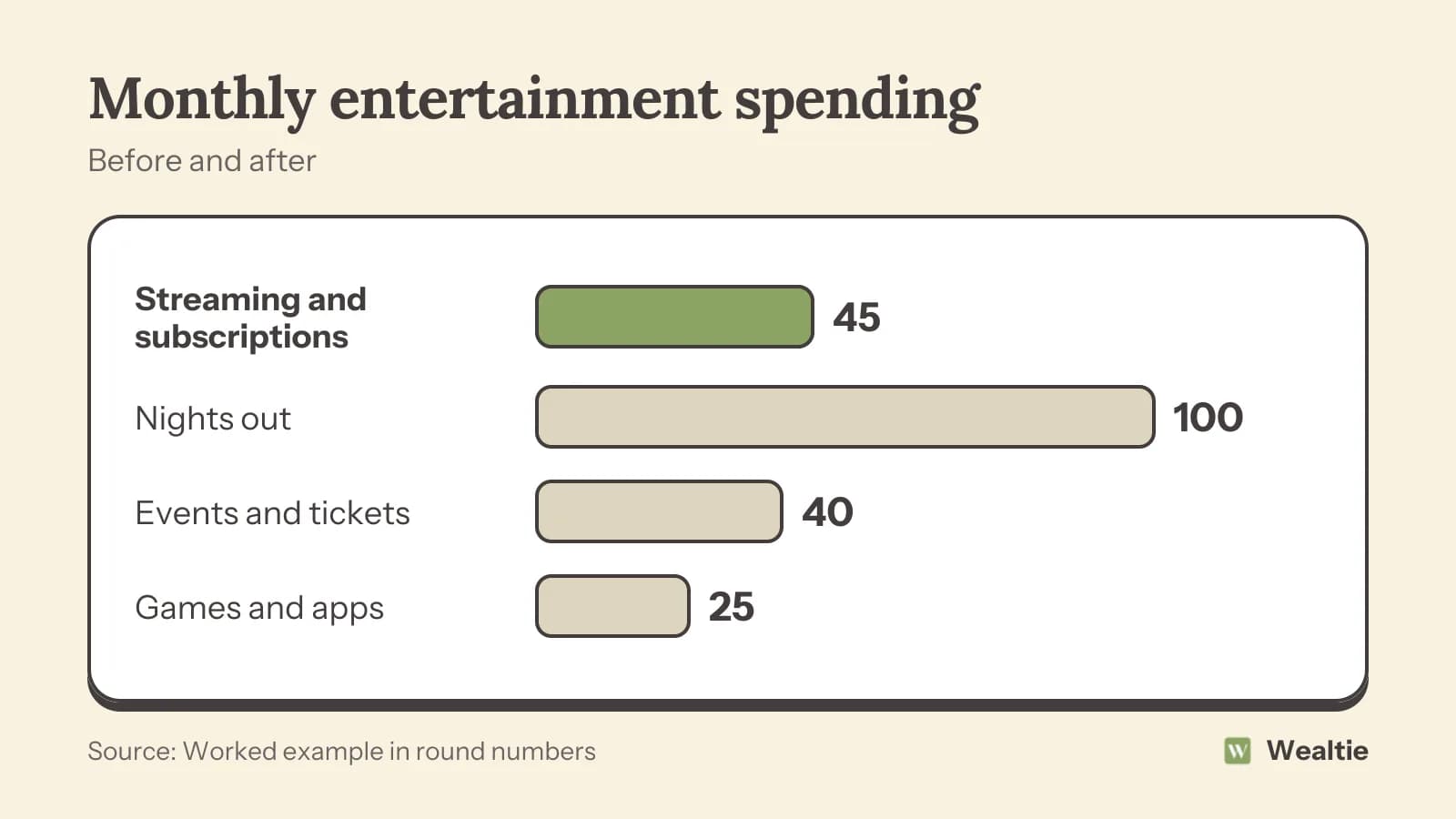
That's 90 a month, or over 1,000 a year, and the person in this example still goes out regularly.
How do you cut streaming costs?
Keep one or two services at a time and rotate. Subscribe to one for a month or two, watch what you want, then cancel and switch to another. Most services let you cancel any time, and you won't miss much while you're on a different one.
Check which ones you've used in the last month. Any you haven't opened can go. Look out for price rises, which are common, and for subscriptions billed annually that are easy to forget. How to cut subscription costs has a quick method. Shared family plans can be cheaper per person if everyone uses them.
How do you spend less on nights out?
Change the format, not the company. A few ideas:
- Eat before you go out, so you're not buying expensive food late
- Meet for drinks earlier, when happy hours or set menus are cheaper
- Host a night in with friends, taking turns, with everyone bringing something
- Set a cash amount for the night and leave the card at home
- Agree to buy your own drinks instead of rounds in a large group
Rounds can be expensive in a group, because you end up buying more drinks than you'd have on your own.
How do you say no without missing out?
Suggest an alternative instead of a flat no. "I can't do dinner this week, but I'd love a walk on Sunday" keeps you in touch without the cost. Most friends are happy to adjust, and some will be relieved. If a group plan is too expensive, join for part of it, like the drinks but not the dinner. Over time, friends get used to you suggesting cheaper plans, and many start doing the same.
How do you save on events and tickets?
Book early, look for off-peak or weekday performances, and check for cheaper seats or standby tickets. Many venues offer discounts for students, young people or local residents. Free events, like outdoor concerts, festivals, talks and open days, are common, especially in summer.
Volunteering at festivals or events often gives free entry in exchange for a few hours' help. Only buy tickets for things you're sure you'll go to. Unused tickets are entertainment you paid for and didn't get.
What about games and apps?
In-app purchases and new releases add up. Wait for sales on games, which come round often, and set a monthly limit for in-app spending. Check your app store subscriptions for anything you're still paying for and no longer use. Turn off one-click purchases if they're tempting. Older games and free-to-play titles can offer a lot of entertainment for little.
What free entertainment is there?
More than people think: parks, walks, libraries with free books, films and events, free museums and galleries, community events, board games with friends, and outdoor sports. Many cities have free events listed online each week, and libraries often lend board games and films. Mixing free and paid activities keeps entertainment varied and affordable.
How do you track entertainment in Wealtie?
Give entertainment its own line in your expense categories, and a share of your monthly limit in the budget tracker, so you can see when it's close to your amount. Subscriptions can be set up as recurring transactions, so they log themselves and you see what's due next.
Questions people ask
Track a month of spending, cut subscriptions you don't use, rotate streaming services, choose cheaper nights out and mix in free activities.
Keep one or two at a time and rotate them, cancelling any you haven't used in the last month.
Eat before you go, go earlier for happy hours, host nights in, set a cash amount and avoid rounds in large groups.
Parks, walks, libraries, free museums, community events, board games with friends and outdoor sports.
This article is general information, not financial, tax or legal advice. Your situation is your own; check the numbers that apply to you before you act on them.