Budgeting: The cost of triathlon: a first-race budget
The cost of triathlon can be modest for a first sprint race if you use the bike and kit you already have. In a worked example, a first triathlon costs 400, against 2,500 for someone who buys a new bike and wetsuit.
 By Wealtie Team · 3 min read

Key takeaways
- The cost of triathlon can be low for a first race using kit you already have.
- Bikes and wetsuits are the biggest costs, and both can be borrowed or rented.
- Entry fees, pool access and travel add up over a season.
- Upgrade gear only once you know you'll keep racing.
What is the cost of triathlon?
A triathlon combines swimming, cycling and running in one race, and many people take on a short sprint triathlon as a fitness goal. It has a reputation as an expensive sport, mainly because of carbon bikes, wetsuits and gadgets. But the cost of triathlon for a first race can be quite modest if you use the bike and kit you already have and borrow or rent the rest.
Here's a worked example of a first sprint triathlon, in round numbers that work in any currency:
| Approach | Cost |
|---|---|
| Use your own bike, rent a wetsuit | 400 |
| Buy road bike, wetsuit and kit | 2,500 |
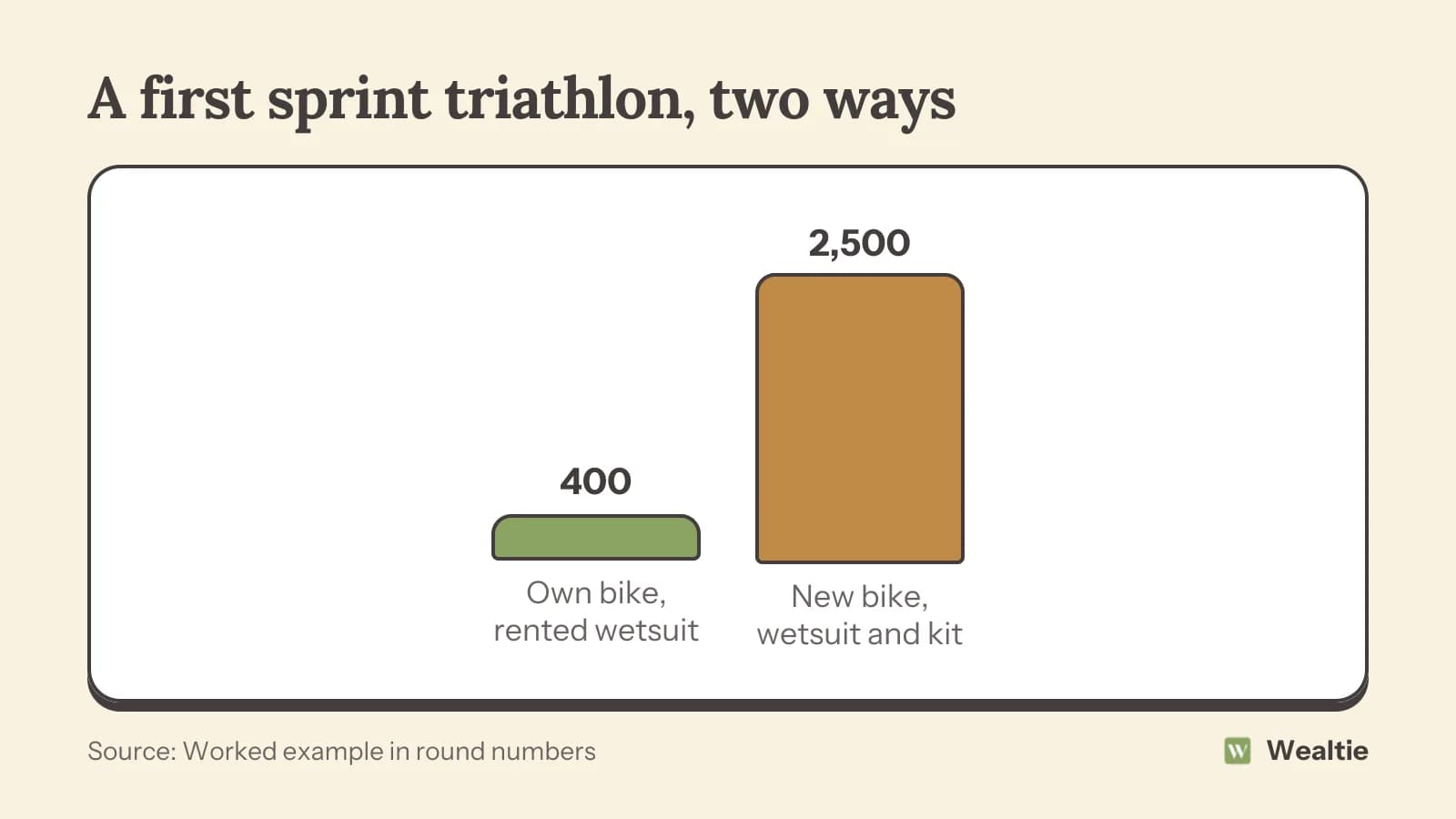
The lower figure covers an entry fee of 80, wetsuit rental, a tri suit, a bike service, pool sessions and travel. The higher figure includes a new road bike, a wetsuit, cycling shoes and pedals. Both get you to the same finish line.
What does a first triathlon cost?
Entry fee
Sprint triathlons usually have modest entry fees, while longer races cost more. Pool-based races are often cheaper and good for beginners.
Swimming
You'll need goggles and swimwear, plus pool access for training. Open-water races usually require a wetsuit, which you can rent for a season.
Cycling
Any roadworthy bike with working brakes and a helmet is allowed in most beginner races. A service before race day is a good idea. The cost of cycling covers running a bike.
Running
Comfortable running shoes are the main cost. Many people already own a pair.
Clothing
A tri suit can be worn for all three parts, but many beginners race in swimwear with shorts and a top pulled on afterwards.
Training
Pool entry, a club membership or a training plan add to the cost. Many free plans are available online.
Where can you save money?
Use the bike you have
A mountain bike or hybrid is slower than a road bike, but it's perfectly fine for a first race. Buy a road bike only if you know you'll keep racing.
Rent or borrow a wetsuit
Season-long wetsuit rental costs much less than buying, and many clubs and shops offer it.
Choose a pool-based race
Pool triathlons don't need a wetsuit and are often cheaper to enter.
Join a club
Triathlon clubs often offer coached sessions, discounted pool time and advice, and members sell used kit. How to save money on sports kit has more ideas.
Buy second-hand
Bikes, wetsuits and tri suits are often sold second-hand by people upgrading or leaving the sport.
Skip the gadgets
Power meters, aero helmets and expensive watches can wait. They make little difference to a first race.
What does a season of racing cost?
If you enjoy your first race, costs can rise as you enter more events, travel further and upgrade gear. Setting a yearly budget for races and equipment keeps the hobby affordable. The marathon budget covers a similar approach for running events, and how to save money on a hobby covers avoiding gear creep.
How do you budget for it?
Decide how much you'll spend on your first race and save for it over the training period. If you're planning to buy a bike, wait until after your first race, when you'll know what kind of riding you enjoy. How to save money on a gym membership covers keeping training costs down if you use a gym for swimming or strength work.
Training doesn't have to cost much either. Running is free once you have shoes, cycling uses roads and paths you already have, and swimming can be done in a public pool for a modest fee. Many beginners follow a free training plan for a sprint distance over eight to twelve weeks, fitting sessions around work and family. The biggest commitment is time, not money.
Practising transitions, the changes between swimming, cycling and running, is free and can save more time on race day than expensive gear. Laying out your kit at home and practising quick changes is an easy win.
If you have a partner or friend interested in triathlon, training and racing together can make it more fun and cheaper, since you can share lifts to races, swap kit and split the cost of a coach or club sessions.
After your first race, take a moment to decide what you enjoyed most and what was hardest. That tells you where spending would make the biggest difference, whether that's a better bike, swimming lessons or a good pair of running shoes.
How can Wealtie help you track race costs?
Log entry fees, kit and training in a sport expense category, and set a budget for your race season. Seeing the total helps you choose which upgrades are worth it.
Questions people ask
In a worked example, a first sprint triathlon cost about 400 using an existing bike and a rented wetsuit, or 2,500 with new gear.
No. Most beginner races allow any roadworthy bike with working brakes and a helmet, including mountain bikes and hybrids.
Open-water races usually require one, but you can rent one for a season. Pool-based races don't need a wetsuit.
Use your own bike, rent a wetsuit, choose a pool race, join a club, buy second-hand and skip expensive gadgets.
This article is general information, not financial, tax or legal advice. Your situation is your own; check the numbers that apply to you before you act on them.