Budgeting: How much does cycling cost? Bike, kit and upkeep
The answer to how much does cycling cost depends mostly on the bike you buy, plus safety kit, maintenance and insurance. In a worked example, a second-hand bike and basic kit cost about 400 to start and about 150 a year to keep running, far less than most other ways to get around or keep fit.
 By Wealtie Team · 3 min read

Key takeaways
- How much cycling costs depends mostly on the bike, plus safety kit, maintenance and insurance.
- In a worked example, starting costs about 400 and upkeep about 150 a year.
- A good second-hand bike, checked over by a mechanic, is often the best value.
- Regular basic maintenance prevents bigger repair bills later.
How much does cycling cost?
Less than most ways of getting around, once you're set up. A bike can last for many years with simple care, and riding it costs nothing in fuel or fares. The main costs are buying the bike, safety kit, maintenance and, for some people, insurance. Whether you cycle to work, for fitness or for fun, knowing these costs helps you choose a bike and a budget.
What does it cost to start cycling?
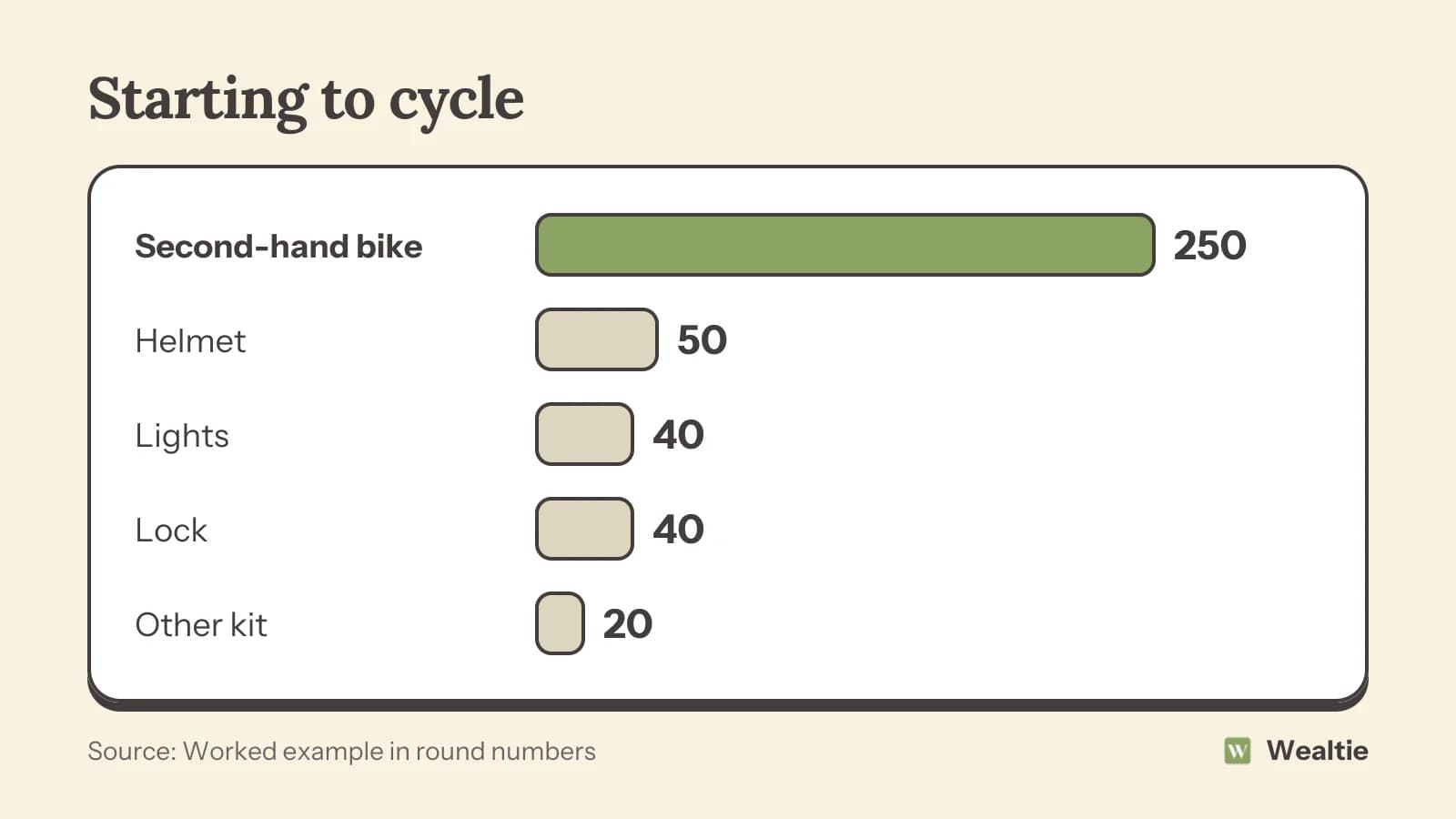
Here's a worked example for a second-hand bike and basic kit, in round numbers that work in any currency:
| Item | Amount |
|---|---|
| Second-hand bike | 250 |
| Helmet | 50 |
| Lights | 40 |
| Lock | 40 |
| Other kit, like a pump and repair kit | 20 |
| Total | 400 |
A new bike can cost much more, especially for road, electric or specialist bikes. A simple bike for short trips can cost less. Spend more on the lock if you'll leave the bike in public places, since a cheap lock is easy to break.
Should you buy a new or second-hand bike?
A good second-hand bike is often the best value. Bikes are built to last, and many are sold when people move, upgrade or stop riding. Look for a bike in the right size, with a straight frame, wheels that spin true and brakes that work well. Having a bike mechanic check it over costs little and can spot problems early. Test ride before you buy, checking that gears change smoothly and nothing rattles or rubs.
Buy only from sellers you trust, and ask for proof of purchase if you can, since stolen bikes are sometimes sold on. How to buy second-hand has more tips.
Buying new
If you buy new, a local bike shop can help you choose the right size and type, and often includes a free first service. Last year's models are frequently discounted. Some employers offer schemes that help spread the cost of a bike for commuting, so ask at work.
What does it cost to keep a bike running?
Here's a worked example of yearly upkeep:
| Cost | Amount |
|---|---|
| Tyres and inner tubes | 50 |
| Chain, brake pads and small parts | 50 |
| Yearly service | 50 |
| Total | 150 |
Your costs depend on how much you ride and in what conditions. Riding every day in wet weather wears parts faster.
Learn basic maintenance
Fixing a puncture, cleaning and oiling the chain and adjusting brakes are simple skills that save money. Many bike shops and community groups run low-cost maintenance classes. Looking after your bike regularly prevents small problems turning into bigger repair bills.
Do you need bike insurance?
It depends on the value of your bike and where you keep it. Bike theft is common in many places, and a good lock is your first defence. Some home insurance policies cover bikes, sometimes only at home or up to a certain value, so check yours first. Specialist bike insurance can cover theft away from home and damage. Which insurance do you need helps you decide what's worth paying for. Registering your bike's frame number with a bike register, where one exists, can help it get back to you if it's stolen and found.
How much can cycling save?
If it replaces other transport, quite a lot. In a worked example, someone who cycles to work instead of taking a bus that costs 60 a month saves 720 a year, which covers the starting cost of a second-hand bike and kit within months. It can also replace a gym membership for some people. How to cut commuting costs covers other ways to spend less getting to work.
Clothing
You don't need special clothing to start. Comfortable clothes, a waterproof jacket and something bright or reflective for dark evenings are enough for most riding. Padded shorts and cycling-specific clothing become useful for longer rides, and much of it can be found second-hand or in sales.
How do you cycle for less?
Keep it simple. Choose a bike that suits how you'll ride, not the most expensive one. Buy second-hand where you can, learn basic repairs and look after your bike. Spend on the things that matter for safety, like a helmet, lights and good brakes, and keep everything else basic. How to save money on a hobby has more ideas.
Electric bikes
Electric bikes cost more to buy and need battery care, but they make longer commutes and hills much easier. If one lets you replace car trips, the savings on fuel and parking can cover the extra cost over time. Charging costs very little compared with fuel.
How do you track cycling costs in Wealtie?
Give cycling its own line in your expense categories, so the bike, kit and repairs add up in one place. If cycling replaces bus or train fares, comparing that category over a few months shows how much you're saving. A monthly limit in the budget tracker keeps upgrades within your plan.
Questions people ask
In a worked example, a second-hand bike and basic kit cost about 400, including a helmet, lights and a lock.
In a worked example, about 150 for tyres, tubes, chain, brake pads and a yearly service.
Often, yes. Check the size, frame, wheels and brakes, and have a mechanic look it over.
Yes, if it replaces other transport. Swapping a 60 monthly bus pass for a bike saves 720 a year.
This article is general information, not financial, tax or legal advice. Your situation is your own; check the numbers that apply to you before you act on them.