Budgeting: How much does it cost to run a marathon?
The cost to run a marathon includes the entry fee, running shoes and kit, training costs, and often travel and a place to stay. In a worked example, a marathon in another city costs about 600 from first training run to finish line, and planning early keeps it affordable.
 By Wealtie Team · 3 min read
Key takeaways
- The cost to run a marathon includes entry, shoes, kit, training costs, travel and a place to stay.
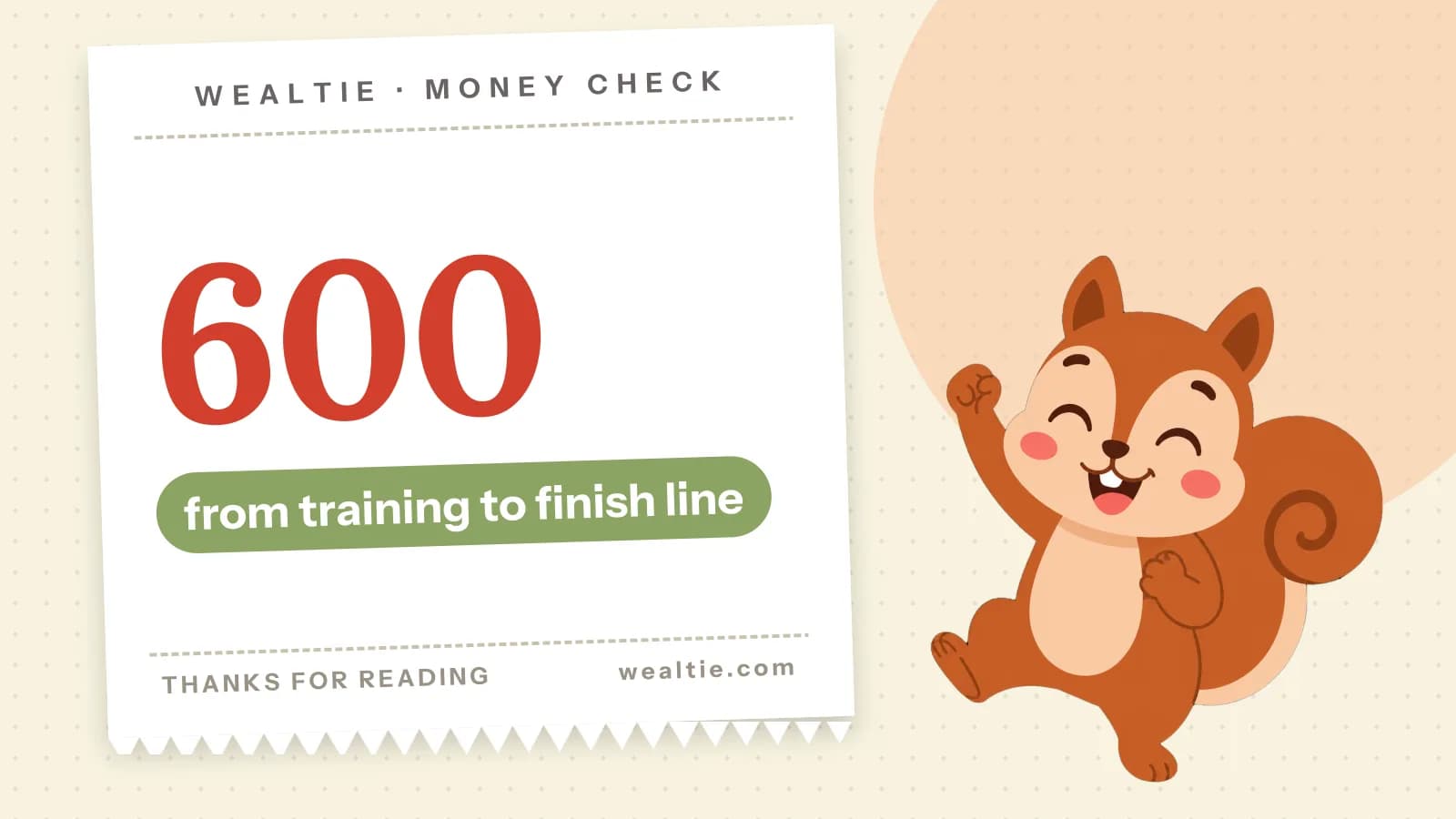
- In a worked example, a marathon in another city costs about 600.
- Shoes are worth spending on, while much of the other kit can be basic or second-hand.
- Charity places may need a fundraising target, so check the commitment before signing up.
What is the cost to run a marathon?
More than the entry fee. Running is often seen as a cheap sport, and for everyday runs it is. But training for and running a marathon brings its own costs: the entry fee, good shoes, kit for months of training, fuel for long runs, and often travel and a place to stay on race weekend. Planning the full cost early means you can focus on the training.
What does a marathon cost?
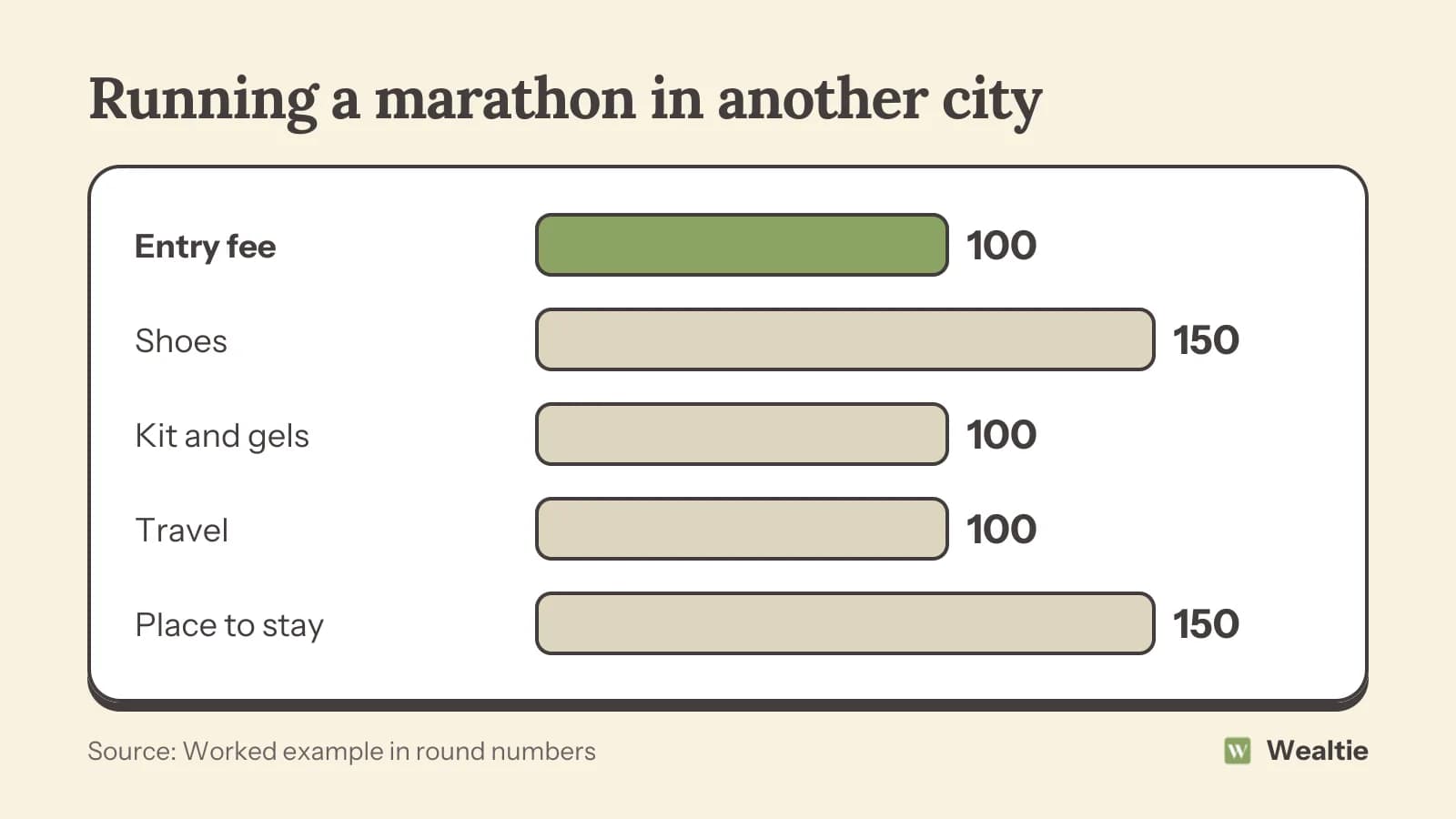
Here's a worked example for a marathon in another city, in round numbers that work in any currency:
| Cost | Amount |
|---|---|
| Entry fee | 100 |
| Running shoes | 150 |
| Kit, gels and training extras | 100 |
| Travel | 100 |
| Place to stay | 150 |
| Total | 600 |
A local marathon you can travel to on the day costs much less. A race abroad, with flights and several nights away, costs much more.
How much are marathon entry fees?
They vary a lot by race. Big city marathons often cost more and may use a ballot, where you apply and hope for a place. Smaller local races are often cheaper and easier to enter. Entering early sometimes gets a lower price, and some races offer discounts for club members. If you get a place but can't run, check the transfer or deferral policy, since some races let you move your entry to the next year for a small fee.
Charity places
Many big races offer guaranteed places through charities. These often have a lower entry fee or none at all, but come with a fundraising target you agree to meet. Check the target and what happens if you don't reach it before signing up. Raising money for a cause you care about is rewarding, but it's a real commitment alongside training.
How much should you spend on shoes?
Shoes are the one thing worth spending on. Good running shoes that suit your feet and running style help prevent injuries over months of training. Many running shops offer a gait check to help you choose. Over a full training block, you may need a second pair, since shoes wear out with high mileage. Rotating two pairs can make each one last longer.
Buying last season's model of a shoe you know suits you is a good way to save. Once you know your size and style, you can often find it for much less.
What other kit do you need?
Less than shops suggest. For training, you need comfortable running clothes, a few pairs of good socks and something reflective for dark runs. Gels or snacks for long runs and a way to carry water become useful as distances grow. A running watch is nice to have but not essential, since free phone apps track distance and pace. Test your race-day kit in training, and avoid buying new clothes at the race expo.
Much running kit can be basic, second-hand or already in your wardrobe. How to save money on a hobby has more ideas for spending less on gear.
Training costs
Running itself is free, but some runners add costs like a running club, a coach, sports massage or physio. A club can be good value, offering group runs, advice and motivation for a small yearly fee. Many areas also have free weekly timed runs, which are a great way to train with others. If you have a gym membership for cross-training, how to save money on a gym membership covers getting the most from it.
How do you save on race weekend?
Book early. Places to stay near big races fill up and get expensive quickly, so book as soon as you have your place, ideally with free cancellation. Staying a little further out and travelling in on public transport can save a lot. Sharing a room or a holiday rental with other runners helps too. Bring your own breakfast and race fuel, rather than buying near the start. Plan your post-race meal and journey home too, since you'll be tired and tempted to pay for convenience.
How do you save for a marathon?
Divide the full cost by the months until race day and set that aside each month. A 600 marathon saved over six months is 100 a month. Since training usually takes several months, saving alongside it works naturally. A sinking fund keeps the money separate until you need it.
How do you track marathon costs in Wealtie?
Give running its own line in your expense categories, so entry, shoes, kit and travel add up in one place. Add a savings account for race weekend and move money into it each month as a transfer, which isn't counted as spending. A monthly limit in the budget tracker keeps training costs within your plan.
Questions people ask
In a worked example, a marathon in another city costs about 600, covering entry, shoes, kit, travel and a place to stay.
It varies by race. Big city marathons often cost more than smaller local races, and charity places may have no fee but a fundraising target.
Enough for a good pair that suits your feet, since they help prevent injury. Last season's model can save money.
Choose a local race, buy last season's shoes, keep other kit basic and book race weekend travel and rooms early.
This article is general information, not financial, tax or legal advice. Your situation is your own; check the numbers that apply to you before you act on them.