Budgeting: How to save money on a gym membership, or decide you don't need one
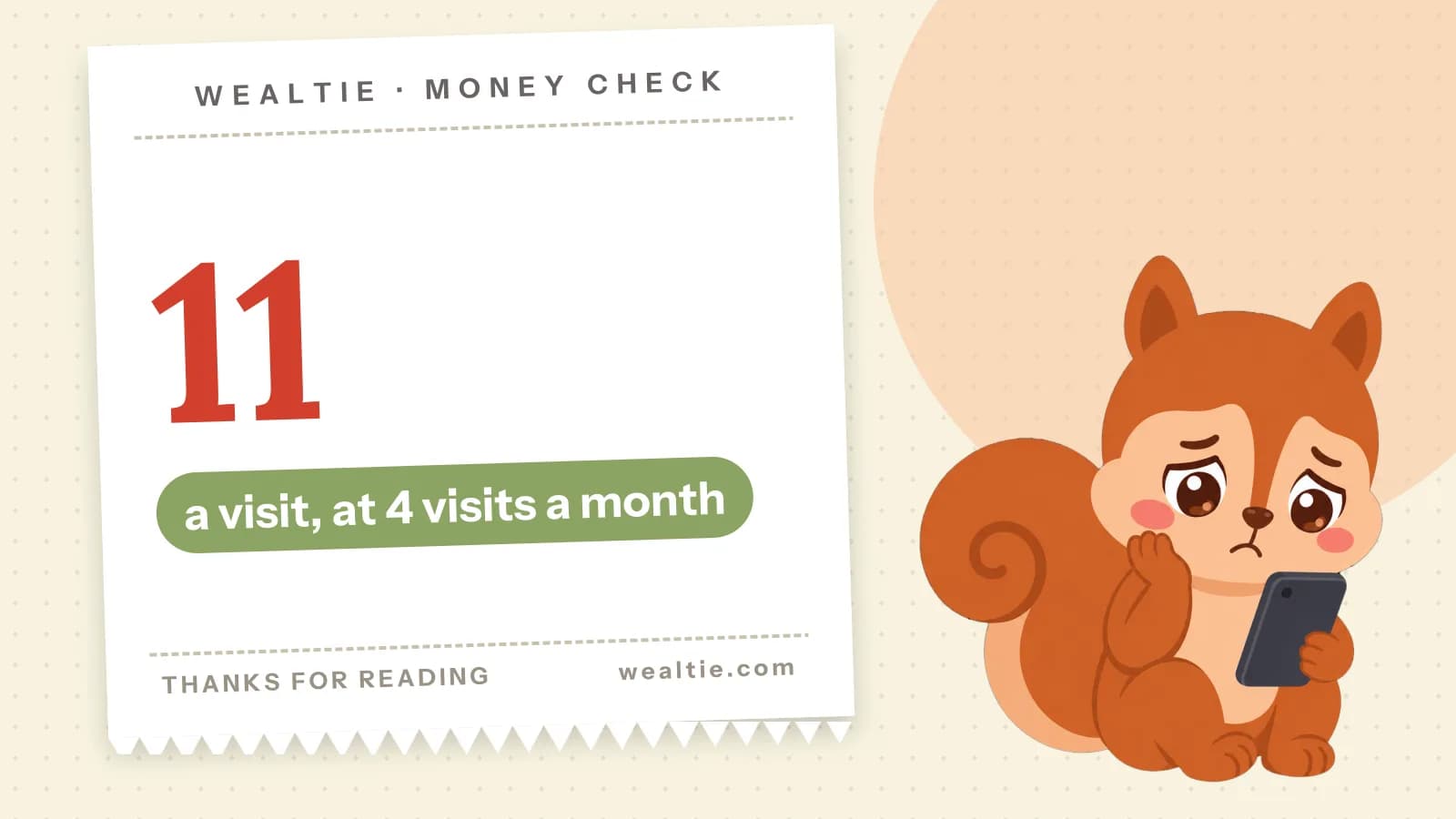
To save money on a gym membership, work out your cost per visit, then compare it with cheaper options like off-peak plans, budget gyms or pay-as-you-go. At 45 a month and four visits, that's about 11 a visit.
 By Wealtie Team · 3 min read
Key takeaways
- Work out your cost per visit by dividing the monthly fee by how often you go.
- At 45 a month, four visits cost about 11 each, while twelve visits cost under 4.
- Off-peak plans, budget gyms, pay-as-you-go passes and free options can all cost less.
- Read the contract before cancelling, since notice periods and fees vary.
How do you save money on a gym membership?
Start by working out what each visit costs you. A membership that seems reasonable per month can be expensive per visit if you go less than you planned, which happens to most people at some point. Once you know the real cost, you can decide whether to keep it, change it or replace it. Gym memberships are easy to forget about, partly because the payment's the same every month.
What does each visit cost?
Divide the monthly fee by the visits. In round numbers that work in any currency, at 45 a month:
| Visits a month | Cost per visit |
|---|---|
| 4 | 11.25 |
| 8 | 5.63 |
| 12 | 3.75 |
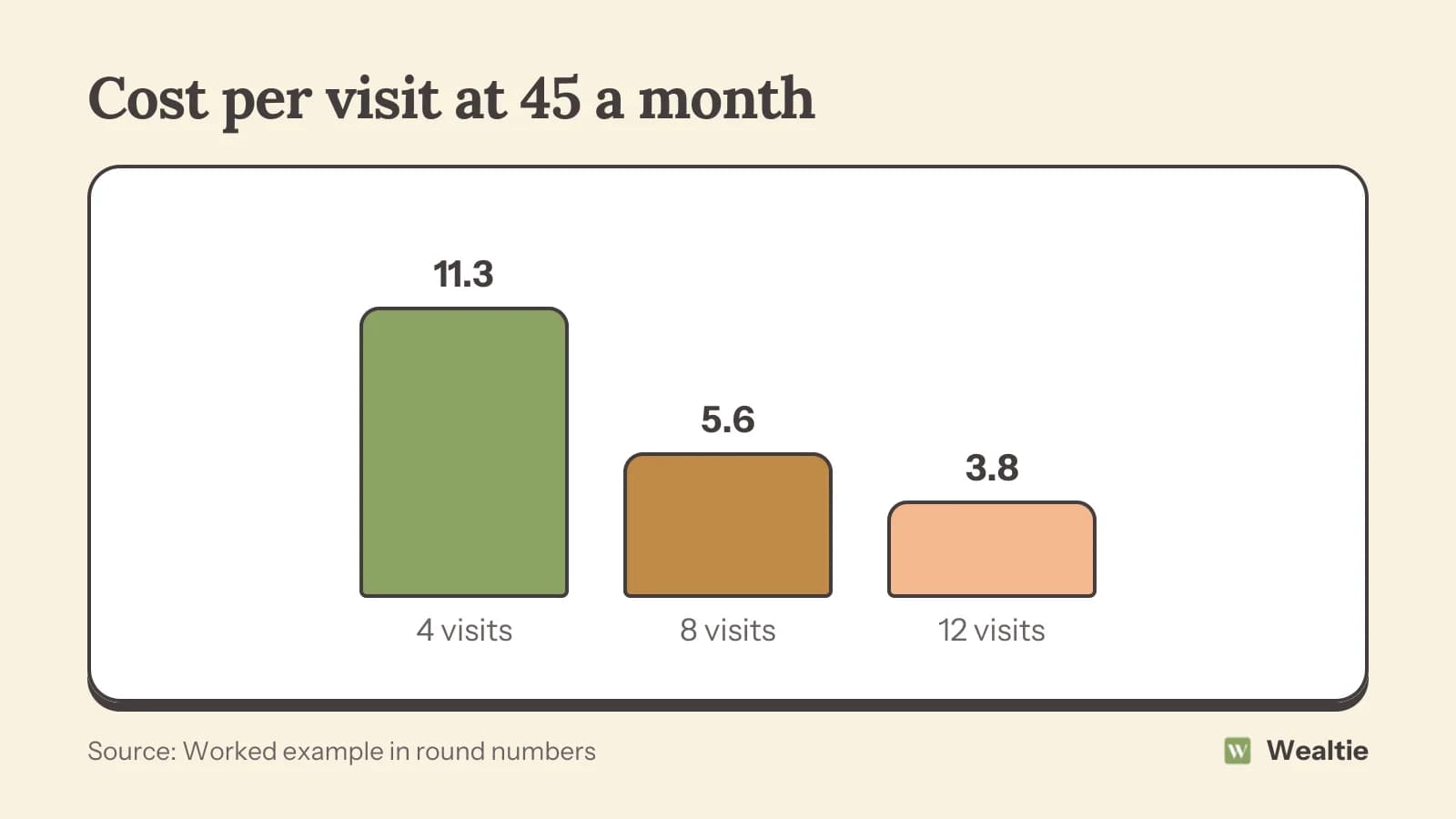
If you go more in winter and less in summer, look at the yearly average instead of one month. Check your real number from the last two or three months. Many gyms show your check-ins in their app. If it's lower than you'd like, that's the figure to compare with other options. Cost per use explains the method.
What are the cheaper options?
Several, depending on how you train:
- Off-peak membership: cheaper if you can go during quieter hours
- Budget gyms: fewer extras, lower prices, often no contract
- Pay-as-you-go: day passes or class packs if you go irregularly
- Workplace or insurance discounts: some employers and insurers offer cheaper memberships
- Free options: running, cycling, outdoor gyms in parks, and workout videos at home
Try a budget gym or a class pack for a month before cancelling your current gym, so you know it suits you. A few pieces of kit and a regular time at home can cover a lot of training for the cost of a month or two's membership. If you mostly use the weights or the treadmill, a budget gym may give you everything you need. If you go for one particular class, a class pack might cost less than a full membership.
Can you negotiate the price?
Often, yes, especially when you're joining or about to cancel. Ask whether there's a joining offer, a discount for paying yearly, or a cheaper rate for off-peak use. When you give notice, the gym might offer a lower price to keep you. If it's a price you'd be happy with, take it.
Many gyms waive their joining fee at certain times of year, so timing can matter. Paying yearly can be cheaper, but only if you're confident you'll keep going. Annual or monthly subscription shows how to work out the break-even.
Should you freeze or cancel?
Freeze it if you'll be away or injured for a while, if the gym allows it. Some charge a small fee to freeze, which is usually much less than the full fee.
If you signed up on a free trial, put the end date in your calendar the day you join. Cancel if you haven't gone in a month or two and don't expect to start again. Check the contract first: notice periods, minimum terms and cancellation fees vary. Give notice in the way the contract says, keep a record, and check your bank statement afterwards to make sure the payments have stopped.
How do you get your money's worth if you keep it?
Go more often. A fixed time in your calendar, a friend to train with, or a class you enjoy all help. If your gym doesn't show visits, keep a tally in a note for a month. Use the extras you're paying for, like classes, a pool or sauna, if they're included.
If you're paying for a premium tier with facilities you never use, ask to move to a cheaper one. Most gyms let you change tier with a month's notice.
What about other fitness costs?
Kit, supplements, classes, apps and personal training can add up to more than the membership. Give fitness a monthly limit and include all of it. Expensive equipment doesn't make you go more often, so start with the basics, and look second-hand, since many people buy weights and stop using them.
How do you track a gym membership in Wealtie?
Set it up as a monthly recurring transaction with the bill tracker, so it logs itself on the due date. If you freeze it, pause the rule, and it logs nothing while it's off. If the price changes, edit it, and later payments use the new amount. Logging fitness costs together in your expense categories shows what keeping fit costs you each month.
Questions people ask
Divide the monthly fee by your visits. At 45 a month and four visits, that's about 11 a visit, which you can compare with a pay-as-you-go option.
Try off-peak plans, budget gyms, workplace or insurance discounts, or ask for a better rate when joining or giving notice.
Freeze it if you'll be away or injured for a while, and cancel if you haven't gone in a month or two. Check the contract's notice period first.
Often, but only if you're sure you'll keep going all year. Work out the break-even month first.
This article is general information, not financial, tax or legal advice. Your situation is your own; check the numbers that apply to you before you act on them.