Saving: How to save money on sports kit and equipment
To save money on sports kit, try a sport before buying much, look for second-hand and last season's gear, and spend more only on items that affect safety or comfort. In a worked example, starting a new sport costs about 300 in new kit, against about 120 with second-hand and borrowed gear.
 By Wealtie Team · 3 min read

Key takeaways
- To save money on sports kit, try the sport before buying much equipment.
- In a worked example, starting a sport costs about 300 new, against about 120 second-hand and borrowed.
- Spend more on items that affect safety or comfort, like shoes and helmets.
- Children outgrow kit quickly, so swaps and second-hand gear make the most sense.
How do you save money on sports kit?
Try before you buy, buy second-hand where you can and spend more only where it matters. Starting a new sport, or keeping children kitted out for theirs, can mean a long list of gear: clothing, shoes, bags, protective equipment and specialist items. Shops and adverts make it easy to believe you need the best gear to start, but most beginners don't. Much of it can be found for far less than full price, and some isn't needed at all when you're starting out. Asking a coach or club what beginners need, rather than following shop displays, avoids buying extras.
How much can you save?
Here's a worked example of starting a new sport, in round numbers that work in any currency:
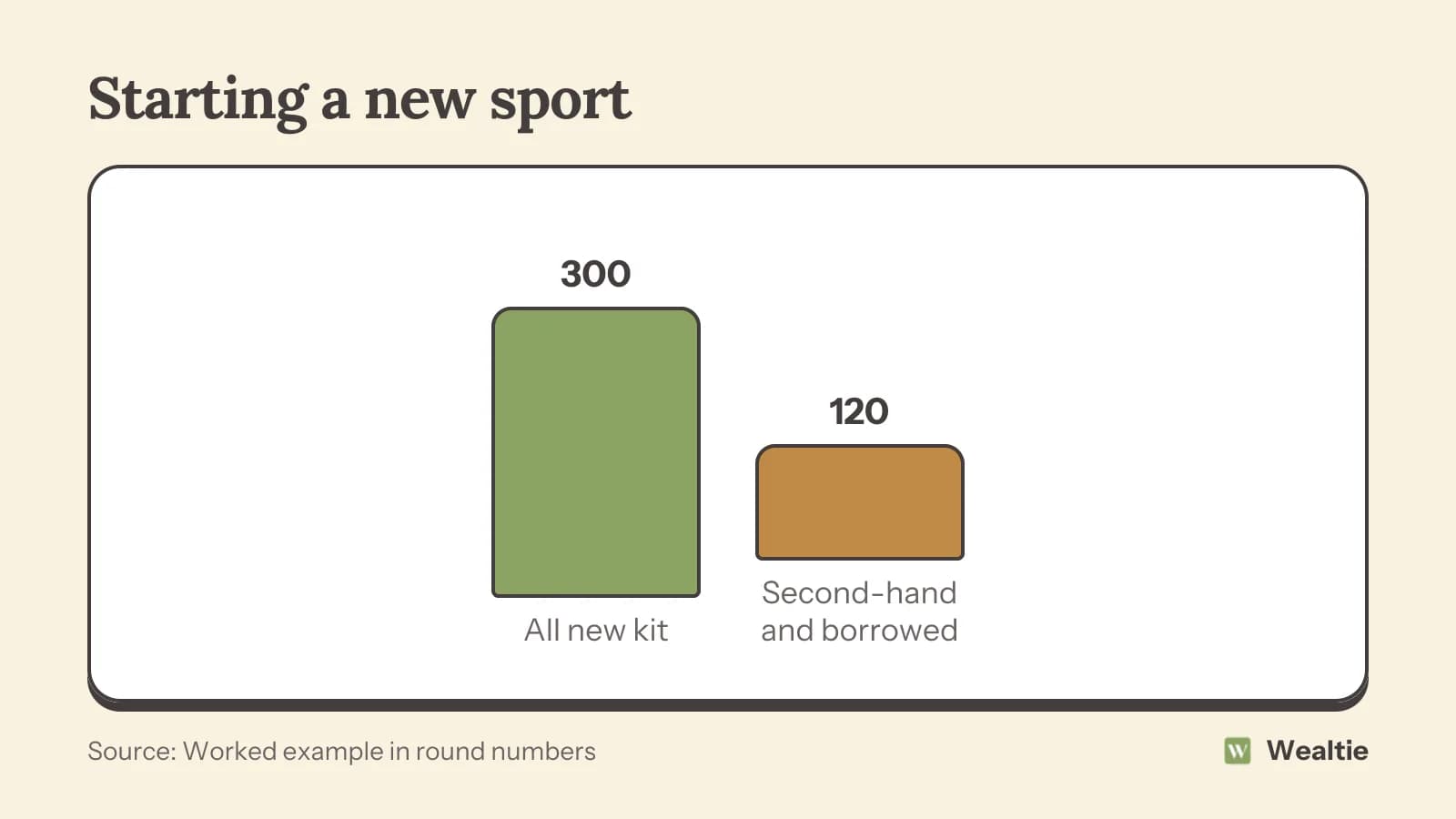
In this example, buying everything new costs about 300, while second-hand and borrowed gear brings it down to about 120. Your own savings depend on the sport and what's available near you. Sports with lots of equipment, like hockey or cycling, offer the biggest savings from buying second-hand.
Should you try a sport before buying kit?
Yes. Many clubs and leisure centres lend or rent equipment for beginners, and taster sessions let you see if you enjoy the sport before committing. Plenty of people buy a full set of gear and stop after a few weeks. Giving yourself a month or two before buying anything expensive is a simple rule that saves money. Starting with basic, borrowed or rented kit avoids that waste. Once you know you'll stick with it, upgrade one item at a time. How to save money on a hobby has more ideas for trying new activities.
Where can you find second-hand kit?
Lots of places:
- Club noticeboards and members selling outgrown or upgraded gear
- Local online selling groups and marketplaces
- Charity shops and sports swap events
- Specialist second-hand sports shops
Sports gear is often barely used, since people upgrade or give up. End-of-season sales, when clubs and shops clear stock, are another good time to buy. Check items carefully for wear, damage and fit. Asking to try equipment before buying, or meeting the seller at the club, helps you check it properly. How to buy second-hand has tips.
Last season's models
New versions of shoes, rackets and other gear come out regularly, and last season's models are often heavily discounted. The differences are usually small, especially for beginners.
What's worth spending more on?
Some items affect safety or comfort, and it's worth buying good ones:
- Helmets and protective gear, which should be new and meet safety standards
- Footwear, since well-fitting shoes help prevent injury
- Anything you use constantly, where better quality lasts longer
For most other items, like bags, basic clothing and accessories, cheaper options work fine. Plain sports clothing from supermarkets often does the same job as branded kit at a fraction of the price.
How do you save on children's sports kit?
Children outgrow kit fast, so new gear can be a poor investment. Older siblings' kit, cleaned and checked, can be passed down for years. Swaps between families, club second-hand sales and hand-me-downs make a big difference. Buy a little big where it's safe to do so, like clothing, but not for shoes or helmets, which need to fit properly. How to save money on kids' activities covers the wider costs of clubs and classes.
How do you make kit last?
Look after it. Clean and dry gear after use, store it properly and repair small damage early. Wet kit left in a bag wears out and smells far sooner. Rotating two pairs of shoes can make each last longer. Following care labels on technical clothing keeps it working well. Small repairs, like regripping a racket or re-lacing boots, cost far less than replacements.
Sell or pass it on
When you upgrade or stop a sport, sell or pass on gear in good condition. It helps someone else start and can fund your next purchase.
Other sports costs
Kit is only part of the cost. Club fees, gym memberships, coaching, travel and competition entries can add up too. How to save money on a gym membership covers one of the biggest regular costs. Looking at the full yearly cost helps you plan. Some clubs offer family discounts or payment plans for fees, so ask.
How do you track sports spending in Wealtie?
Give sports and fitness their own line in your expense categories, so kit, fees and travel add up in one place. A monthly limit in the budget tracker helps you keep the hobby within your plan.
Questions people ask
Try the sport first, borrow or rent beginner gear, buy second-hand and look for last season's models.
Helmets and protective gear, and footwear that needs to fit well.
Club noticeboards, online selling groups, charity shops, swap events and second-hand sports shops.
Use swaps, club sales and hand-me-downs, and buy clothing a little big, but not shoes or helmets.
This article is general information, not financial, tax or legal advice. Your situation is your own; check the numbers that apply to you before you act on them.