Budgeting: The cost of playing amateur football
The cost of playing amateur football is mostly weekly match fees and yearly subs, plus boots and kit. In a worked example, a season of weekend league football costs about 400.
 By Wealtie Team · 3 min read

Key takeaways
- The cost of playing amateur football is mostly match fees and subs.
- Boots are the main kit cost, and mid-range boots are fine.
- Five-a-side is a flexible alternative, paid per game.
- Social events and away travel can add up.
What is the cost of playing amateur football?
Amateur football, whether a weekend league team or a weekly five-a-side game, is one of the most popular ways to stay active and see friends. The cost of playing amateur football is usually modest, but match fees, subs, boots and kit add up over a season.
Here's a worked example of a season of weekend league football, in round numbers that work in any currency:
| Cost | Amount |
|---|---|
| Match fees, 25 games | 200 |
| Yearly subs | 80 |
| Boots | 70 |
| Shin pads, socks and training kit | 50 |
| Total | 400 |
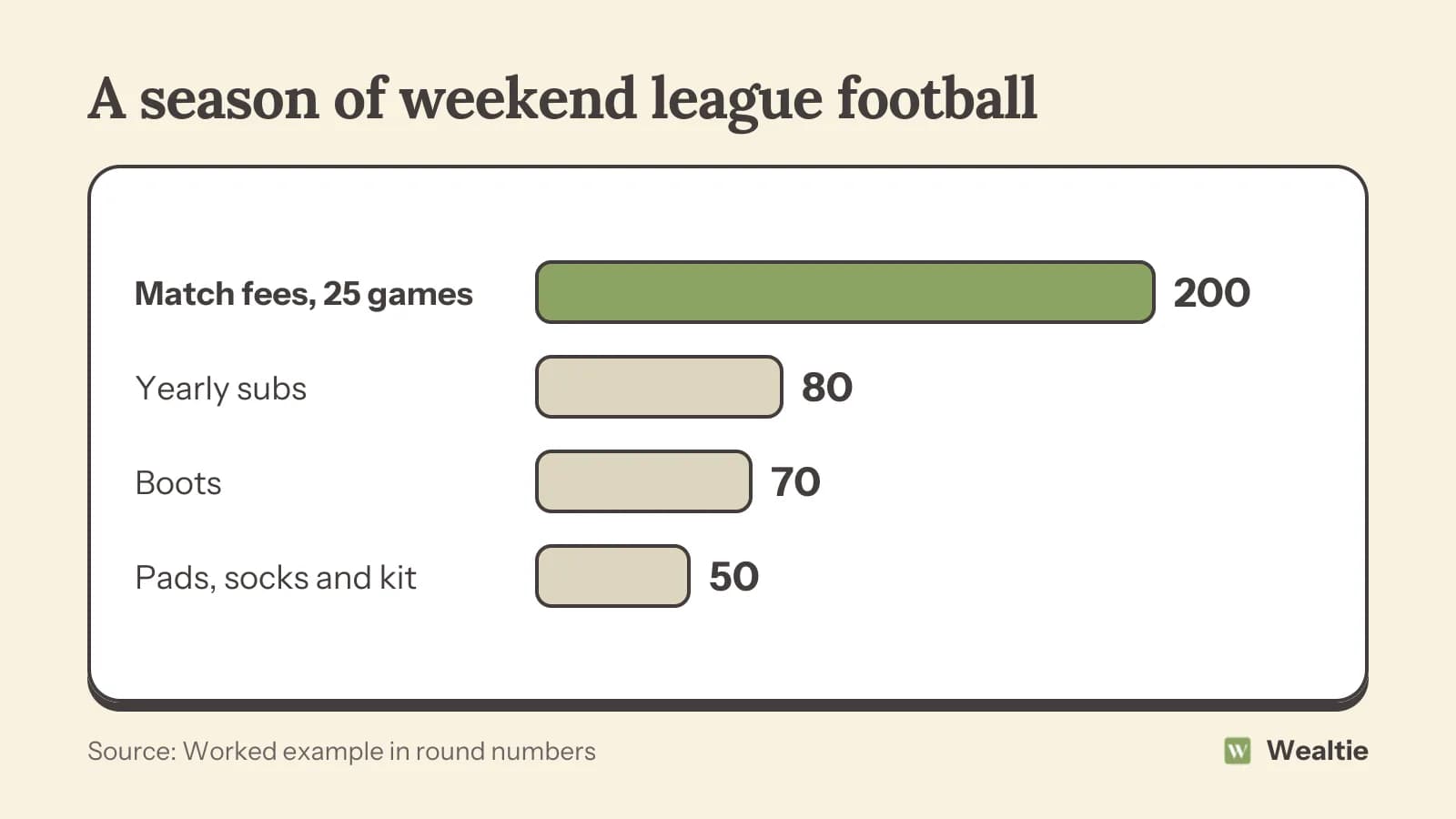
Match fees at around 8 a game cover pitch hire and referees. Yearly subs help pay for league fees, insurance and equipment. Boots and kit are the main personal costs. A season costs about 400, or around 16 per game.
What are the main costs?
Match fees
Most teams split pitch hire and referee costs, usually paid each week.
Subs
A yearly or seasonal fee covers league registration, insurance and team kit.
Boots
Boots are the biggest personal cost. Mid-range boots work well for most players.
Training
Some teams train midweek, which may mean extra pitch fees.
Socials and travel
Team socials, end-of-season events and travel to away games add costs.
Is five-a-side cheaper?
Five-a-side is usually paid per game, often at around 6 each, with no subs or kit requirements. Playing 40 games a year would cost around 240. It's flexible, since you can play when you're free, which suits people with busy schedules. Many players do both.
How do you play football for less?
Buy mid-range boots
Expensive boots rarely make a difference at amateur level. Last season's models are often discounted. How to save money on sports kit covers buying gear for less.
Look after your boots
Cleaning and drying boots properly helps them last longer.
Share lifts to away games
Travelling together cuts fuel costs.
Pay subs upfront if cheaper
Some teams offer a discount for paying the season's subs in one go.
Keep socials affordable
Suggesting cheaper team socials helps everyone, especially younger players or those on tighter budgets.
Is football a good activity for kids?
Youth football is popular and often affordable, though club fees, kit and travel can add up. How to save money on kids' activities covers keeping costs down for children's sports.
How does football compare with other ways to stay fit?
Amateur football is often cheaper than a gym membership, especially for people who play once a week. How to save money on a gym membership and how to save money on a hobby cover other options, and cost per use helps compare them.
Joining a team is often easier than people think. Many leagues have teams looking for players, and social media groups and local notice boards list opportunities. Some areas also run walking football or veterans' leagues for older players, which can be cheaper and gentler on the body.
Think about the time commitment as well as the cost. League football usually means a game every weekend during the season, sometimes with travel. Five-a-side offers more flexibility for busy schedules. Choosing the format that fits your life means you're more likely to keep playing, which makes the money better spent.
Injuries are a real cost in football. Warming up properly, wearing shin pads and good boots, and not playing through pain help you avoid time out and physiotherapy bills. Some leagues include basic insurance in subs, which is worth checking.
If you organise a team, keep money simple and transparent. Collecting match fees through a shared app or bank transfer, and keeping a record of what's been paid, avoids awkward conversations and stops one person from covering costs for everyone.
For kids, look for clubs that offer kit swaps or second-hand boots, since children outgrow them quickly. Many clubs are run by volunteers and keep fees low.
Finally, enjoy the social side without overspending. A team drink after the game is part of the fun, but agreeing on affordable socials keeps football inclusive for everyone.
Ask the team manager what the season will cost before you sign up, including subs, match fees, kit and any end-of-season events. Knowing the full figure upfront makes it easy to plan, and it avoids surprises halfway through the season when extra costs appear.
Keeping your own simple record of what you pay each week also helps if there's ever a question about who has paid.
How can Wealtie help you track football costs?
Log match fees, subs and kit in a sport expense category, and set a monthly budget for football. Seeing the total over a season shows how much the hobby costs and whether five-a-side or a league suits your budget better.
Questions people ask
In a worked example, a season of weekend league football cost about 400, including match fees, subs, boots and kit.
Often, since it's paid per game with no subs. In a worked example, 40 games of five-a-side cost about 240.
No. Mid-range boots work well at amateur level, and last season's models are often discounted.
Buy mid-range boots, look after them, share lifts to away games, pay subs upfront if cheaper and keep socials affordable.
This article is general information, not financial, tax or legal advice. Your situation is your own; check the numbers that apply to you before you act on them.