Budgeting: How to save money on kids' activities and clubs
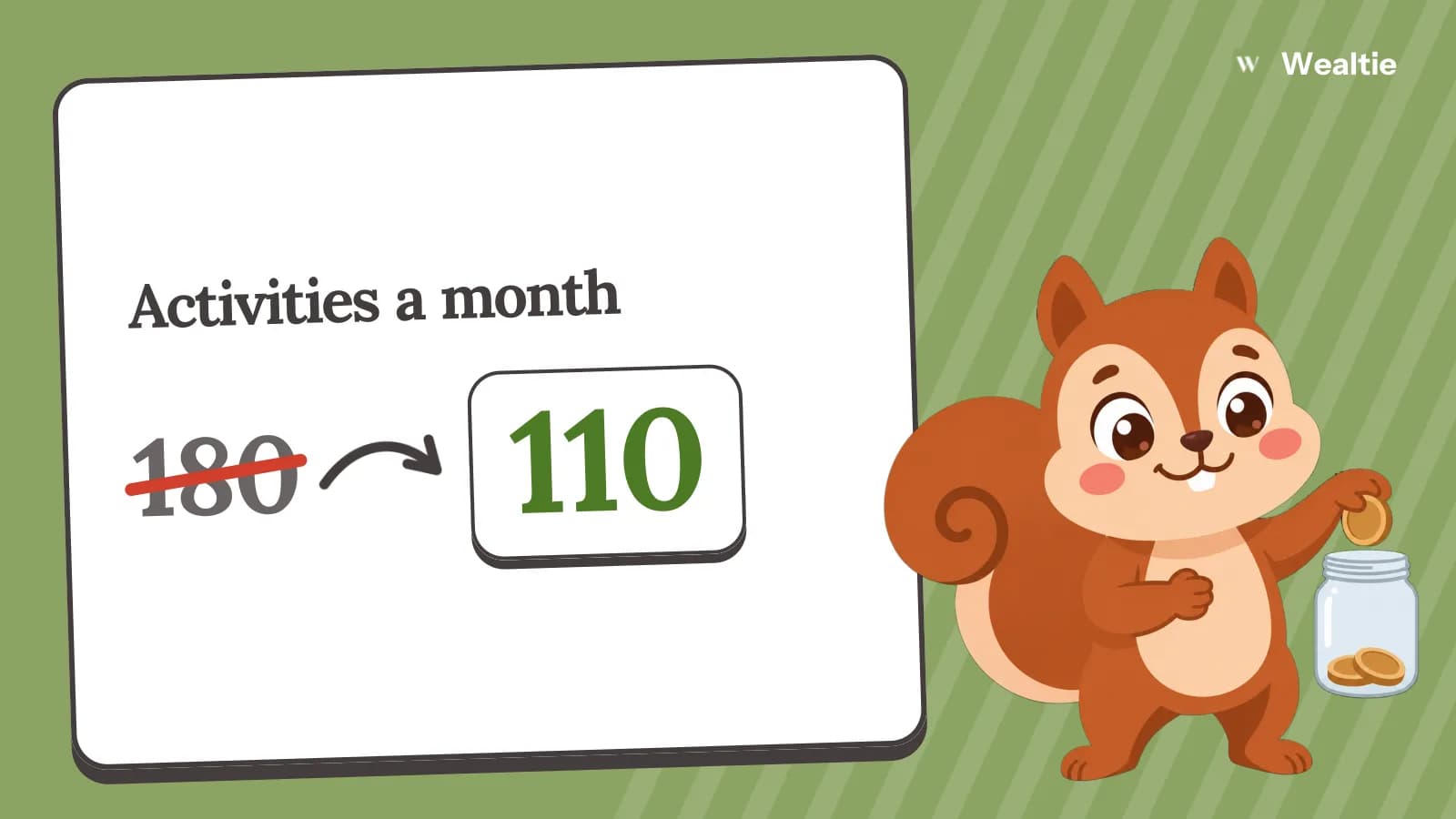
Here's how to save money on kids' activities: add up what each costs per month including kit and travel, compare cheaper options like council or school clubs, and buy equipment second-hand. In a worked example, three activities drop from 180 a month to 110.
 By Wealtie Team · 3 min read
Key takeaways
- Add up each activity's full monthly cost, including kit, travel and extras.
- In a worked example, switching to council and group options cut three activities from 180 a month to 110.
- Council, school and community clubs are often much cheaper than private ones.
- Let children try activities before committing to expensive kit or long contracts.
How do you save money on kids' activities?
Know the full cost, compare options and buy kit second-hand. Clubs, lessons and sports are good for children, but they add up quickly, especially with more than one child. Fees are often paid termly or yearly, which hides the monthly cost until you work it out. A few changes can keep them doing what they enjoy for much less. Start by listing every activity each child does, with the fee, how often it's paid and the extras, so you can see the whole picture in one place.
What do activities cost?
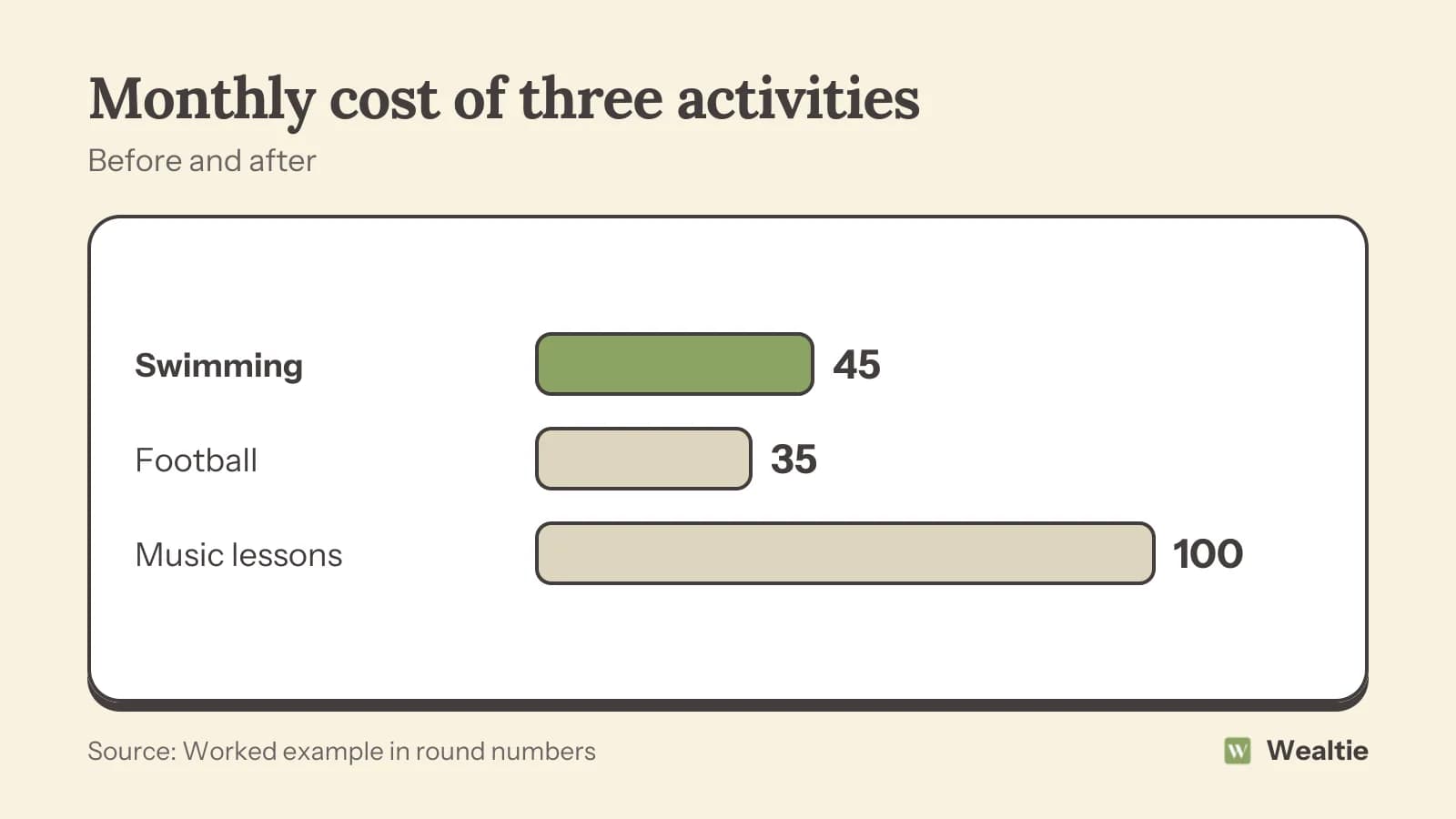
More than the fee. Include kit, uniforms, travel, competitions, exams and the snacks after. Ask the club for a list of all the costs for the year, including kit and trips. Here's a worked example for three activities, in round numbers that work in any currency:
| Activity | Before | After |
|---|---|---|
| Swimming lessons | 45 | 30 at the council pool |
| Football | 35 | 20 at the school club |
| Music lessons | 100 | 60 in a small group |
| Month | 180 | 110 |
That's 70 a month, or 840 a year, and the child still does all three.
Where are the cheaper options?
Often closer than you think:
- Council leisure centres and sports clubs, which are usually cheaper than private ones
- After-school clubs run by the school
- Community groups, scouts and similar organisations, often run by volunteers
- Group lessons instead of one-to-one, for music, swimming or languages
- Libraries, which often run free activities, especially in school holidays
Many activities offer discounts for siblings, paying termly, or families on lower incomes. Some clubs ask parents to volunteer, which can lower fees, and a few intensive swimming lessons in the holidays can cost less than a year of weekly ones for some children.
How do you find free activities?
Look at what's free locally: library events, parks with courts or outdoor gyms, free museum workshops and community sports days. Many councils publish holiday activity programmes, some free for families on lower incomes. Online, there are free coding clubs, art tutorials and exercise videos for children. A few free activities each week can replace one paid club without the child missing out. Ask, since these aren't always advertised.
How do you save on kit?
Buy second-hand, borrow and pass down. Children outgrow kit quickly, so second-hand boots, instruments and uniforms are easy to find and much cheaper. Many clubs run kit swaps. For instruments, renting before buying lets you see whether the interest lasts.
Don't buy the most expensive kit for a beginner. Basic equipment is enough until you know they'll stick with it. Label kit with your child's name, since lost items have to be replaced, and share an instrument between siblings where you can.
How many activities is enough?
Fewer than you might think. Children need free time too, and a packed schedule costs money and energy for the whole family. Let your child choose one or two they love, rather than signing up for everything. Rotating activities by term lets them try different things without paying for everything at once. Ask your child which activity they'd miss most, since that tells you where to spend.
How do you handle trial and commitment?
Ask for a free or cheap trial session before paying for a term. Avoid long contracts or large upfront payments until you know your child enjoys it. If they want to stop, check the cancellation terms so you're not paying for months they won't attend. Ask whether siblings can share a lesson or join at a reduced rate.
What about competitions and exams?
They add up fast, especially for sports and music. Ask the club early in the year what competitions, gradings or exams are expected and what they cost, so you can plan. Skipping some is fine, since not every competition is necessary, and children often enjoy the activity itself more than the extras.
How do you plan for activity costs?
Treat them as a regular bill, and set aside a small amount for extras like competitions, exams and new kit as children grow. The family budget puts activities alongside other children's costs. Car-sharing with other families for practices and matches saves fuel and time.
How do you track activities in Wealtie?
Set regular fees up as recurring transactions, so they log themselves on the due date. Give activities their own line in your expense categories, and a monthly limit in the budget tracker shows what's left after them.
Questions people ask
Compare council, school and community options, choose group lessons, ask about sibling and termly discounts, and buy kit second-hand.
Whatever fits your budget after essentials and savings. Add up the full cost, including kit and travel, before committing.
Renting first lets you see whether the interest lasts before buying.
One or two they love is often enough. Children need free time, and a packed schedule costs money and energy.
This article is general information, not financial, tax or legal advice. Your situation is your own; check the numbers that apply to you before you act on them.