Budgeting: The cost of pickleball for beginners
The cost of pickleball is low to start, since paddles are cheap and many courts are free or shared at community centres. In a worked example, a first year of playing twice a week costs about 300.
 By Wealtie Team · 3 min read

Key takeaways
- The cost of pickleball is low compared with many racket sports.
- Paddles and balls are cheap, and many courts are free or low-cost.
- Proper court shoes help prevent slips and injuries.
- Community sessions and clubs keep costs down.
What is the cost of pickleball?
Pickleball is a paddle sport played on a small court with a plastic ball full of holes. It's easy to learn, gentle on the body and popular with people of all ages, from teenagers to retirees. The cost of pickleball is low compared with many sports, since paddles and balls are inexpensive and many places offer free or cheap courts.
Here's a worked example of a first year playing about twice a week, in round numbers that work in any currency:
| Cost | Amount |
|---|---|
| Court and session fees | 150 |
| Paddle | 60 |
| Court shoes | 60 |
| Balls | 30 |
| Total | 300 |
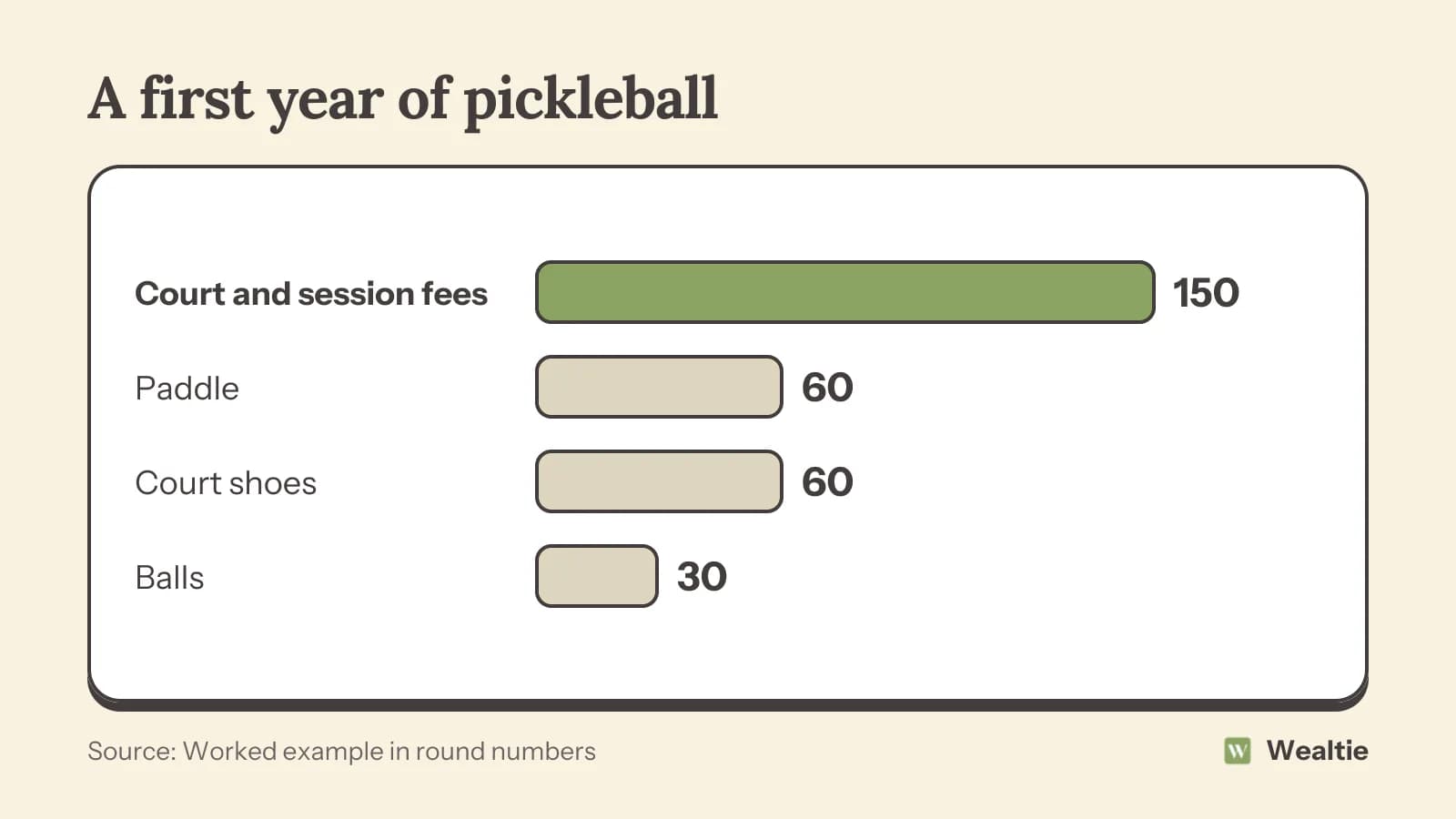
Session fees at community centres or clubs are often small, and some outdoor courts are free. A decent beginner paddle costs around 60, and court shoes about the same. After the first year, the main costs are session fees and replacing balls.
What do you need to start?
A paddle
Beginner paddles are affordable and work well. You don't need a high-end paddle to enjoy the game. Many clubs and community sessions lend paddles to newcomers.
Balls
Indoor and outdoor balls are slightly different. They're cheap but wear out, so buying a few at a time is useful.
Court shoes
Shoes made for indoor or court sports give grip and support for quick side-to-side movements. Running shoes are less stable for this.
Comfortable clothes
Any sports clothes will do.
Where can you play?
Community centres and leisure centres
Many run pickleball sessions for a small fee, often with equipment provided.
Outdoor public courts
Some parks have pickleball courts or tennis courts marked for pickleball, sometimes free to use.
Clubs
Clubs may charge a yearly membership but offer regular sessions, coaching and social events.
How do you keep pickleball cheap?
Start with free or drop-in sessions
Try the sport at a community session before buying anything.
Buy a mid-range paddle
Expensive paddles offer small improvements that beginners rarely notice.
Share balls with your group
Taking turns to bring balls spreads the cost.
Look for off-peak sessions
Daytime sessions are often cheaper and less crowded.
Buy second-hand
Players who upgrade often sell their old paddles cheaply. How to save money on sports kit has more tips.
Is pickleball good for retirees and families?
Pickleball's small court and slower ball make it accessible for many ages and fitness levels, and it's often very social. For retirees looking for an active, affordable hobby, it can be good value. How to budget in retirement covers fitting hobbies into a retirement budget. Families can also play together, which makes it a cheap shared activity.
How does it compare with other sports?
Pickleball usually costs less than golf, tennis lessons or a gym membership. The cost of golf and how to save money on a gym membership cover other options, and how to save money on a hobby covers keeping any hobby affordable.
Many players start pickleball through friends or community groups, which is often the cheapest and friendliest way in. Experienced players are usually happy to explain the rules, lend a paddle and include newcomers in games. Joining a regular session also helps you improve quickly and find partners at your level.
As you play more, you might be tempted by expensive paddles that promise more power or control. For most recreational players, the difference is small. Spending on good shoes is usually a better investment, since they protect your knees and ankles and help prevent injuries that could stop you playing.
Some clubs and centres offer beginner courses over a few weeks. They cost a little more than drop-in sessions but teach rules, scoring and basic technique, which makes games more enjoyable from the start.
If you play outdoors, check the weather and court surface. Outdoor balls are harder and wear differently, and a few spares in your bag means games aren't cut short.
Watch for travel costs too. A court a short walk or bike ride away keeps each session cheap, while driving across town adds fuel and parking.
Finally, set a simple monthly amount for the sport. It's a cheap hobby, and keeping it that way is easy with a little planning.
Some leisure centres offer pay-as-you-go cards or block bookings that bring the price per session down, which suits regular players who don't want a full club membership.
Bringing a water bottle and a small towel to every session avoids buying drinks at the venue, a small saving that adds up over a year of regular games.
How can Wealtie help you track sports costs?
Log session fees and kit in a sport expense category and set a monthly budget for pickleball. Seeing your total each month helps you decide whether a club membership would save money.
Questions people ask
In a worked example, a first year of playing twice a week cost about 300, including session fees, a paddle, shoes and balls.
A decent beginner paddle costs around 60 in a worked example. Many sessions lend paddles to newcomers.
Community centres, leisure centres and some public courts offer free or low-cost sessions.
Usually, yes. Equipment is cheaper and many sessions cost little, though costs vary by area.
This article is general information, not financial, tax or legal advice. Your situation is your own; check the numbers that apply to you before you act on them.