Budgeting: How to budget in retirement when your income is fixed
To budget in retirement, add up every income source, list your costs, including those that rise with age, and keep a cash buffer for repairs and surprises. A fixed income needs more planning, not less, because it's harder to top up.
 By Wealtie Team · 3 min read
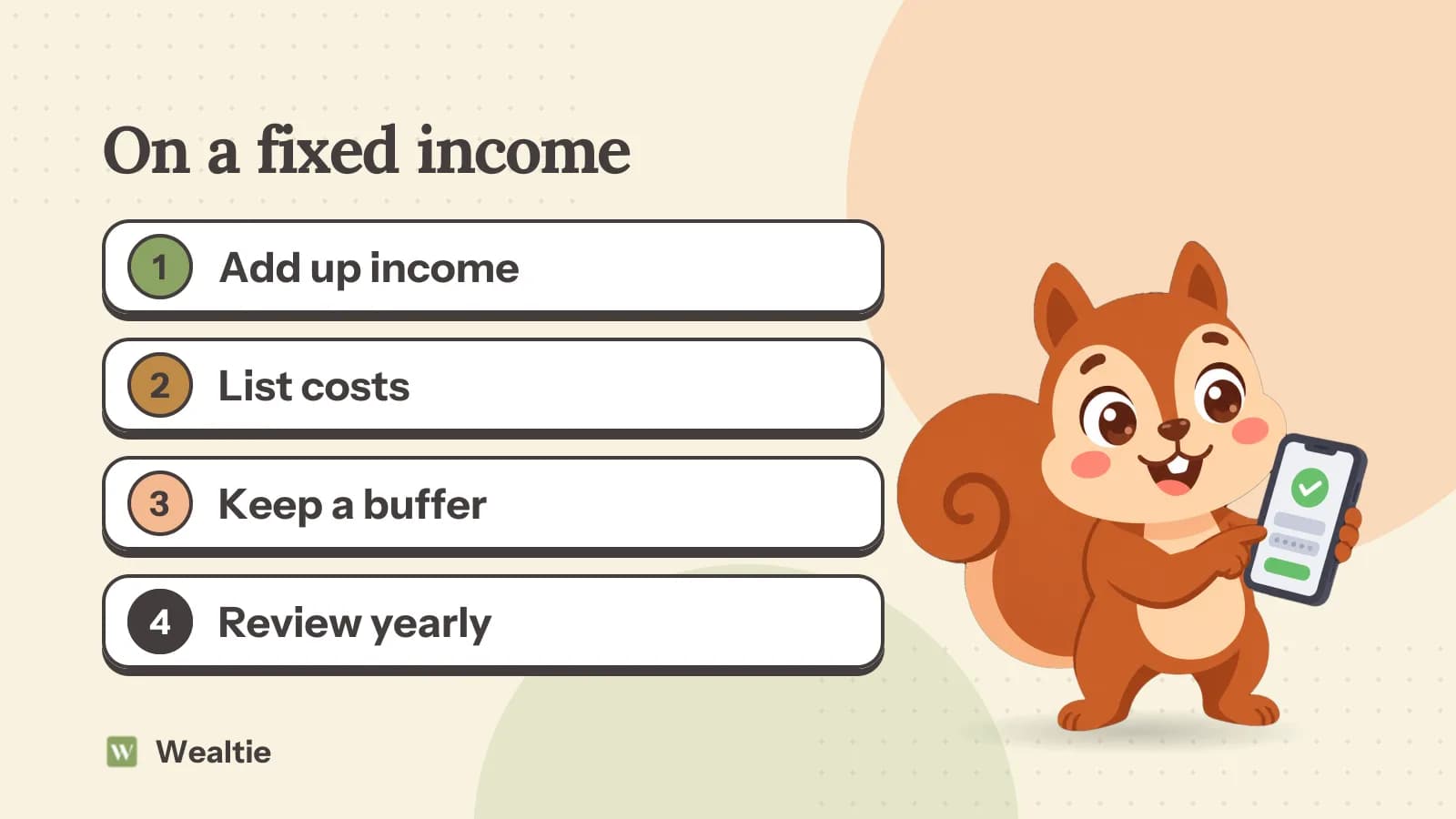
Key takeaways
- List every income source and when each one pays, since pensions and benefits may arrive on different days.
- Plan for costs that change in retirement, like more spent on leisure and health, and less on commuting.
- Keep a cash buffer for home repairs and surprises, so you're not forced to sell investments at a bad time.
- Review the budget each year, as prices, health and income change.
How do you budget in retirement?
Start with what comes in, then plan what goes out, with room for surprises. Retirement often means a fixed or slowly changing income from pensions, benefits and savings. It's harder to top up than a salary, so a plan matters more. It also means more control over your time, which brings new costs and new ways to save.
What income will you have?
List every source and when it arrives:
- State or government pension
- Workplace or private pensions
- Any part-time work
- Income from savings or investments
- Benefits you're entitled to
Ask each pension provider for a statement showing exactly what they'll pay and when. Note the date each one pays. If they arrive on different days, set aside part of each for bills that come out at other times. A simple calendar showing each payment and each big bill helps you see the month at a glance, and makes it easier to spot a gap before it happens. Check that you're claiming everything you're entitled to, since some support for older people goes unclaimed.
What does a retirement budget look like?
Here's a worked example on a monthly income of 2,000, in round numbers that work in any currency:
| Line | Monthly |
|---|---|
| Housing and bills | 900 |
| Food | 350 |
| Health | 120 |
| Transport | 130 |
| Leisure and gifts | 250 |
| Savings for repairs and replacements | 150 |
| Total | 1,900 |
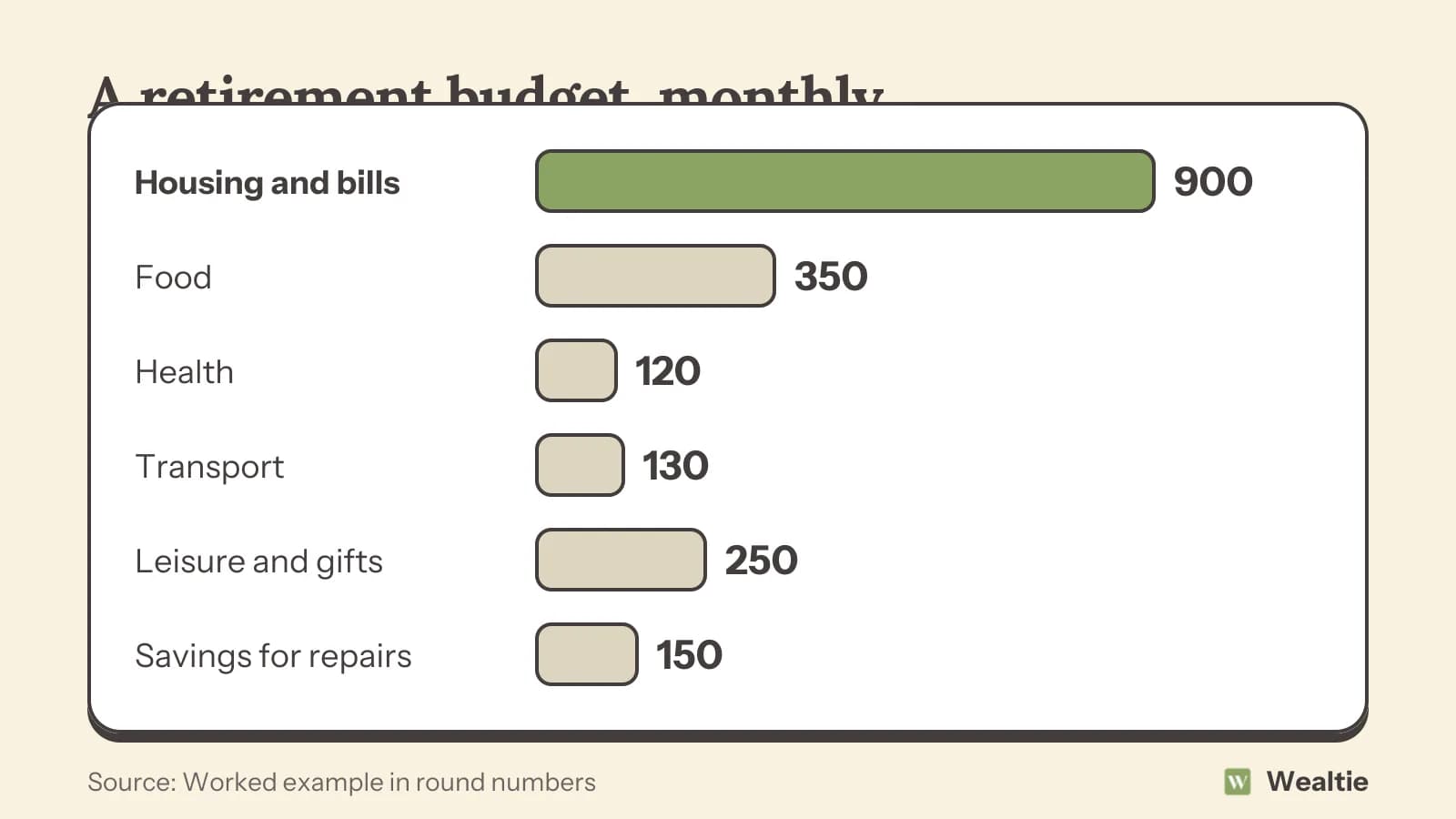
That leaves 100 a month spare. Your own figures will depend on whether you own your home, your health and how you like to spend your time.
Which costs change in retirement?
Some go down: commuting, work clothes, lunches out, and possibly a second car. Some go up: heating and electricity with more time at home, leisure and travel, and often health costs as you get older.
The early years of retirement are often the most active and the most expensive, with travel and hobbies. Later years might bring more health and care costs. Planning for both, rather than one average, gives a more realistic picture. Hobbies can cost more than expected once you have time for them, so give leisure its own amount.
Why do you need a cash buffer?
Because big costs still happen: a new boiler, a car, a roof repair, a family emergency. A cash buffer means you can pay them without borrowing or taking money from investments at a bad moment. Many retirees keep a few months of spending in cash for exactly this reason, in an easy-access account separate from everyday money. How much should be in an emergency fund helps set the amount.
If you draw income from investments, how and when you do it matters, and a regulated adviser can help you plan it.
How do you make your money last?
Be clear about which money is for everyday spending and which is for later. Spending a little more early on is normal, but check that it still leaves enough for the years ahead. Review your budget each year, and adjust if prices have risen faster than your income. A short review each January works well for many people.
Check what happens to income if one partner dies, since some pensions pay less to the survivor. Watch out for big, permanent commitments, like a new car on finance or a large mortgage, that a fixed income would struggle to support.
How can you save money in retirement?
Look for discounts for older people on transport, leisure, and some bills. Review insurance, phone and energy each year. How to negotiate bills helps. Check whether downsizing or moving somewhere cheaper to run would free up money, if that suits you. Review insurance you may no longer need, like life cover for a mortgage that's paid off.
Be wary of scams targeting retirees, especially offers of investments, unexpected calls about your pension, or urgent requests for money.
How do you plan for later life?
Talk with family about your wishes and make sure your affairs are in order: a will, and arrangements in case you need help managing money later. Talking openly with family about care and money now makes later decisions easier for everyone.
How do you budget in retirement with Wealtie?
Log each pension and income source as income, or set regular ones up as recurring transactions, and set your monthly income goal to the total. Set a monthly limit in the budget tracker, and Budget Health warns you mid-month if spending's running ahead. Your accounts, including a cash buffer, show in your net worth tracker.
Questions people ask
List every income source and when it pays, list your costs including those that rise with age, keep a cash buffer for big repairs, and review the budget each year.
Enough to cover a few months of spending and big repairs, so you don't need to borrow or sell investments at a bad time.
Some do, like commuting, but others rise, like heating, leisure and health costs. Plan for both.
Look for discounts for older people, review bills and insurance each year, and consider whether a cheaper home would free up money.
This article is general information, not financial, tax or legal advice. Your situation is your own; check the numbers that apply to you before you act on them.



