Budgeting: How much does golf cost, and how to play for less
The answer to how much does golf cost depends mostly on whether you pay green fees or join a club, plus equipment, balls and lessons. In a worked example, a golfer playing twice a month on green fees spends about 900 a year, and second-hand clubs and off-peak times cut that a lot.
 By Wealtie Team · 3 min read

Key takeaways
- How much golf costs depends mostly on green fees or membership, equipment and lessons.
- In a worked example, playing twice a month on green fees costs about 900 a year.
- Membership is cheaper per round only if you play often enough.
- Second-hand clubs, off-peak tee times and practice at the range keep costs down.
How much does golf cost?
It depends on how often you play and where. Golf has a reputation for being expensive, and it can be, but there's a big difference between a private club membership and a few rounds a month at a public course. The main costs are paying to play, equipment, balls, clothing and lessons. Once you see where the money goes, it's easier to choose how you want to play.
What does a year of golf cost?
Here's a worked example for someone playing twice a month on green fees, in round numbers that work in any currency:
| Cost | Amount |
|---|---|
| Green fees, 24 rounds at 25 | 600 |
| Balls and tees | 100 |
| Clothing and shoes | 100 |
| Equipment wear and replacement | 100 |
| Total | 900 |
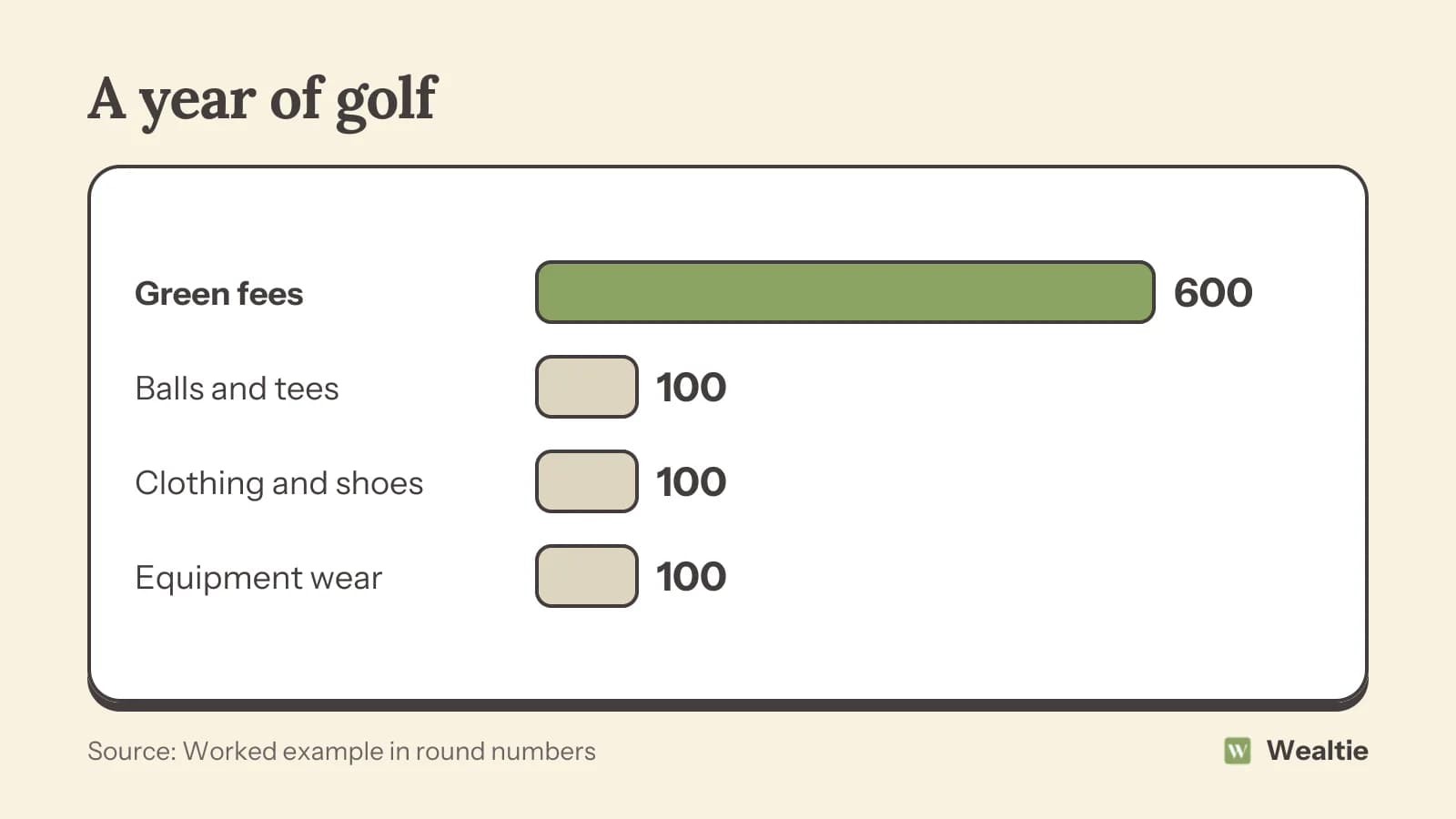
That's 75 a month. Your own costs depend on local prices, how often you play and whether you're starting from scratch with equipment.
Is a membership cheaper than green fees?
Only if you play enough. A membership has a fixed yearly cost, while green fees are paid each time. In a worked example, a 1,200 membership used for 50 rounds works out at 24 a round, just under a 25 green fee. If you'd only play 24 rounds, the same membership costs 50 a round.
To decide, count how many rounds you played last year, or would realistically play. Membership often makes sense for people who play every week, while green fees suit those who play less often or like trying different courses. Some clubs offer cheaper memberships for off-peak times, weekdays or younger players. Some memberships also charge joining fees, locker fees or compulsory spending in the clubhouse, so ask about the full cost before signing up.
Other ways to pay
Some courses sell packs of rounds at a discount, or offer twilight rates for late tee times. Shorter nine-hole rounds cost less and take less time. Checking these options can bring the cost per round down without a full membership.
How much do golf clubs cost?
A new full set can cost a lot, but you don't need one to start. In a worked example, a new set costs 600, while a good second-hand set costs 200. Beginners can start with a half set, which covers most shots, and add clubs as their game develops.
Second-hand clubs are widely available, since many golfers upgrade regularly. Check grips, shafts and club faces for damage. Getting fitted can help as you improve, but it's not needed at the start. How to buy second-hand has tips on getting good value.
Renting clubs
Many courses and driving ranges rent clubs for a small fee. If you're trying golf for the first time, or playing on holiday, renting avoids buying a set before you know you'll keep playing. Some players rent until they've had a few lessons and know what suits them.
How do you save on balls and clothing?
Balls get lost, especially when you're learning. Buying recycled or lake balls, sold in bulk, costs much less than new ones and is fine for most players. Save premium balls for when your game is consistent enough to notice the difference.
Many courses have a dress code, but you don't need specialist clothing for everything. Ordinary sports clothes that meet the code, plus a pair of golf shoes, cover most needs. Waterproofs are worth buying if you'll play in all weathers.
Are lessons worth it?
For beginners, a few lessons can save money over time. Good technique from the start means fewer lost balls, faster progress and more enjoyment. Group lessons cost less than one-to-one sessions. After the basics, practising at a driving range, which costs much less than a round, is a cheap way to improve.
How do you keep golf affordable?
Plan your golf for the year. Decide how many rounds you want to play and whether membership or green fees suit you better. Play off-peak when you can, and mix full rounds with range sessions and nine-hole games. Avoid upgrading equipment until your game needs it. Playing with friends who share your budget, rather than a group who always books the most expensive courses, makes it easier to stick to your plan. How to save money on a hobby has more ideas that apply to golf too.
If you're saving for a membership or new clubs, a sinking fund spreads the cost across the months before.
How do you track golf spending in Wealtie?
Give golf its own line in your expense categories, so green fees, balls and equipment add up in one place. A yearly membership paid in instalments can be set up as a recurring transaction. A monthly limit in the budget tracker shows whether the hobby fits your plan.
Questions people ask
In a worked example, playing twice a month on green fees costs about 900 a year, including balls, clothing and equipment wear.
Only if you play often. In a worked example, a 1,200 membership is cheaper than green fees after about 48 rounds a year.
Very little at first. A second-hand half set covers most shots, and you can add clubs as you improve.
Play off-peak or twilight rounds, buy recycled balls and second-hand clubs, and practise at the range.
This article is general information, not financial, tax or legal advice. Your situation is your own; check the numbers that apply to you before you act on them.