Budgeting: The cost of padel: courts, rackets and a yearly budget
The cost of padel is mostly court hire, which is usually split between four players, plus a racket and shoes. In a worked example, playing once a week costs about 600 in the first year.
 By Wealtie Team · 3 min read

Key takeaways
- The cost of padel is mostly court hire, split between four players.
- A mid-range racket is enough for beginners.
- Off-peak courts and club memberships cut the cost.
- Proper shoes help avoid injuries on padel courts.
What is the cost of padel?
Padel is a racket sport played in doubles on an enclosed court, mixing elements of tennis and squash. It's easy to learn, sociable and growing fast in many countries. The cost of padel depends mostly on how often you play and what courts cost where you live, since court hire is usually the biggest expense. The good news is that courts are normally booked by four players, so the cost is shared.
Here's a worked example of playing once a week for a first year, in round numbers that work in any currency:
| Cost | Amount |
|---|---|
| Court share, 50 games | 400 |
| Racket | 100 |
| Shoes | 60 |
| Balls and grip tape | 40 |
| Total | 600 |
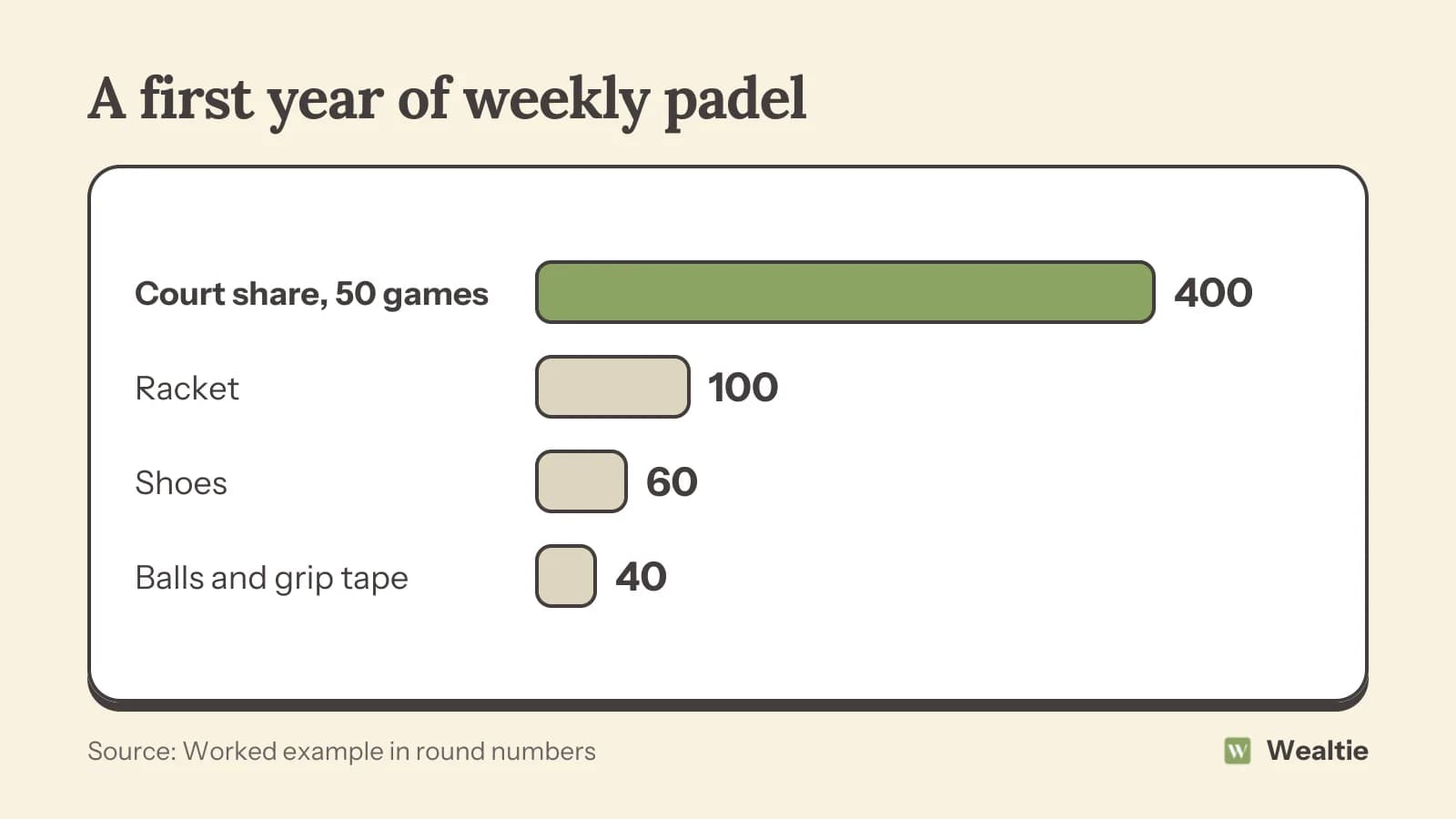
A court at around 32 an hour, split four ways, costs 8 each per game. Over 50 games, that's 400. A racket, shoes and balls add another 200 in the first year. After that, the main cost is court time.
What do you need to start?
A racket
Padel rackets are solid, without strings. Beginners don't need an expensive model. A mid-range racket with a forgiving sweet spot is ideal. Many clubs rent rackets for your first few games.
Shoes
Padel courts often have artificial grass with sand. Shoes with the right grip help you move safely and avoid injuries. Tennis or court shoes can work at first.
Balls
Padel balls are similar to tennis balls but slightly different in pressure. Players usually take turns bringing a new tube.
Comfortable sportswear
Any comfortable sports clothes will do.
How much do lessons cost?
Lessons are optional but help you learn the rules and techniques, like using the glass walls. Group lessons cost less than private ones. A short course of beginner sessions can speed up learning and make games more fun, but many people learn by playing with friends.
How do you play padel for less?
Book off-peak
Courts are often cheaper during weekday daytimes or late evenings.
Split costs fairly
Agree upfront how the court cost is shared, and take turns booking and paying, or use an app to split payments.
Join a club
Some clubs offer memberships with discounted court hire, which pays off if you play often.
Buy a racket second-hand
Players often upgrade and sell their old rackets in good condition. How to save money on sports kit covers buying gear for less.
Rent before buying
Renting a racket for your first few games lets you find out if you enjoy the sport before spending.
How does padel compare with other sports?
Padel is often cheaper per person than tennis lessons or golf, since court costs are shared four ways and equipment is simple. It can be more expensive than running or a basic gym membership if you play several times a week. The cost of golf and how to save money on a gym membership cover other options, and cost per use helps compare them.
How do you budget for padel?
Work out how often you'll play and multiply by your share of the court, then add equipment. Setting a monthly amount for the sport keeps it affordable, especially if you start playing more often. How to save money on a hobby covers keeping hobbies under control.
Finding regular playing partners makes padel cheaper and more fun. A fixed group of four can book the same court each week, often at a better rate, and share the booking duty. Many clubs and apps help players find partners at a similar level, which is useful if your friends don't play.
It's worth thinking about how often you will play before buying expensive kit or a membership. Trying the sport for a few weeks with a rented racket shows whether it becomes a regular habit. If it does, a mid-range racket and a membership with cheaper court rates can save money over the year.
Look after your racket and shoes too. Keeping the racket in a cover, out of hot cars and away from walls during games helps it last longer. Shoes designed for padel courts last better on the abrasive surface than general trainers.
Finally, keep an eye on the extras. Drinks at the club bar, coaching clinics and tournaments are enjoyable but add up. Setting a monthly amount for the whole hobby keeps it affordable.
If you travel, look up local courts before you go. Padel is popular in many holiday destinations, and a game can be a cheap, fun way to stay active on a trip.
How can Wealtie help you track sports costs?
Log court bookings and kit in a sport expense category, and set a monthly budget for padel. Seeing your total each month helps you decide how often to play and whether a club membership would save money.
Questions people ask
In a worked example, playing once a week cost about 600 in the first year, including court shares, a racket, shoes and balls.
Prices vary by area and time. In a worked example, a court cost about 32 an hour, or 8 each when split between four players.
No. A mid-range racket with a forgiving sweet spot is ideal for beginners, and many clubs rent rackets.
Book off-peak courts, split costs fairly, consider a club membership, buy a second-hand racket and rent before buying.
This article is general information, not financial, tax or legal advice. Your situation is your own; check the numbers that apply to you before you act on them.