Budgeting: The cost of energy drinks: a daily habit adds up
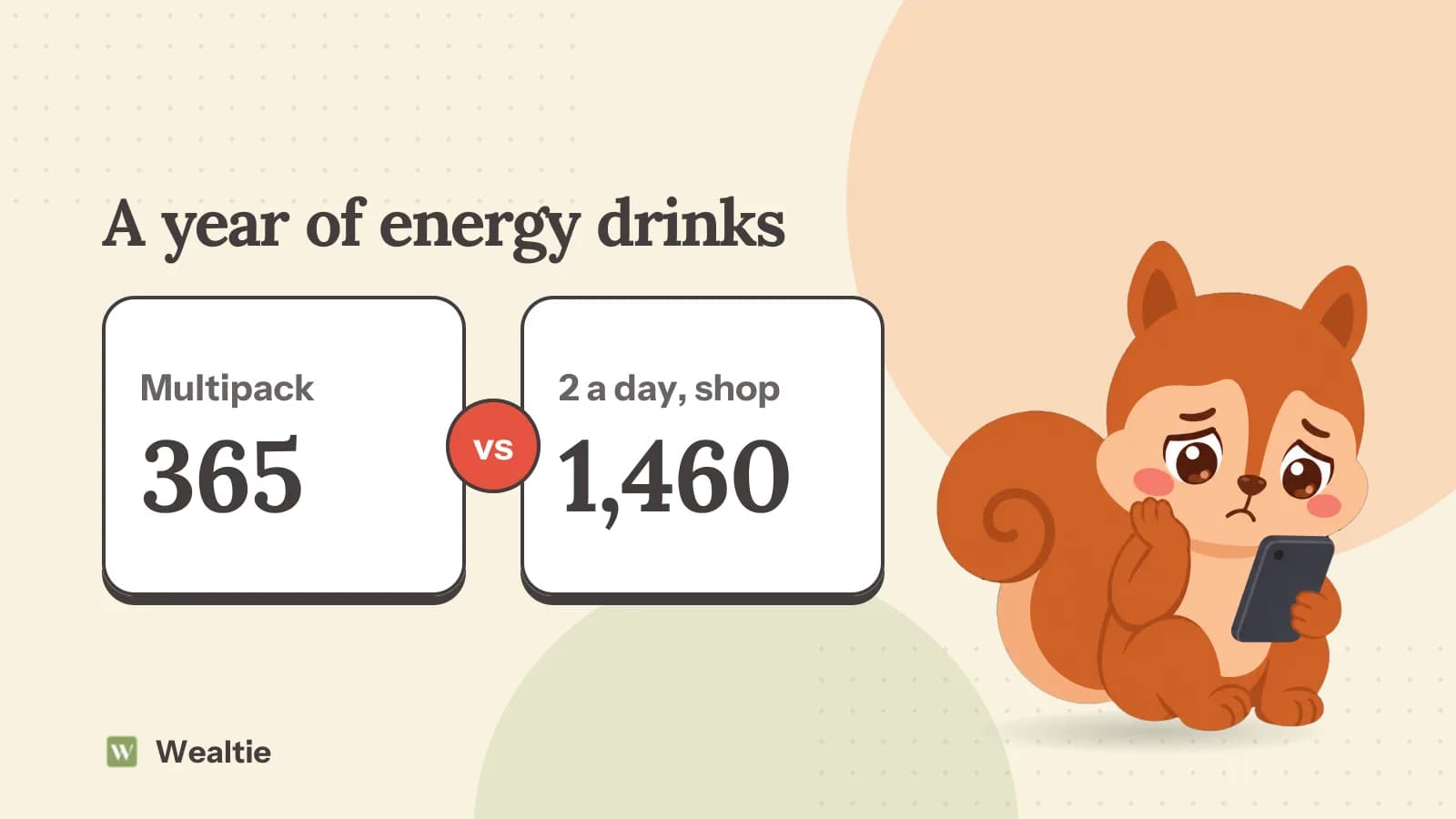
The cost of energy drinks seems small per can, but a daily habit can cost hundreds a year. In a worked example, two cans a day from a shop cost 1,460 a year, while one can bought in multipacks costs 365.
 By Wealtie Team · 3 min read
Key takeaways
- The cost of energy drinks adds up quickly with a daily habit.
- Buying single cans from shops costs much more than multipacks.
- Cutting back gradually is easier than stopping all at once.
- Water, tea and coffee made at home are far cheaper alternatives.
What is the cost of energy drinks?
Energy drinks are a common pick-me-up for students, shift workers, drivers and people with long days. A can from a shop or petrol station doesn't feel expensive, but the cost of energy drinks adds up fast when it becomes a daily habit, especially when bought one at a time.
Here's a worked example, in round numbers that work in any currency:
| Habit | Yearly cost |
|---|---|
| 1 a day, multipack | 365 |
| 1 a day, from a shop | 730 |
| 2 a day, from a shop | 1,460 |
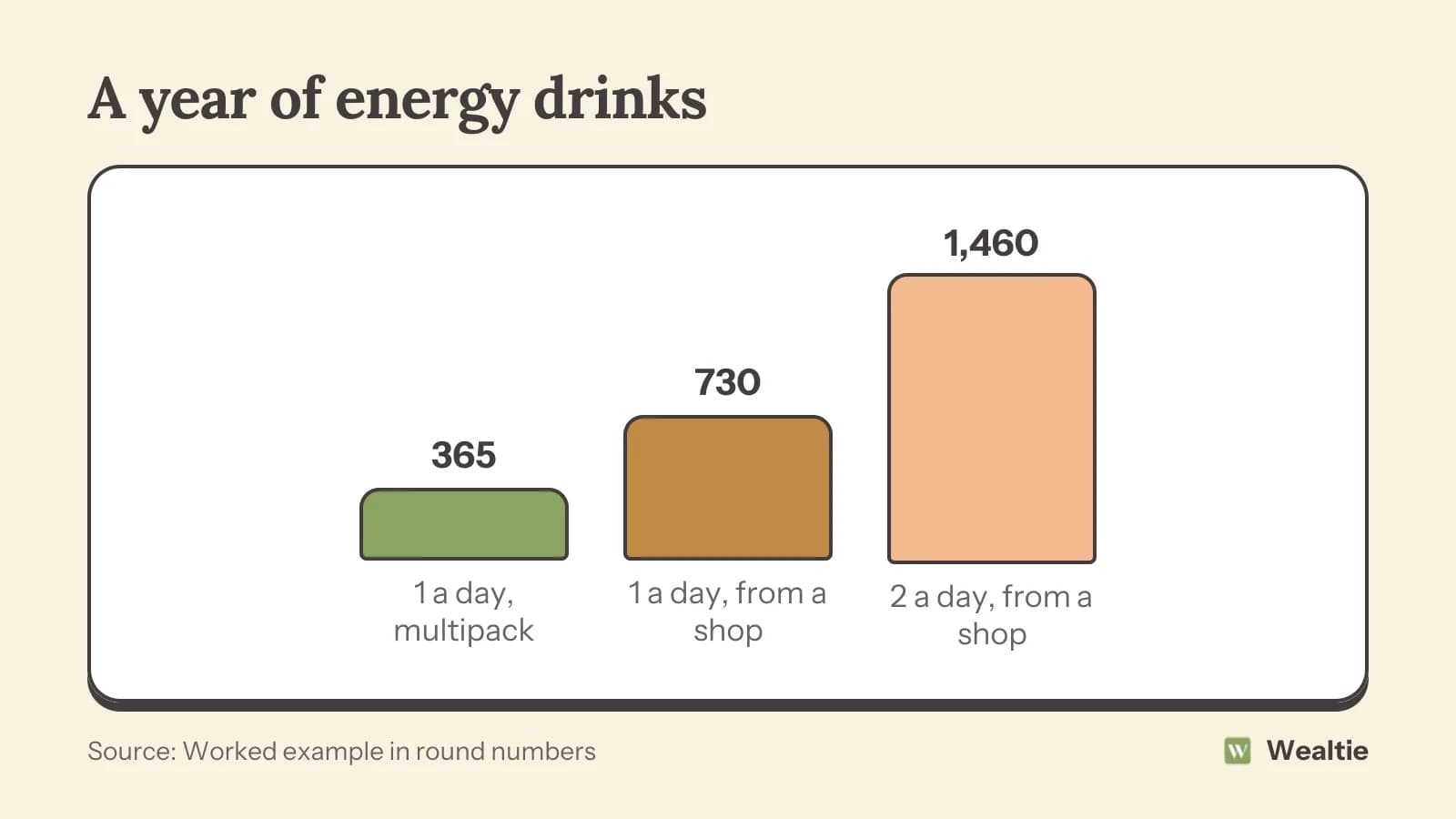
A can at around 2 from a shop, once a day, costs 730 a year. Two cans a day doubles that to 1,460. Buying the same drink in multipacks at around 1 a can halves the cost. Like a daily coffee, it's a small habit with a big yearly total. How much do you spend on coffee? shows the same pattern.
Why does the habit cost more than it seems?
Single cans are expensive
Buying cans one at a time from convenience shops, vending machines or petrol stations costs much more than buying in bulk.
It's often an add-on
Energy drinks are often bought with lunch, fuel or snacks, so they don't feel like a separate purchase. How to stop impulse buying covers checkout temptations.
The habit grows
One can in the afternoon can turn into two or three on busy weeks.
How do you cut the cost?
Buy multipacks
If you drink them regularly, buying multipacks from a supermarket cuts the price per can a lot.
Cut back gradually
Reducing from two cans a day to one, then to a few a week, is easier than stopping all at once.
Swap for cheaper drinks
Tea, coffee made at home, or water cost far less. Many people find a glass of cold water and a short walk helps with an afternoon slump.
Bring drinks from home
Taking a drink to work or college avoids shop prices. How much can bringing lunch to work save? covers the bigger picture of buying food and drink at work.
Look at sleep and routine
Many people rely on energy drinks to cope with tiredness. Better sleep, regular meals and breaks can reduce the need, which saves money too.
Is it worth thinking about health too?
Energy drinks contain caffeine and often a lot of sugar. If you drink several a day, or have health conditions, it's worth talking to a doctor or pharmacist about how much is sensible for you. Cutting back can be good for both your wallet and your wellbeing.
How do you track the habit?
Logging each can you buy for a month shows the real number. Many people are surprised by how often they buy them, especially if it's a few here and there. Once you know the total, you can set a weekly limit that fits your budget. Cost per use and how to save money on groceries cover other ways to think about everyday spending.
Think about when you reach for an energy drink. Many people buy one at the same time every day, like mid-afternoon at work, during a long drive or before a late shift. Knowing your trigger helps you plan an alternative for that moment, such as a short walk, a snack with protein, a glass of cold water or a cup of tea made at work. Changing the routine is often easier than relying on willpower.
Students and shift workers often rely on energy drinks during exams or long night shifts. Planning sleep, meals and breaks around those busy periods can reduce the need, and keeping cheaper drinks and snacks at hand stops the shop or vending machine becoming the default.
If you share a home or office with others who drink them, buying multipacks together or agreeing to cut back as a group can make the change easier and cheaper for everyone.
Keep an eye on the total over a month. Writing down each can, or logging it on your phone, shows whether you're spending more than you thought. Many people find that once they see the real number, cutting back feels much more worthwhile.
Finally, reward yourself for cutting back by putting the money you'd have spent into savings. After a few months, the total can pay for something you'll enjoy much more than another can.
How can Wealtie help you track small habits?
Give energy drinks and snacks their own expense category in Wealtie and set a monthly budget for them. Seeing the total grow during the month makes it easier to cut back before it becomes a big number.
Questions people ask
In a worked example, one can a day from a shop cost about 730 a year, and two cans a day cost about 1,460.
Yes. In a worked example, multipacks halved the price per can compared with buying single cans from shops.
Buy multipacks, cut back gradually, swap for tea, coffee or water and bring drinks from home.
Reduce slowly, from two cans a day to one, then a few a week, and look at sleep and routine to reduce tiredness.
This article is general information, not financial, tax or legal advice. Your situation is your own; check the numbers that apply to you before you act on them.