Income & freelancing: Is a company car worth it, or should you take the cash?
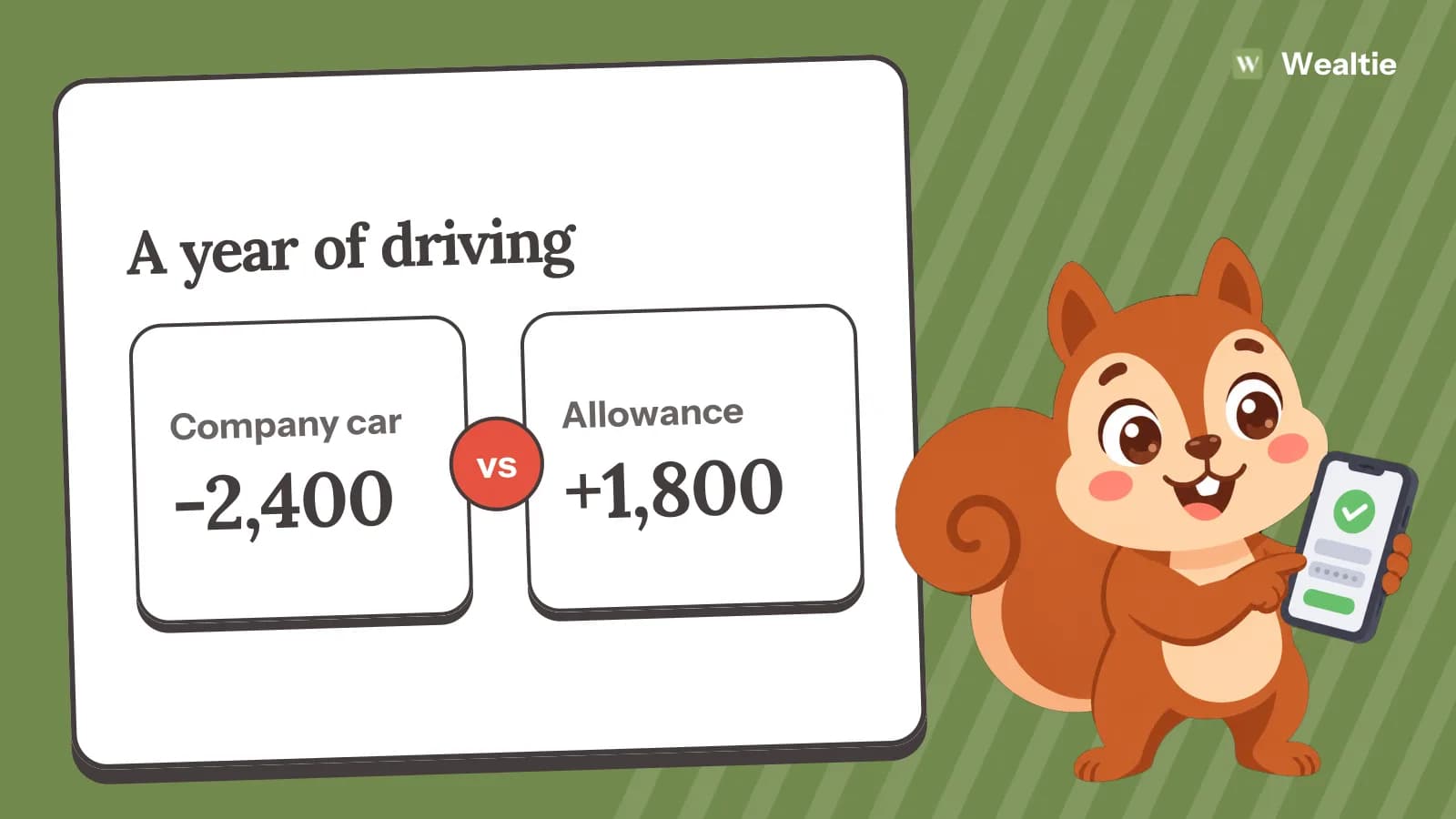
Is a company car worth it? It can be if the tax on it is low, but in a worked example, the car costs 2,400 a year in tax, while a cash allowance leaves 1,800 after paying for your own car.
 By Wealtie Team · 3 min read
Key takeaways
- A company car is worth it if the tax is low and you'd otherwise need an expensive car.
- A cash allowance gives flexibility but you pay for your own car.
- Compare the tax on the car with your real costs of running your own.
- Electric company cars can be cheaper in some tax systems.
Is a company car worth it?
A company car is a car provided by your employer, usually with insurance, servicing and sometimes fuel included. Some employers offer a cash allowance instead, which you can use to buy, lease or run your own car. Whether a company car is worth it depends on how much you drive, the type of car, how it's taxed where you live and what owning your own car would cost.
In many countries, a company car counts as a taxable benefit, so you pay tax on its value even though you don't receive cash. A cash allowance is usually taxed as income, and you then pay all your own car costs.
How do the two options compare?
Here's a worked example for one year, in round numbers that work in any currency. The company car costs you 2,400 a year in tax, with insurance and servicing covered. The alternative is an allowance of 8,000 before tax, which leaves 4,800 after tax. Running your own car costs 3,000 a year:
| Option | Amount |
|---|---|
| Company car, tax paid | 2,400 |
| Allowance after tax | 4,800 |
| Own car costs from allowance | 3,000 |
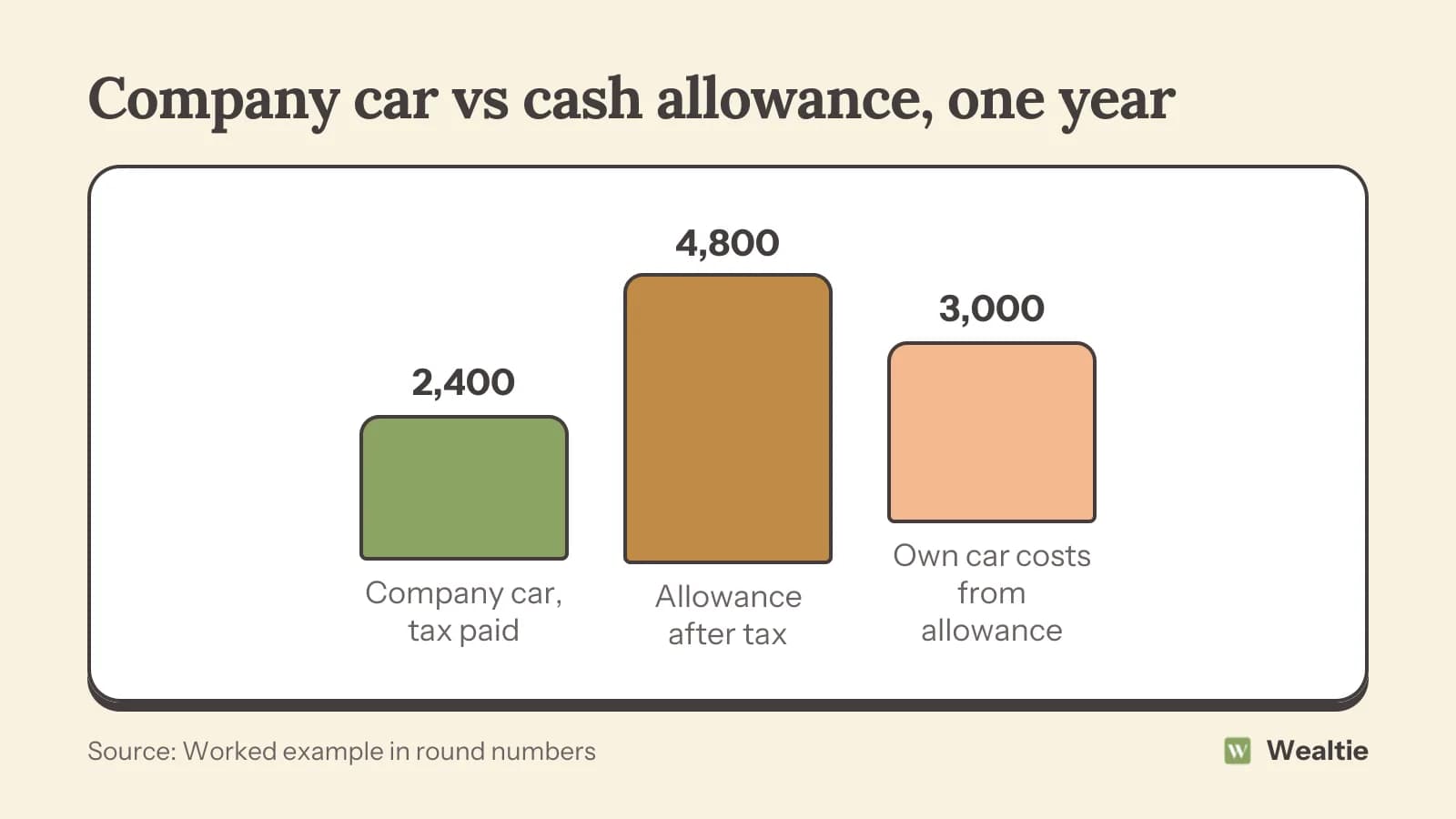
With the company car, you're 2,400 out of pocket for the year. With the allowance, you have 4,800 and spend 3,000 on your car, leaving 1,800. In this example, the allowance is better by 4,200 a year. Change the numbers, like a higher tax on the car, a cheaper own car or a bigger allowance, and the answer can flip.
When is a company car worth it?
The tax is low
In some tax systems, electric or low-emission company cars are taxed lightly, which can make them very good value. Electric car running costs covers what electric cars cost to run.
You'd otherwise need an expensive car
If your job requires a newer or larger car than you'd choose for yourself, the company car may cost less than running an equivalent car.
You drive a lot for work
High business mileage means more wear and servicing. A company car shifts those costs to your employer.
You want simplicity
No buying, selling, servicing or insurance to arrange can be worth a lot to some people.
When is the cash allowance better?
You drive little
If you mostly work from home or commute by train, an allowance gives you money you can keep or spend on cheaper transport.
You already own a car
If your current car is reliable and paid off, the allowance can be mostly profit.
The car tax is high
Large or high-emission company cars can carry a hefty tax charge.
You want flexibility
With an allowance, you choose the car, how long you keep it and whether to have one at all.
How do you work out your own numbers?
Find the tax on the company car
Ask your employer or check your country's tax rules for how much tax you'd pay each year.
Estimate your own car costs
Add up finance or depreciation, insurance, servicing, tax, repairs and fuel if it isn't covered. How much car can you afford? covers the full list.
Work out the allowance after tax
The allowance is usually taxed as income, so use your take-home amount. Gross vs net income explains the difference.
Include fuel
Check whether fuel for private journeys is paid by your employer, and whether that's taxed too.
How does it fit with other job benefits?
A company car is one of several benefits that can make one job offer better than another. How to compare job offers and the value of workplace benefits cover weighing the whole package.
It's also worth thinking about what happens when you change jobs. A company car goes back when you leave, so you'll need to arrange your own transport at short notice. With a cash allowance, the car is yours, and you can keep it when you move on. If you expect to change jobs in the next couple of years, that flexibility may matter more than a small difference in cost.
Personal use is another factor. Some company car schemes limit how the car can be used, who can drive it or how far you can take it on holiday. Check the rules if you plan to use the car for family trips or let a partner drive it.
Finally, review the decision whenever the rules or your circumstances change. Tax rules on company cars change from time to time, and a choice that made sense a few years ago may not be the best today.
How can Wealtie help you compare?
Log your car costs in a transport expense category for a few months, so you know what your own car costs to run. Adding the allowance as income, and setting a monthly budget for transport, shows clearly how much you'd keep each month.
Questions people ask
It can be if the tax is low and you'd otherwise need an expensive car. For people who drive less, a cash allowance often wins.
In many countries, yes. A company car is often a taxable benefit, so you pay tax on its value even though you don't receive cash.
Often, if you drive little, already own a reliable car or the company car would be heavily taxed. Compare your own numbers.
In some tax systems, electric company cars are taxed lightly, which can make them very good value. Check local rules.
This article is general information, not financial, tax or legal advice. Your situation is your own; check the numbers that apply to you before you act on them.