Budgeting: Is an electric car cheaper to run? A cost comparison
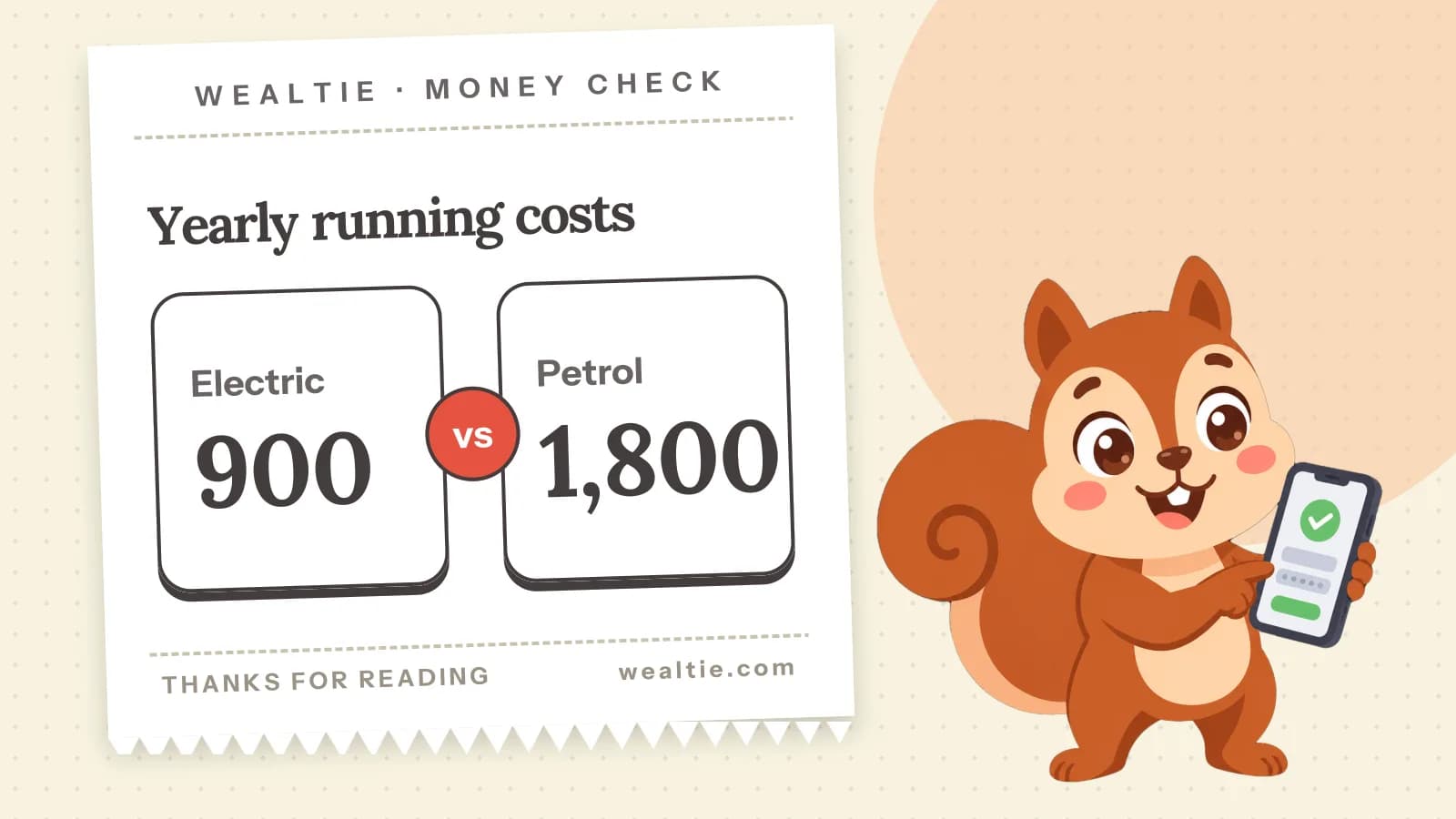
Is an electric car cheaper to run? Often, because charging at home costs less than fuel and servicing is simpler, and in a worked example running costs are about 900 a year against 1,800 for petrol, though the higher purchase price can cancel that out.
 By Wealtie Team · 3 min read
Key takeaways
- An electric car is often cheaper to run, mainly because home charging costs less than fuel.
- In a worked example, running costs are about 900 a year for electric against 1,800 for petrol.
- The purchase price, insurance and where you charge can change the answer.
- Compare the total cost over the years you'll keep the car, not just running costs.
Is an electric car cheaper to run?
Often, yes, but it depends on how you charge, how far you drive and what you pay for the car. Electric cars use electricity instead of fuel, and they have fewer moving parts, so servicing is usually simpler. For many drivers, running costs are lower. But electric cars often cost more to buy, and the savings need time to make up the difference.
Comparing the total cost over the years you'll keep the car gives the clearest answer.
How do running costs compare?
Here's a worked example for 10,000 miles a year, in round numbers that work in any currency:
| Cost | Electric | Petrol |
|---|---|---|
| Charging or fuel | 500 | 1,300 |
| Servicing and maintenance | 150 | 300 |
| Tax and other costs | 250 | 200 |
| Total | 900 | 1,800 |
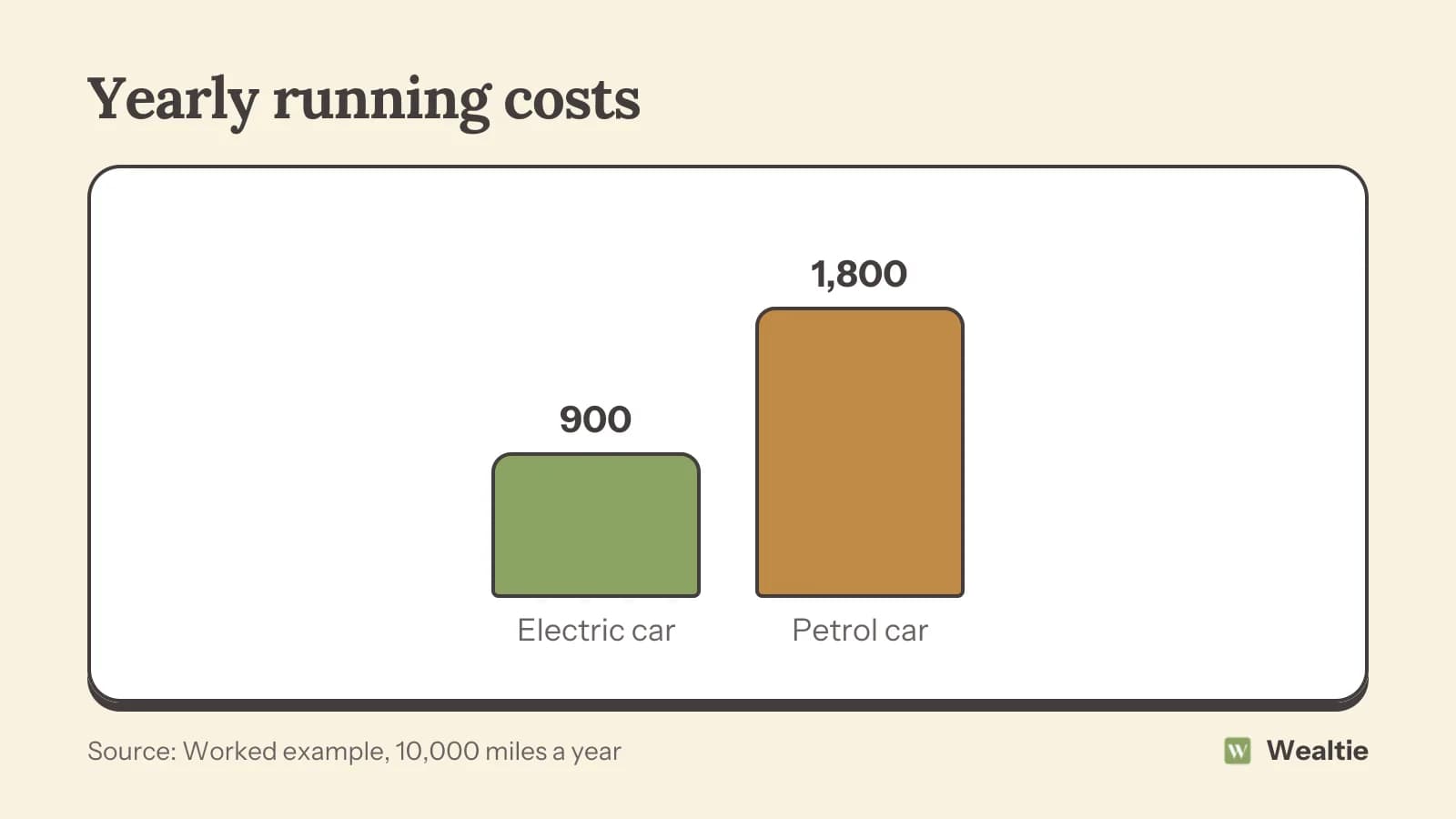
In this example, the electric car costs 900 less a year to run. Your own figures depend on electricity and fuel prices where you live, the cars you're comparing and how you drive.
How much does charging cost?
It depends a lot on where you charge. Charging at home overnight is usually the cheapest option, especially on an energy tariff with lower night rates. Public chargers cost more, and rapid chargers on motorways can cost much more, sometimes close to the cost of fuel.
If you can charge at home, an electric car is much more likely to save money. If you'd rely on public rapid chargers, the savings can shrink a lot. Some workplaces offer free or cheap charging, which helps.
Charging on a trip
On longer journeys, you'll often use public chargers, which cost more. Planning routes with cheaper chargers, charging at your destination overnight where possible and avoiding rapid chargers when there's time all help keep costs down.
Home charger costs
Installing a home charger has an upfront cost, though some places offer grants. Without a charger, you can sometimes use a standard socket, but charging is slower. Include the charger in your comparison.
What about servicing and repairs?
Electric cars have no oil changes, fewer moving parts and brakes that often wear more slowly. Servicing is usually simpler and cheaper. Tyres can wear a little faster, since electric cars are often heavier. Battery replacement is rare within the warranty period, but check the battery warranty before buying, especially for a used car. Some insurers and garages are still building experience with electric cars, so shop around for both.
What about tax and insurance?
It varies by country. In some places, electric cars pay less road tax or get tax benefits as company cars. Insurance can be higher for some electric models, since repairs can cost more. Get insurance quotes before you buy, since they can change the total a lot. Check whether there are charges for driving in city zones, since electric cars are exempt in some places.
Does the purchase price cancel out the savings?
Sometimes. If an electric car costs 5,000 more to buy than a similar petrol car, and saves 900 a year to run, it takes about five and a half years to make up the difference. If you keep cars for a long time, that can work out well. If you change cars every two or three years, the higher price might not be repaid.
Used electric cars are becoming more common and more affordable, which can change the maths. Leasing is another option. Lease or buy a car covers the trade-offs, and how much car can you afford helps you set a budget.
Who benefits most from an electric car?
People who can charge at home, drive a fair amount each year, mostly make shorter trips and keep cars for several years usually save the most. If you drive very little, the savings on fuel are smaller, and a cheaper car might cost less overall.
How do you plan for car costs?
Whatever you drive, set aside money each month for servicing, tyres and repairs. The car repair fund covers how much to save. Electric cars still need tyres, wipers, brakes and a yearly check, so keep a small fund going. If you stick with petrol for now, how to save money on fuel has ways to cut running costs.
How do you track car running costs in Wealtie?
Log charging or fuel, servicing and insurance in their own expense categories, so you can see the true yearly cost of your car. Regular costs like insurance or a charging subscription can be set up as recurring transactions. Comparing a year of costs shows whether the switch is saving what you expected. A monthly limit in the budget tracker keeps transport costs in line.
Questions people ask
Often, yes. In a worked example, an electric car costs about 900 a year to run against 1,800 for petrol.
Home charging overnight is usually cheapest, while public rapid chargers can cost much more.
It can, if running savings make up for a higher purchase price over the years you keep the car.
Usually. They have fewer moving parts and no oil changes, though tyres can wear a little faster.
This article is general information, not financial, tax or legal advice. Your situation is your own; check the numbers that apply to you before you act on them.