Income & freelancing: MBA cost: the full price and whether it pays off
MBA cost is much more than tuition, because a full-time programme also means giving up a salary for a year or two. In a worked example, a one-year MBA costs 40,000 in fees and 45,000 in lost take-home pay.
 By Wealtie Team · 3 min read
Key takeaways
- MBA cost includes tuition, living costs and the salary you give up.
- Part-time and online MBAs let you keep earning.
- Employer sponsorship can cover much of the cost, often with conditions.
- Work out how long it would take a higher salary to repay the full cost.
How much does an MBA cost?
A Master of Business Administration (MBA) is a postgraduate degree in business and management, often taken by people who want to move into leadership roles, change industry or start a business. MBA cost varies enormously between schools and countries, from relatively affordable online programmes to some of the most expensive degrees available.
The biggest cost of a full-time MBA is often not the tuition but the salary you give up while studying. Here's a worked example of three ways to study, in round numbers that work in any currency:
| Option | Total cost |
|---|---|
| Full-time, 1 year, incl. lost pay | 85,000 |
| Part-time, 2 years, keep working | 35,000 |
| Online, keep working | 20,000 |
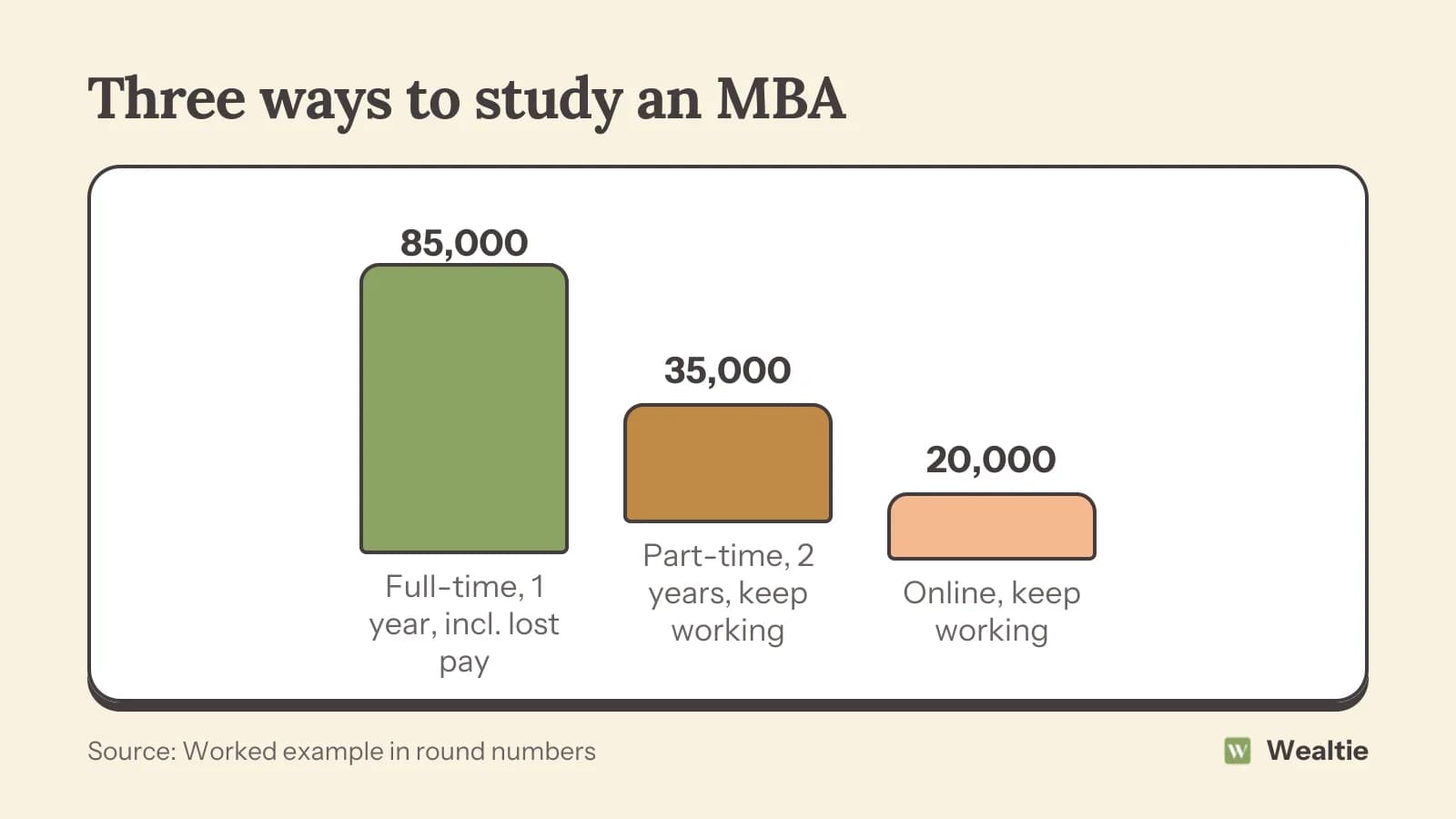
The full-time figure is made up of 40,000 in fees and 45,000 in lost take-home pay. If you have to move for the course, living costs and relocation add more. Part-time and online programmes cost less overall because you keep your salary, though they take longer and need a lot of evening and weekend study.
What does an MBA cost beyond tuition?
Lost salary
For full-time programmes, the income you give up is usually the biggest cost. This is the opportunity cost of studying.
Living costs
If you move to study, rent, food and travel in a new city can be expensive, especially near top business schools.
Application and test fees
Entrance tests, application fees and preparation courses add up before you've even been accepted.
Travel and networking
Study trips, conferences and networking events are often part of the experience and may cost extra.
Pension and benefits
Leaving work can mean pausing pension contributions and losing workplace benefits for a year or two. The value of workplace benefits covers what those are worth.
How do people pay for an MBA?
Employer sponsorship
Some employers pay all or part of the fees, especially for part-time study. Sponsorship often comes with conditions, like staying with the company for a set time afterwards or repaying fees if you leave.
Savings
Many students use savings, sometimes built up over years specifically for the MBA.
Scholarships
Business schools offer scholarships based on merit, background or financial need. It's worth applying even if you're unsure you'll qualify.
Loans
Some students borrow to cover fees and living costs. Compare interest rates and plan how repayments fit into your budget after graduating. How to budget with student loan repayments covers planning for repayments.
Is an MBA worth it?
Work out the payback
Divide the total cost by how much more you expect to take home each year after the MBA. If a full-time MBA costs 85,000 and you expect to take home 10,000 more a year, it would take about eight and a half years to break even. A part-time MBA costing 35,000 with the same increase would break even in about three and a half years.
Be realistic about the salary increase
Talk to people in the roles you're aiming for, and be cautious about headline salary figures from schools. Results vary widely by industry, location and experience.
Consider the non-financial value
Many graduates value the network, skills and confidence an MBA brings. Those matter, but it's worth being clear about whether you need the degree for your goals, or whether experience, a shorter course or a certification would get you there.
How do you plan the budget?
Save a buffer
If you're stopping work, save enough to cover living costs for the programme and a few months afterwards while you look for your next role.
Keep fixed costs low
Lower rent and fewer commitments during the MBA make your savings go further.
Negotiate your next salary
After graduating, negotiating your offer can shorten the payback period. How to negotiate a salary offer covers how.
It's worth timing an MBA carefully too. Many people find the best moment is a few years into their career, when they have enough experience to get the most from the course but haven't yet taken on large commitments like a mortgage or children. Others wait until an employer will sponsor them, which can save tens of thousands. There's no single right time, but thinking about your finances over the next five years helps you choose.
If you're married or in a long-term relationship, talk through the plan with your partner early. A full-time MBA can mean a year or two on one income, a move to a new city or long hours of study, and those changes affect the whole household budget. Agreeing on a plan, including how you'll cover shared costs, makes the experience far less stressful.
How can Wealtie help you plan an MBA?
Set a budget for your study period and log fees, living costs and any income in their own expense categories. After graduating, tracking your new salary shows how quickly you're recovering the cost.
Questions people ask
Costs vary widely. In a worked example, a one-year full-time MBA cost 40,000 in fees plus 45,000 in lost take-home pay.
Yes, usually. You keep your salary while studying, so the total cost is much lower, though it takes longer and needs evening and weekend study.
Some employers sponsor all or part of an MBA, especially part-time, often with conditions like staying for a set time afterwards.
Divide the total cost by the extra take-home pay you expect each year to see how long it would take to break even.
This article is general information, not financial, tax or legal advice. Your situation is your own; check the numbers that apply to you before you act on them.