Income & freelancing: How much are your workplace benefits worth?
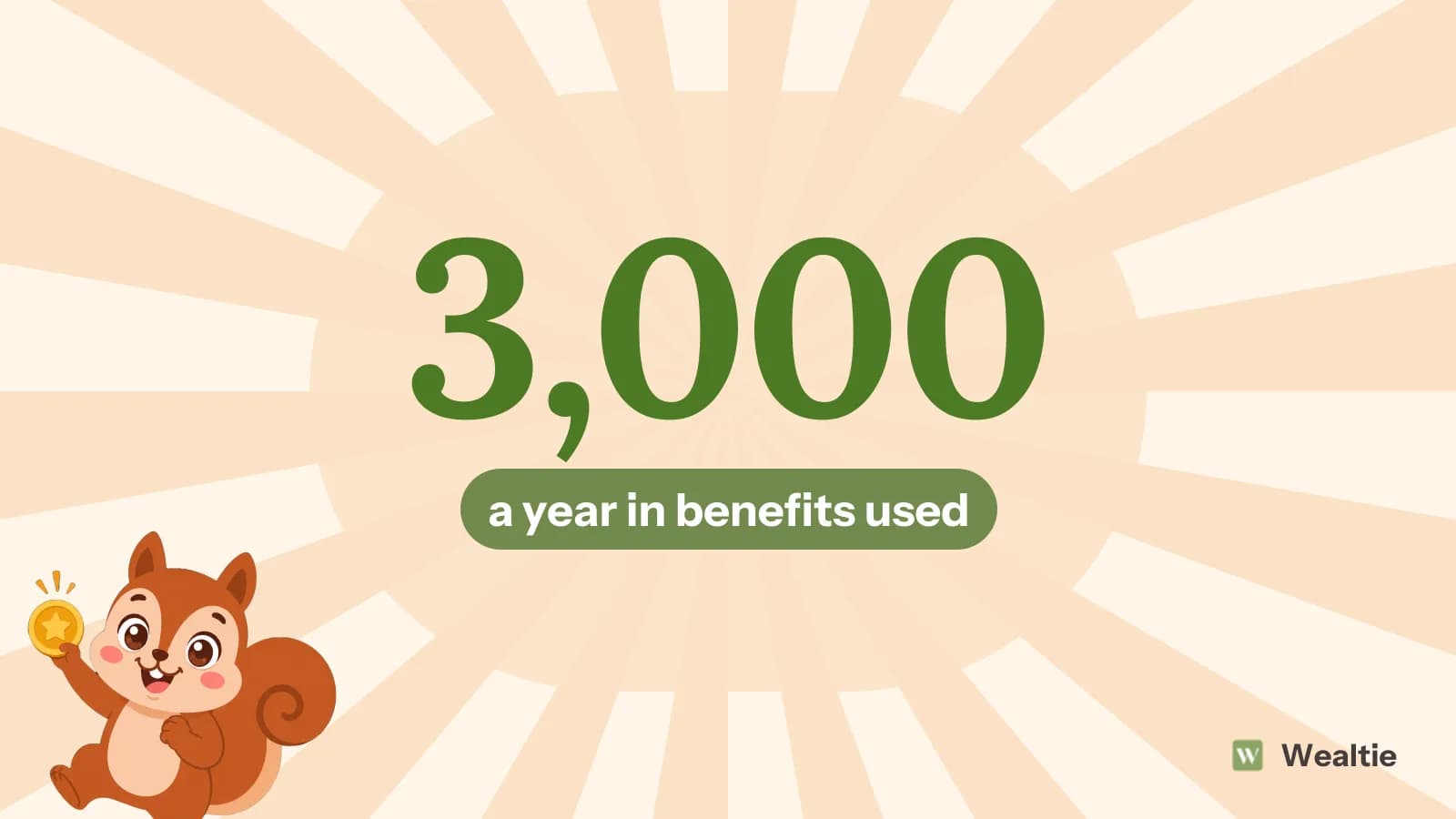
Workplace benefits can be worth a lot, but only if you use them, and the biggest is often employer pension matching. In a worked example, a set of benefits is worth about 3,000 a year to an employee who uses them, on top of salary.
 By Wealtie Team · 3 min read
Key takeaways
- Workplace benefits can be worth a lot on top of salary, if you use them.
- In a worked example, benefits are worth about 3,000 a year to an employee who uses them.
- Employer pension matching is often the most valuable benefit, so make sure you get the full match.
- Check your benefits once a year, since many people miss ones they're entitled to.
What are workplace benefits worth?
More than many people realise. Workplace benefits are the extras an employer provides on top of your salary: pension contributions, insurance, extra holiday, discounts, health support and schemes that help with costs like childcare or cycling to work. They can add up to a significant amount each year. But a benefit only has value if you use it, and many people leave money on the table. New starters often get a long benefits pack on day one and never look at it again.
Benefits vary a lot between employers and countries, so check your own package. A short conversation with HR can uncover benefits that aren't well advertised.
How much can benefits be worth?
Here's a worked example for an employee who uses their benefits, in round numbers that work in any currency:
| Benefit | Yearly value |
|---|---|
| Employer pension matching | 1,500 |
| Health or dental cover | 600 |
| Extra holiday days | 500 |
| Discounts and schemes | 400 |
| Total | 3,000 |
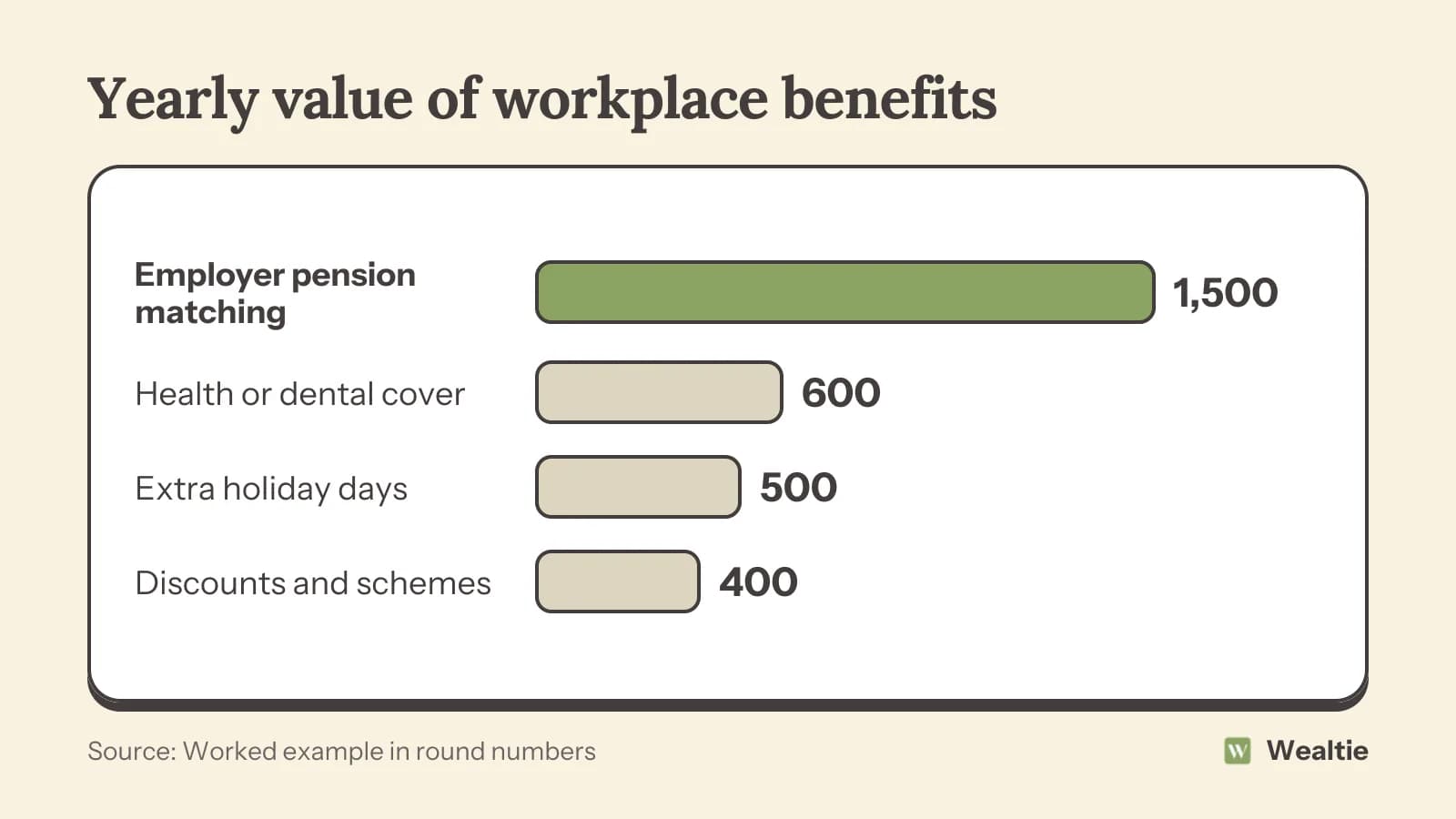
In this example, benefits add about 3,000 a year on top of salary. Someone who didn't join the pension scheme or use the health cover would get much less. Adding up your own benefits this way shows what your job is worth, beyond the salary.
Why does pension matching matter most?
Because it's extra pay you only get if you take part. Many employers match what you pay into a workplace pension, up to a limit. If you pay in less than the limit, you miss part of the match. Check what your employer offers and how much you need to contribute to get the full amount. Should I save or invest covers retirement saving more broadly. If you can't afford the full match straight away, raising your contribution a little each year gets you there over time.
What other benefits are common?
Depending on your employer, you might have:
- Health, dental or eye care cover, or help with costs like glasses
- Life insurance or income protection
- Extra holiday days or the option to buy more
- Employee assistance programmes, with free counselling and advice
- Discount schemes for shops, gyms or travel
- Help with childcare costs or cycle-to-work schemes, in some countries
- Training and qualifications paid for by the employer
How to save money on glasses and how to save money on childcare cover two areas where workplace help can save a lot. Employee assistance programmes often include free financial and legal advice too.
Check the small print
Some benefits are taxable, which reduces their value, and some have conditions, like staying a set time after paid training. Ask your HR team if anything is unclear.
Benefits with a deadline
Some benefits must be chosen at a set time each year, like during an enrolment window. Missing it can mean waiting another year. Put the date in your calendar.
How do you make sure you're using your benefits?
Review them once a year, or when you join a new employer. Life changes, like having a child, moving home or starting to cycle to work, can make benefits you ignored suddenly useful. Read your benefits guide or ask HR for a summary. List what you could use, and set reminders for things like eye tests or dental check-ups that are covered. Many people discover a benefit they've been paying for privately, like insurance or a gym, and can cancel the private version. That's an instant saving that shows up in your budget straight away.
How do benefits affect job decisions?
When comparing jobs, benefits can make a big difference, and they're often easier to negotiate than salary. A lower salary with strong pension matching and health cover can be worth more than a higher salary with few extras. Putting a yearly value on each benefit helps you compare fairly. Remember that some benefits, like pension matching, also grow over time, which adds to their value. Gross vs net income helps with the salary side.
What if your employer offers few benefits?
You can still build some yourself: a personal pension, your own insurance where needed and savings for health costs. Setting these up as automatic payments on payday makes them feel like workplace benefits you don't have to think about. Factor this into salary negotiations, since an employer with fewer benefits may be willing to pay more instead. Some small employers offer flexibility or extra holiday instead of formal benefits, which can be just as valuable.
How do you track benefits in Wealtie?
Log your pay in the income tracker, and when a benefit saves you money, like covered glasses or a discount, note the lower cost in your expense categories. Looking back over a year shows how much your benefits saved you.
Questions people ask
In a worked example, about 3,000 a year to an employee who uses them. Your own figure depends on your package.
When your employer adds money to your pension to match what you pay in, up to a limit.
Review them once a year, join the pension to get the full match and use covered services like eye tests.
Some are and some aren't, depending on the benefit and where you live. Ask your HR team.
This article is general information, not financial, tax or legal advice. Your situation is your own; check the numbers that apply to you before you act on them.