Income & freelancing: Coding bootcamp cost: is it worth the money?
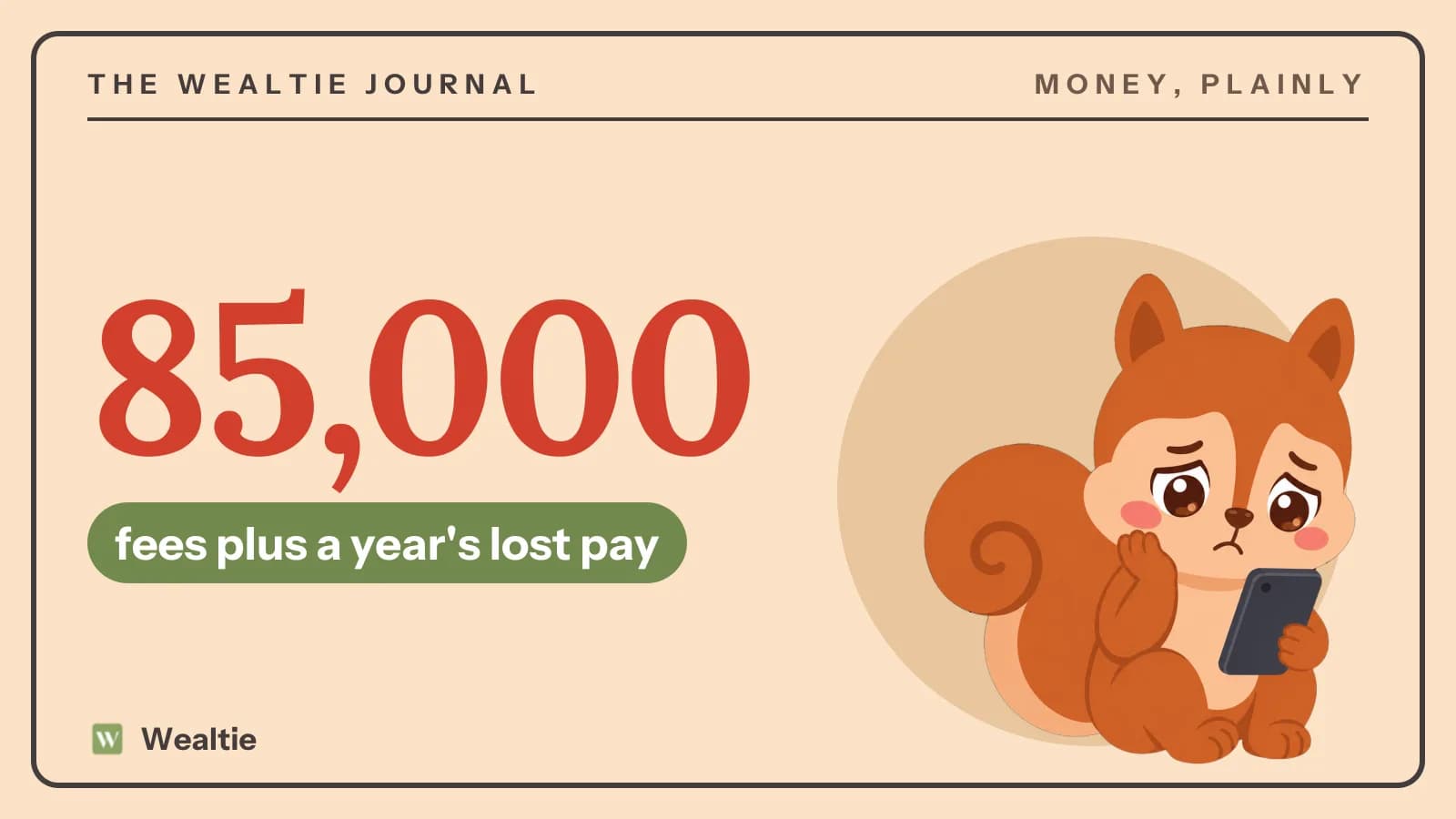
Coding bootcamp cost includes the fee plus the income you give up while studying full-time, which can be the bigger number. In a worked example, a 12-week bootcamp costs 8,000 in fees and 6,000 in lost pay.
 By Wealtie Team · 3 min read
Key takeaways
- Coding bootcamp cost includes fees, lost income and a buffer for the job search.
- Part-time and online bootcamps let you keep earning while you learn.
- Income share agreements and deferred fees need careful reading.
- Try free courses first to check you enjoy coding before paying.
How much does a coding bootcamp cost?
A coding bootcamp is an intensive course that teaches programming skills in weeks or months rather than years. Many people use one to change career into software development, data or design. Coding bootcamp cost varies a lot depending on the provider, the subject, the length and whether you study full-time, part-time or online.
The fee is only part of the cost. If you study full-time, you'll probably stop working, so the income you give up can be as large as the fee itself. You may also need a laptop, and it can take time to find a job afterwards. Here's a worked example of a 12-week full-time bootcamp, in round numbers that work in any currency:
| Cost | Amount |
|---|---|
| Course fee | 8,000 |
| Lost take-home pay, 3 months | 6,000 |
| Laptop and software | 800 |
| Job search period buffer | 2,000 |
| Total | 16,800 |
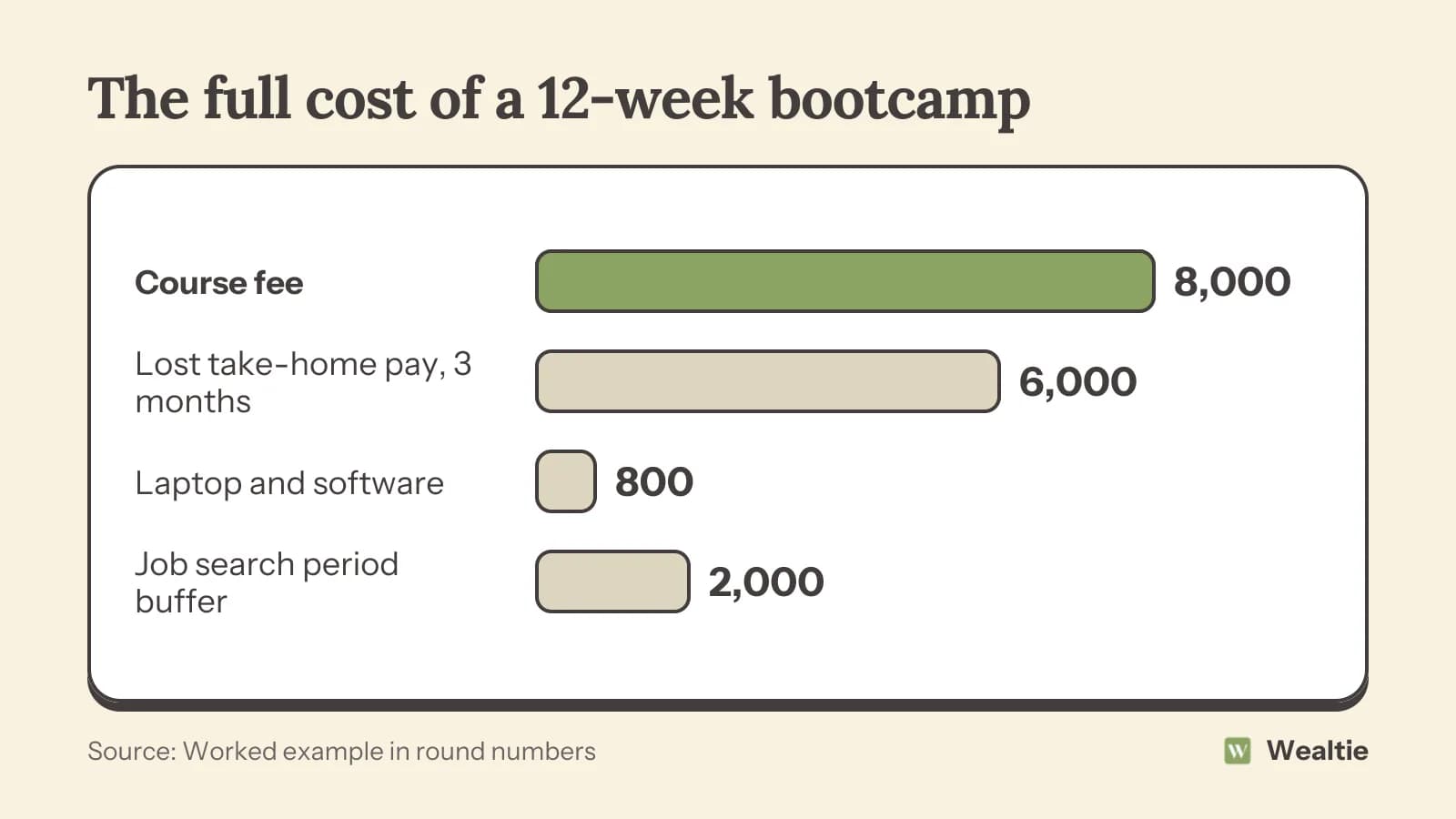
That's nearly 17,000 once everything is counted. A part-time bootcamp over six months might cost around 6,000 with no lost income, since you keep working, though it takes longer and needs evening and weekend study.
What payment options are there?
Paying upfront
Paying the full fee upfront is sometimes discounted, but it needs savings. How to use a sinking fund covers saving for a big cost like this.
Instalments
Many providers let you spread the fee over the course or a few months. Check whether instalments cost more in total.
Loans
Some bootcamps partner with lenders. Compare the interest rate and total cost with other borrowing options before signing.
Income share agreements and deferred fees
Some bootcamps let you pay nothing upfront and then pay a share of your salary, or a fixed amount, once you're in work above a set income. These can make bootcamps accessible, but the total you repay can be much higher than the upfront fee. Read the terms carefully: how much you'll pay, for how long, the income threshold and what happens if you lose your job.
Employer funding
If you're moving into a technical role within your current company, your employer may help pay. It's worth asking.
Is a coding bootcamp worth it?
When it can pay off
If you're motivated, enjoy problem-solving and choose a reputable bootcamp with strong support for job hunting, the move into tech can raise your earning potential over time. Some people recover the cost within a few years.
What to check first
Ask bootcamps for evidence of graduate outcomes, like how many find relevant jobs and how long it takes, and look for independent reviews. Be cautious of guarantees that sound too good. Job markets change, and results depend on effort, location and timing.
Try before you commit
Free online courses and tutorials let you test whether you enjoy coding before spending thousands. If you're still keen after a month or two of self-study, a bootcamp is a safer bet.
How do you plan the budget?
Save an income buffer
If you're stopping work, save enough to cover your essential costs for the course plus a few months of job hunting. How to build an emergency fund covers building that cushion.
Cut costs while studying
Lowering fixed costs for a few months, like subscriptions or eating out, stretches your savings further. How to plan a career change budget covers managing money through a career switch.
Plan for a starting salary
Your first tech job may pay less than you hope, especially if you're changing career mid-life. Plan your budget for a modest starting salary, and use how to compare job offers to look at the full package.
Consider part-time first
If you can't afford to stop working, a part-time or online course lets you keep your income while you learn.
What are cheaper alternatives?
Self-teaching with free and low-cost resources, community coding groups, short online courses and local college classes can all build skills for far less. They take more self-discipline, and you won't get the same structure or career support, but many developers started this way.
Talk to recent graduates before you sign up. Most bootcamps will put you in touch with former students, and online communities are full of honest accounts. Ask how long their job search took, what their first role paid and what they wish they'd known. Their answers will tell you more about the real cost and payoff than any brochure, and help you plan a realistic budget for the months after the course ends.
How can Wealtie help you plan the switch?
Set a budget for the months you're studying, based on your savings rather than a salary, and log course fees and living costs in their own expense categories. Logging any income during the course, and your first salary afterwards, shows how long it takes to recover the cost.
Questions people ask
In a worked example, a 12-week full-time bootcamp cost 8,000 in fees, plus 6,000 in lost pay, a laptop and a job-search buffer.
It can be for motivated learners who choose a reputable provider with strong job support. Check graduate outcomes and try free courses first.
An income share agreement lets you pay nothing upfront and then pay a share of your salary once you earn above a set amount. The total can be higher than the fee.
Yes. Part-time and online bootcamps let you keep earning, though they take longer and need evening and weekend study.
This article is general information, not financial, tax or legal advice. Your situation is your own; check the numbers that apply to you before you act on them.