Income & freelancing: Gross vs net income: which number to budget with
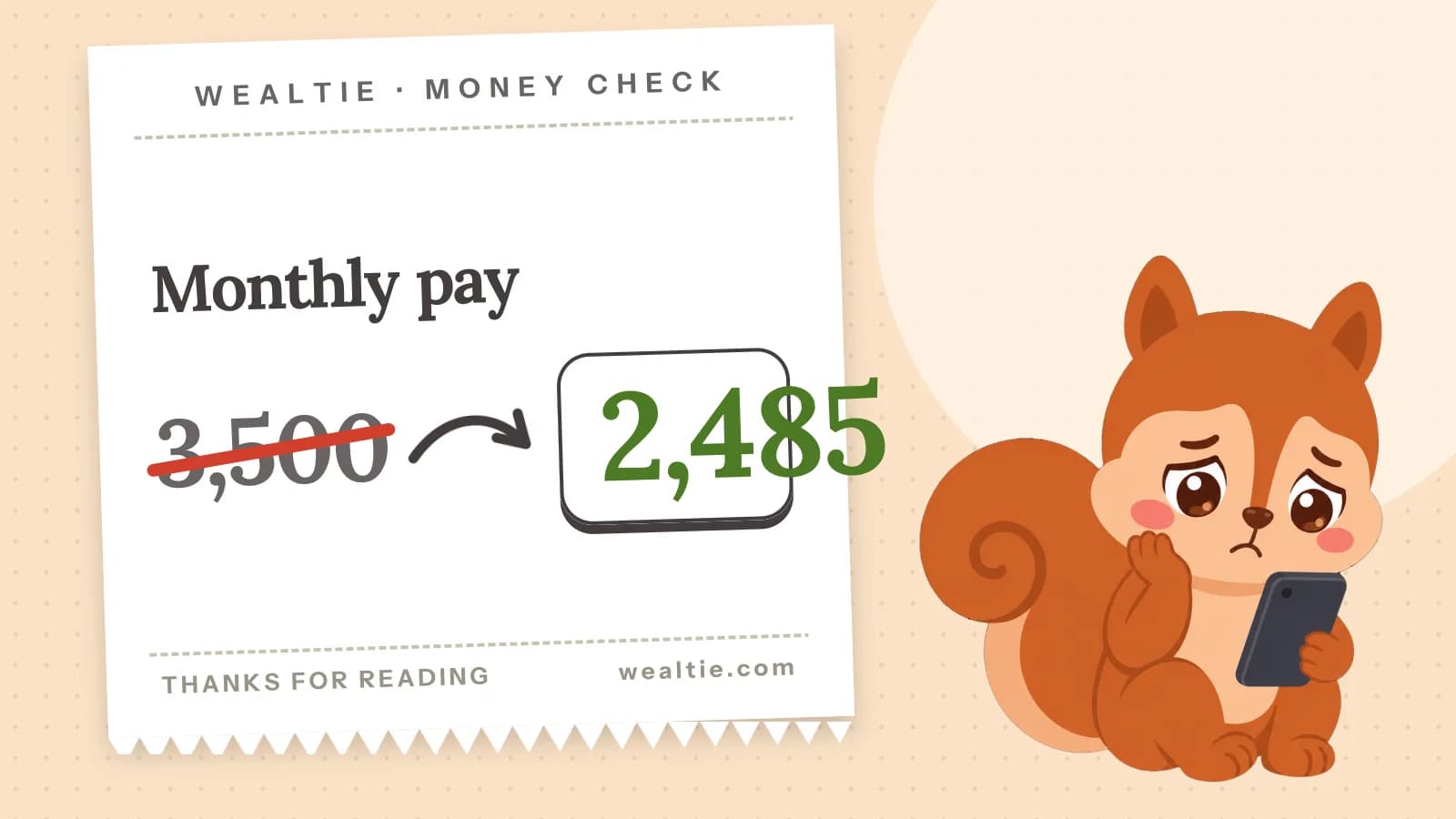
Gross vs net income is the difference between what you earn before deductions and what reaches your account. In a worked payslip, 3,500 gross becomes 2,485 net, and that net figure is the one to budget with.
 By Wealtie Team · 3 min read
Key takeaways
- Gross income is your pay before deductions, and net income is what reaches your account.
- In a worked payslip, 3,500 gross becomes 2,485 net after tax, social contributions, pension and health cover.
- Build your budget from net income, because that's the money you can spend.
- Pension contributions taken from pay are still yours, so count them as saving when you look at your overall finances.
What is the difference between gross vs net income?
Gross income is what you earn before anything's taken off. Net income, or take-home pay, is what's left after tax and other deductions, and it's what lands in your account. A job advertised at 42,000 a year is a gross figure. What you'll live on is less.
What comes off between gross and net?
It depends on where you live and what you've signed up for, but a payslip usually shows something like this. Here's a worked monthly example in round numbers that work in any currency:
| Line | Amount |
|---|---|
| Gross pay | 3,500 |
| Income tax | −500 |
| Social contributions, such as social security or national insurance | −280 |
| Pension contribution | −175 |
| Health cover or other benefits | −60 |
| Net pay | 2,485 |
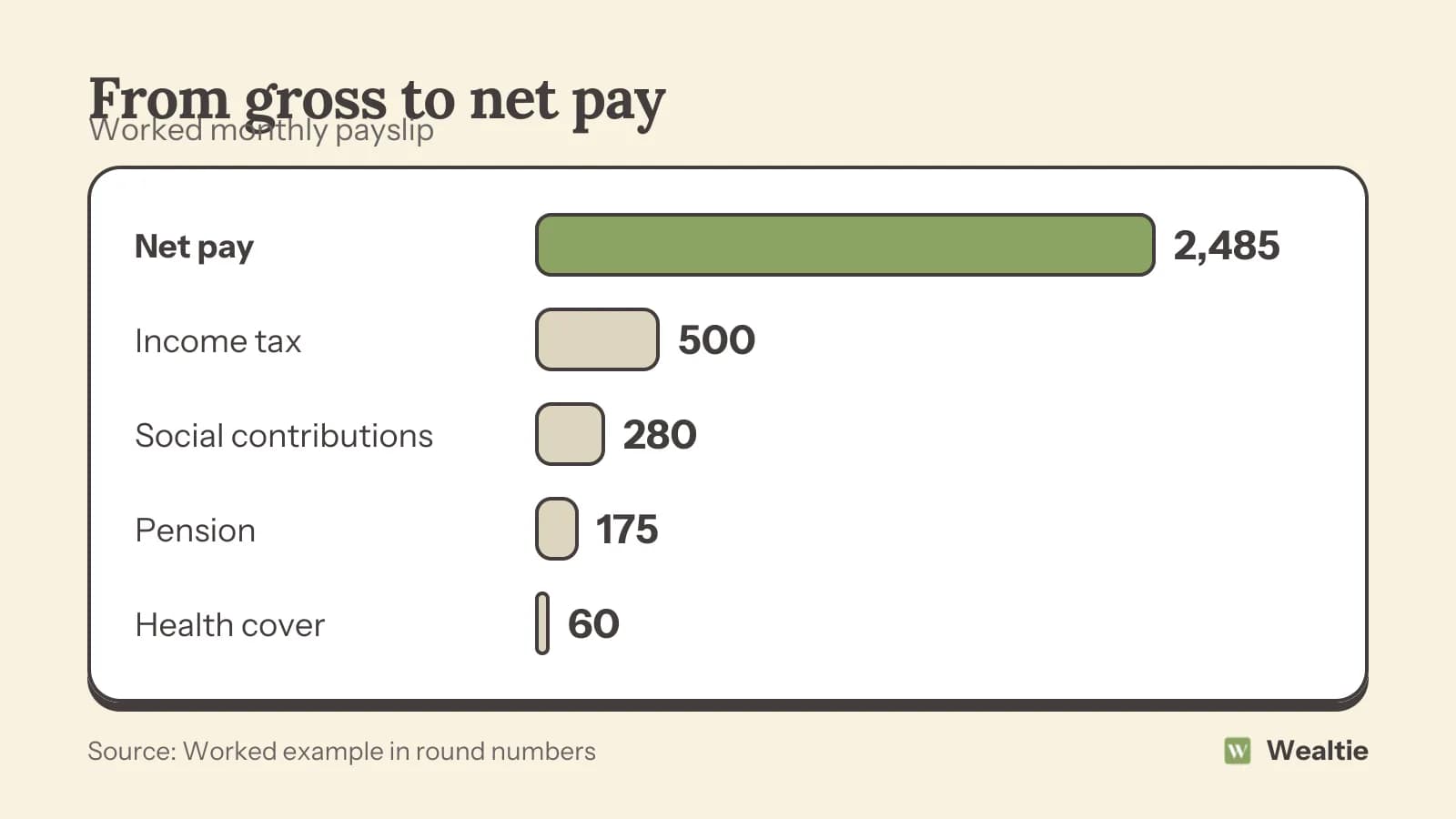
Over a year, that's 42,000 gross and 29,820 net. Your payslip may also list employer contributions, like the employer's share of pension or social contributions. They don't come out of your gross pay, but they're part of what the job's worth. The deductions in your country might have different names, and some, like student loan repayments, only apply to some people.
Which number should you budget with?
Net. It's the money you can spend, and every bill, saving and purchase comes out of it. Building a budget from gross pay is one of the most common reasons a budget doesn't work: the plan says you've got 3,500 and the account says 2,485.
If you've just started a job, wait for the first payslip before setting the budget, since the first one can include odd amounts. Some rules, like the 50/30/20 rule, are usually applied to take-home pay for exactly this reason. The budget calculator asks for take-home pay.
When does gross income matter?
When someone else is measuring you. Lenders often look at gross income for mortgages and loans. Rent rules of thumb sometimes use gross. Job offers and pay rises are quoted in gross.
So when you compare a job offer or a raise, work out what it means in net terms. A raise of 300 a month gross might be noticeably less once tax and deductions are taken. How to negotiate a pay rise touches on this, and how much rent can I afford explains why a rent rule based on gross can mislead.
Should pension contributions count as spending?
No. Money paid into your pension is still yours, just saved for later. When you look at how much you save in total, add it in. In the example, 175 a month goes to the pension before you see it. If you also move 200 to savings, you're saving 375 a month in total.
For your monthly budget, though, start from net, since pension money isn't available to spend.
What if your net pay changes month to month?
Check your payslip each month to see why. Overtime, bonuses and commission push it up. A tax code change, a new benefit or a higher pension contribution can push it down. Some deductions only happen in certain months.
If your pay varies, budget on the lowest typical net figure and treat anything above it as extra. The guide on how to budget on irregular income has the method.
What about freelancers and the self-employed?
There's no payslip, so you work out net yourself. Your gross is what clients pay you. Take off business costs to get your profit, then set aside tax on that profit. What's left is your net. How much to set aside for taxes covers the set-aside, and the self-employed expenses list covers costs.
Budget from that net figure, not from what arrives in the account, since part of each payment belongs to the tax bill. Move the tax share to a separate account the day each payment arrives.
How do you check your own numbers?
Look at your last payslip and write down gross, each deduction and net. Then multiply net by 12, by 26 if you're paid every two weeks, or by 13 if you're paid every four weeks, to get your yearly take-home. That's the number to plan the year with.
If you're starting a new job, ask for a sample payslip or use your country's official tax calculator to estimate net pay before you accept.
How do you track net income in Wealtie?
Log your take-home pay as income, and set your monthly income goal to your net figure. The income tracker shows how close each month comes, and your budget tracker limit should fit inside that net amount.
Questions people ask
Gross income is your pay before deductions, and net income is what reaches your account after tax, social contributions, pension and other deductions.
Net income, because that's the money you can spend. Budgeting from gross is a common reason budgets fall short.
Yes. Take-home pay is another name for net pay, the amount that reaches your account.
Overtime, bonuses, tax code changes, pension contributions or deductions that only apply in some months. Check your payslip to see which.
This article is general information, not financial, tax or legal advice. Your situation is your own; check the numbers that apply to you before you act on them.