Income & freelancing: Professional certification cost: is it worth paying?
Professional certification cost includes study materials, exam fees and ongoing renewals, not just the course. In a worked example, a certification costs 1,500 to gain and 150 a year to keep.
 By Wealtie Team · 3 min read

Key takeaways
- Professional certification cost includes training, exams, materials and renewals.
- Many employers pay for certifications that help in your role.
- Self-study can cut costs if the exam allows it.
- Check that the certification is valued in your field before paying.
How much does a professional certification cost?
Professional certifications prove your skills in a specific area, from project management and accounting to IT, marketing, HR and many trades. They can help you get a new job, earn a promotion or charge more as a freelancer. Professional certification cost depends on the field and the level, and it usually includes more than the course itself.
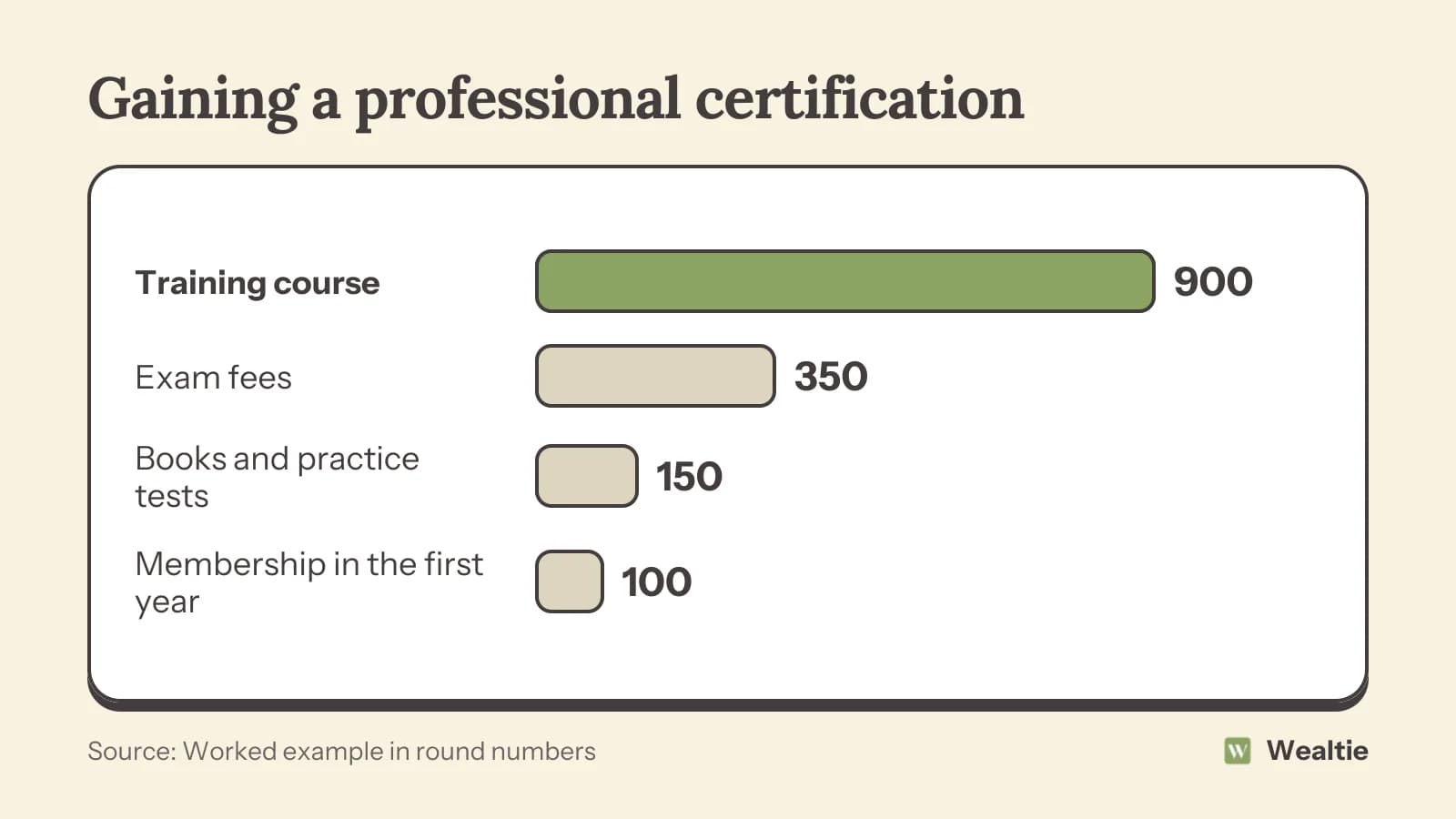
Here's a worked example of gaining a mid-level certification, in round numbers that work in any currency:
| Cost | Amount |
|---|---|
| Training course | 900 |
| Exam fees | 350 |
| Books and practice tests | 150 |
| Membership in the first year | 100 |
| Total | 1,500 |
On top of that, many certifications need renewing, often through yearly fees or continuing professional development, which might cost around 150 a year. If you fail an exam, a resit adds another fee. Entry-level certifications can cost much less, while advanced ones with several exams can cost far more.
What costs are involved?
Training
Many people take a course, either in person, online or through a training provider. Prices vary widely for the same certification, so compare providers.
Exams
Each exam usually has a fee, and some certifications need several. Resits often cost the same or slightly less.
Study materials
Books, practice tests and online resources help you prepare. Second-hand books and free resources can cut this cost.
Membership
Some certifications require you to join a professional body, with a yearly fee.
Renewal and continuing development
Many certifications expire unless you renew them, complete a set number of training hours or pay a yearly fee. Factor this into the long-term cost.
Time
Studying takes time, sometimes months. If you take time off work to study or sit exams, that has a cost too.
How do you pay less for a certification?
Ask your employer
Many employers pay for certifications that help in your role, sometimes including study time. Some ask you to repay the cost if you leave within a set period, so check the terms.
Self-study
If the exam doesn't require a formal course, studying on your own with books and practice tests can cost far less.
Compare training providers
The same certification can be taught by many providers at very different prices. Look at pass rates, reviews and what's included.
Look for bundles and discounts
Some providers bundle training, materials and exam fees for less than buying separately. Professional bodies sometimes offer discounts to students or members.
Prepare well to avoid resits
Thorough preparation and practice tests reduce the chance of paying for a resit.
Is a certification worth it?
Check its value in your field
Look at job adverts for roles you want. If the certification is often required or preferred, it's more likely to pay off. Talk to people already in those roles.
Work out the payback
If a certification costing 1,500 leads to a pay rise of 1,500 a year in take-home pay, it pays for itself in a year. For freelancers, it might support higher rates. How to raise your freelance rates covers using new skills to charge more.
Use it to negotiate
A new certification is a good reason to discuss pay. How to negotiate a pay rise covers how to make the case.
Be wary of low-value certificates
Some certificates are easy to buy but not recognised by employers. Check the awarding body's reputation before paying.
How do you budget for it?
Spread the cost by saving a set amount each month before the course starts, and plan for renewal fees as a yearly cost. How to use a sinking fund covers saving for planned costs like this.
Plan your study time as carefully as your budget. Many people pay for a course and then struggle to fit study around work and family, which leads to rushed exams and costly resits. Blocking out regular study sessions in your calendar, even an hour a few evenings a week, makes it far more likely you'll pass first time. Some people find a study partner or online group helps them stay on track.
Keep receipts and records of everything you pay for. If you're self-employed, training that maintains or improves skills for your current work may be tax-deductible in some countries, and if your employer reimburses you, they'll need proof. A simple folder or spreadsheet saves time later.
Finally, think about which certification to do first. If you're planning several, start with the one most likely to raise your pay or open new work, so it can help fund the next.
How can Wealtie help you track the cost?
Log training, exams and renewals in their own expense category, and add yearly renewals as recurring transactions so they don't surprise you. If you're self-employed, keeping these costs separate also makes tax time easier.
Questions people ask
In a worked example, a mid-level certification cost 1,500 to gain, including training, exams, materials and first-year membership.
Many employers pay for certifications that help in your role. Some ask you to repay the cost if you leave soon after.
Many do, through yearly fees, continuing professional development or retaking exams. In a worked example, renewal cost about 150 a year.
Check whether job adverts in your field ask for it, talk to people in those roles and compare the cost with the pay rise it might bring.
This article is general information, not financial, tax or legal advice. Your situation is your own; check the numbers that apply to you before you act on them.