Budgeting: How to budget on minimum wage when every pound or dollar counts
To budget on minimum wage, start from your exact take-home pay, pay housing and bills first, plan food and transport tightly, and check for support you're entitled to. Even 10 a week saved builds a small cushion.
 By Wealtie Team · 3 min read
Key takeaways
- Start from your exact take-home pay, and pay housing and bills before anything else.
- In a worked example on 1,500 a month, rent, bills, food and transport take 1,280.
- Check for benefits, discounts and social tariffs you're entitled to, since many go unclaimed.
- Saving even 10 a week builds a cushion that stops small surprises going on credit.
How do you budget on minimum wage?
Start from the money that reaches your account, not the hourly rate. Then pay the things that keep a roof over your head first, plan food and transport tightly, and see what's left. It's hard, and there's often very little room, which makes planning more important, not less.
What does a minimum wage budget look like?
Here's a worked example on take-home pay of 1,500 a month, in round numbers that work in any currency:
| Line | Amount |
|---|---|
| Rent | 700 |
| Bills and phone | 180 |
| Food | 300 |
| Transport | 100 |
| Everything else | 177 |
| Savings | 43 |
| Total | 1,500 |
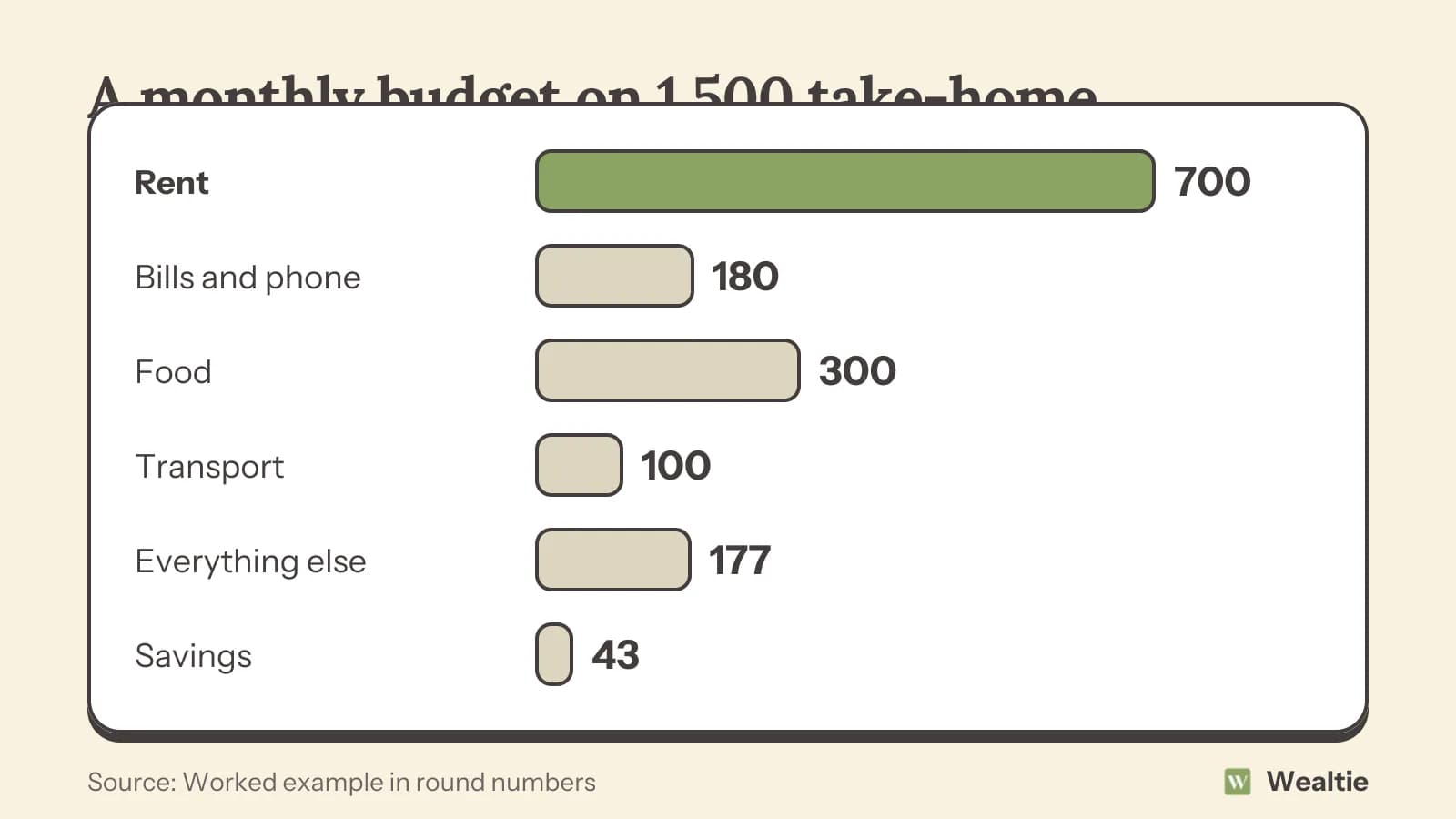
The savings line is 10 a week. It's small, but it's there, and after a year it's over 500. That's enough to cover a lot of the small emergencies that would otherwise go on a card or an overdraft.
How do you work out your take-home pay?
Check your payslips. If your hours change, look at the last three months and use the lowest typical month as your base. Budgeting on a good month means coming up short in a normal one. Gross vs net income explains what comes off between your hourly rate and what you receive.
If you've got more than one job, add up take-home from all of them and note which pays on which day. If you're paid weekly or every two weeks, set aside part of each payment for rent and bills, so the monthly bills are covered when they land.
What should you pay first?
Housing, energy and water, then food, then transport to work, then minimum debt payments. Those keep you housed, warm, fed and working. Missing rent or energy has the most serious consequences, so they come first even when other bills feel more urgent.
Write the order down, so you're not deciding it under stress. If something has to give, talk to the company before you miss a payment. Many have payment plans or hardship support if you ask early.
What support might you be entitled to?
Possibly more than you think. Depending on where you live, there may be benefits that top up low wages, help with housing costs, council or local tax discounts, free school meals, cheaper public transport passes, or social tariffs for broadband, phone, energy and water.
Many people don't claim what they're entitled to. A benefits calculator from your government or a reputable charity can show what's available in a few minutes. It's worth checking again whenever your hours, rent or household changes. Ask your employer too, since some offer schemes like discounted travel or meals.
Where can you save on a tight budget?
Food and bills are usually where there's room. Plan meals for the week, shop from a list, buy supermarket own-brand, and cook in batches. How to save money on groceries has a worked approach.
For bills, check whether a cheaper phone plan or a social tariff applies to you. How to negotiate bills helps with the rest. For more ideas when there's very little to cut, how to save on a low income goes further.
Why bother saving when money's this tight?
Because without a cushion, every surprise becomes debt. A broken phone or a bus pass that runs out early ends up on a card or an overdraft, and the interest makes next month tighter. A small fund breaks that cycle.
Keep it separate from your everyday account, so it doesn't get spent by accident. Even 5 a week is a start, and a jar for coins helps if a weekly transfer feels like too much. How to build an emergency fund has the steps.
What about more income?
Extra hours, a second job or a better-paid role can make the biggest difference, if they're possible. Ask about training or progression at work. If you take on extra work, check how it affects any benefits you receive before you start, and keep a note of extra hours so you can check your pay is right. The budget calculator can show how a change in take-home pay changes your budget.
How do you track a minimum wage budget in Wealtie?
Set your monthly limit in the budget tracker to what's left after rent and bills, and Budget Health warns you mid-month if your pace would take you over. If you use cash, add your wallet as an account and log what you spend. All of this is on the Free plan, which has no time limit and needs no card.
Questions people ask
Start from your exact take-home pay, pay housing and bills first, plan food and transport carefully and check for support you're entitled to. Save even a small amount each week.
Yes, even a little. Saving 10 a week adds up to over 500 a year, which covers many small emergencies.
Housing, energy and water, then food, transport to work and minimum debt payments. Talk to companies before you miss a payment.
Possibly wage top-ups, housing help, tax discounts and social tariffs for bills, depending on where you live. A benefits calculator shows what you could claim.
This article is general information, not financial, tax or legal advice. Your situation is your own; check the numbers that apply to you before you act on them.



