Saving: How to save money on a low income, when there's little left over
To save money on a low income, start with an amount small enough to keep every payday, even $10, and move it to a separate account before you spend. Cut fees first, save part of every windfall, and aim for a $500 buffer before any bigger goal.
 By Wealtie Team · 3 min read
Key takeaways
- In the Federal Reserve's 2025 survey, 21% of adults with family income under $25,000 had savings to cover three months of expenses, against 75% of those on $100,000 or more.
- Four in 10 adults with income under $50,000 said they couldn't cover even a $100 emergency expense from savings alone.
- A small amount saved every payday adds up: $20 a week is $1,040 a year.
- Fees are money spent on nothing; avoiding one overdraft or late fee can be worth more than a month of small savings.
- A first goal of $500 covers the small emergencies that would otherwise go on a card or a payday loan.
Can you save money on a low income?
Yes, in small amounts, and small amounts are the point. A few hundred dollars set aside is the difference between a car repair you can pay and one that goes on a credit card and gathers interest.
It's also harder than most advice admits. In the Federal Reserve's 2025 Survey of Household Economics and Decisionmaking, savings that would cover three months of expenses tracked income closely:
| Family income | Had three months of expenses saved |
|---|---|
| Less than $25,000 | 21% |
| $25,000–$49,999 | 39% |
| $50,000–$99,999 | 55% |
| $100,000 or more | 75% |
And four in 10 adults earning under $50,000 said they couldn't cover even a $100 emergency from savings alone, in the Fed's fact sheet. So the goal here isn't three months. It's the first $100, then $500.
How much should you save on a low income?
An amount you can keep every payday without taking it back. Start smaller than you think.
| Saved each week | After 3 months | After a year |
|---|---|---|
| $5 | $65 | $260 |
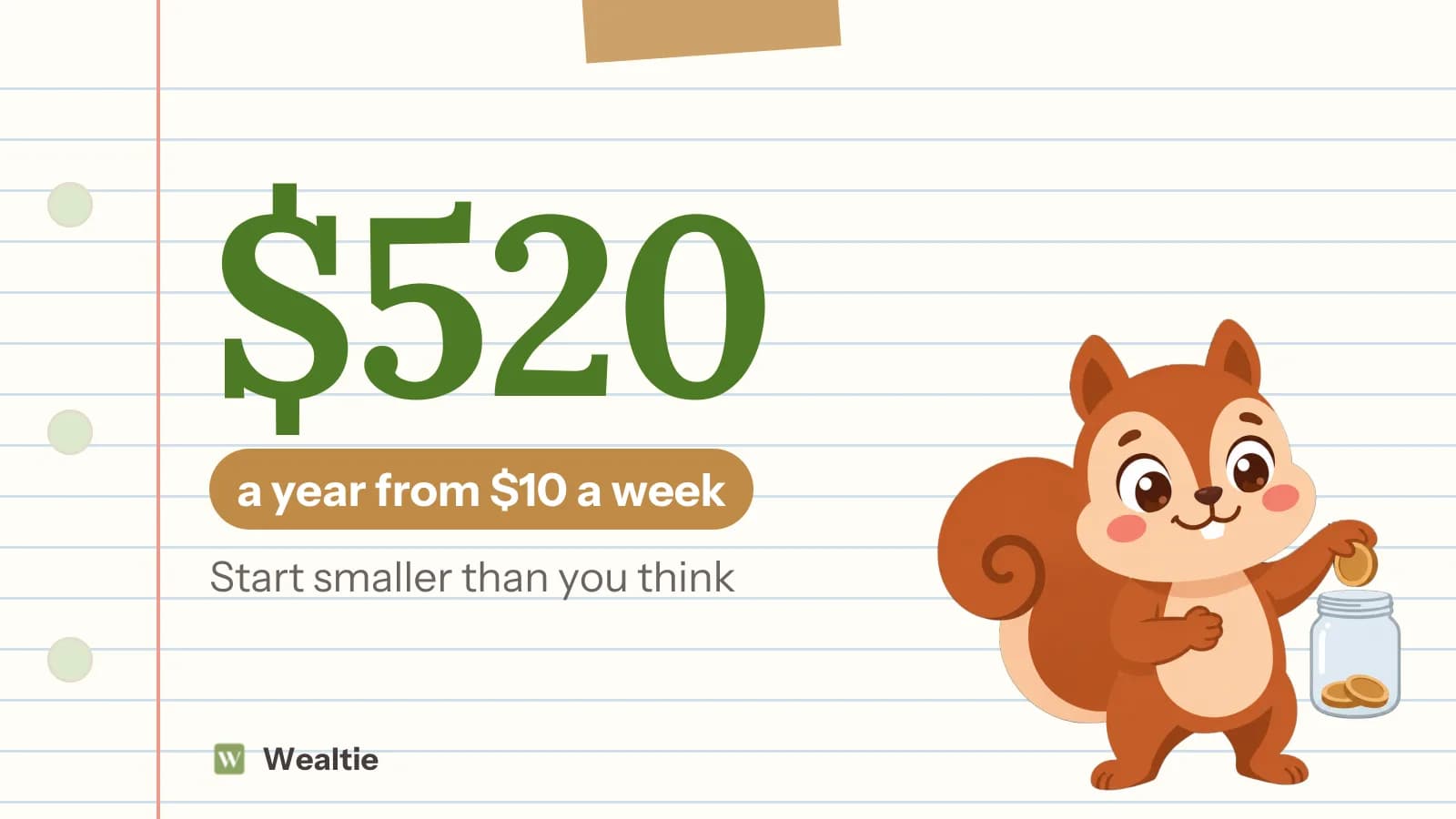
| $10 | $130 | $520 |
| $20 | $260 | $1,040 |
| $40 | $520 | $2,080 |
$10 a week sounds like nothing. A year later it's $520, which covers most of the emergencies that would otherwise mean a payday loan or an overdraft. Once $10 is routine, try $15. Raising an amount that already works is easier than starting a big one that doesn't.
How do you find money to save when there's nothing left?
Look for fees first, then the costs that change month to month, then the bills.
- Fees. An overdraft fee, a late payment fee or a monthly account fee is money spent on nothing. Set up payment reminders, move due dates to just after payday, and switch to an account without a monthly fee if yours has one. Avoiding one fee can be worth more than a month of saving.
- Variable spending. Track every purchase for one month. Groceries, takeaway, transport and small purchases are where the money moves. How to stop overspending shows how to find the categories that leak.
- Subscriptions and bills. Cancel the ones you don't use and call about the ones you do. Phone, internet and insurance providers often have a cheaper plan they won't offer unless you ask.
If there's still nothing left after all three, the problem is income, not spending, and no budgeting trick fixes that. Check what benefits, tax credits or utility assistance you might qualify for; many go unclaimed. In the UK, the government's Help to Save scheme adds a 50p bonus for every £1 saved, for certain people on Universal Credit who save between £1 and £50 a month.
How do you make saving automatic?
Move the money on payday, into a separate account, before you can spend it.
Set a standing transfer for the day your pay lands, even if it's $10. Money left in your everyday account until the end of the month tends not to be there at the end of the month. A separate savings account, with no fee and no minimum balance, keeps it out of sight and out of your debit card's reach.
If your pay changes from week to week, save a fixed share instead of a fixed amount: 2% of every payment, say. How to budget on irregular income sets that up.
What should you do with windfalls?
Save part of every one before it arrives. A tax refund, a bonus, overtime or a cash gift is the fastest way to build savings on a low income, because it doesn't come out of the money you live on.
Decide the split in advance. Half to savings and half to spend is a split you'll keep. All of it to savings is a rule you'll break the first time.
What's the first savings goal on a low income?
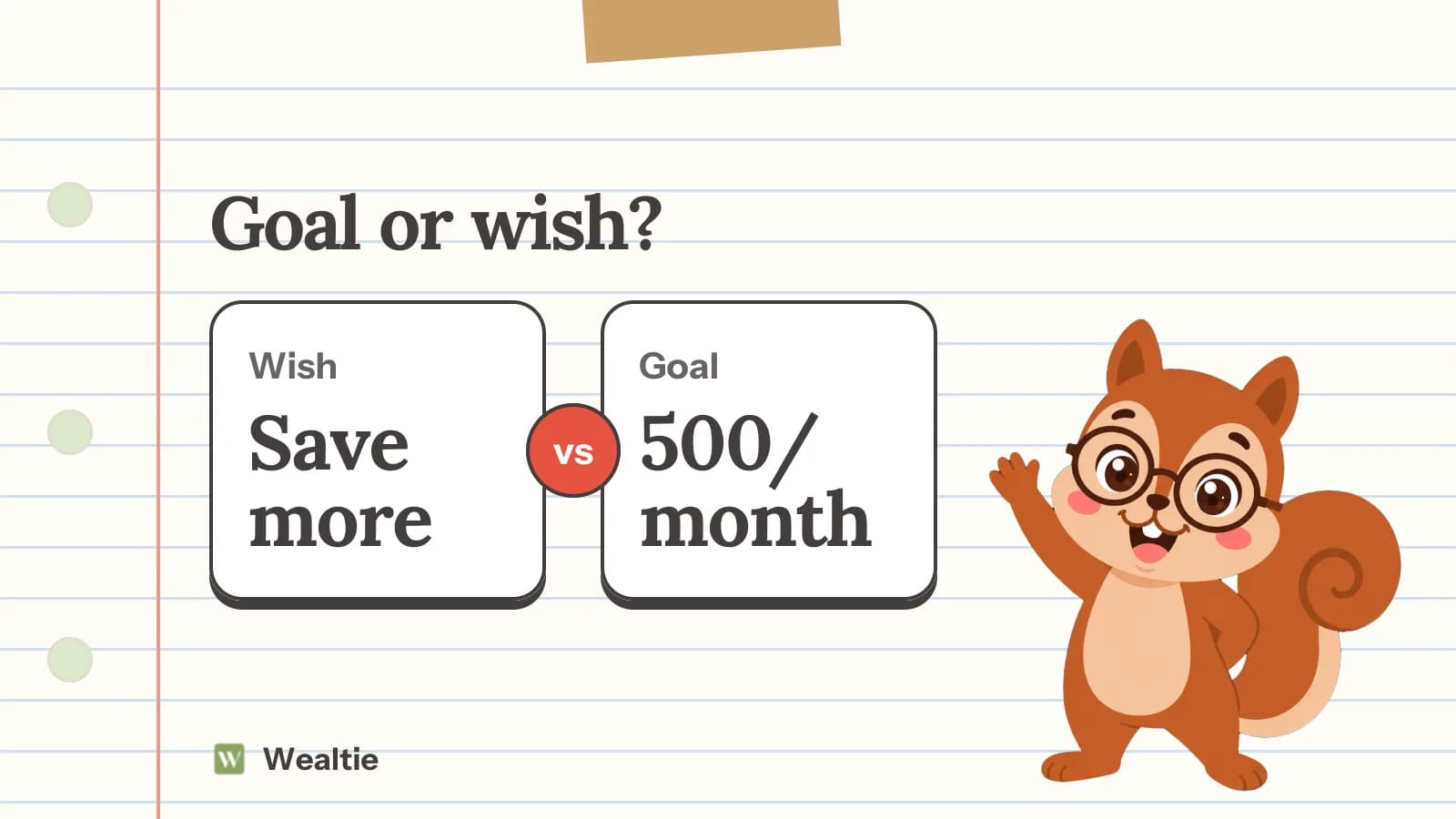
$500. It covers the common small emergencies: a car repair, a prescription, a broken phone, a utility bill that came in high.
In the Fed's 2025 survey, 12% of all adults said they couldn't pay a $400 emergency expense right now by any means, and 15% would put it on a credit card and pay it off over time. A $500 buffer turns those emergencies into a withdrawal instead of a debt.
After $500, the next target is one month of essential costs, then one month of income. How much should be in an emergency fund explains why one month matters more than the three-to-six-month rule when you're starting out.
How do you keep track of small savings?
Watch the balance grow and count every transfer as saving, not spending.
Small amounts are easy to lose track of, and seeing $130 after three months is what keeps you going. In Wealtie, the Free plan includes two accounts, so your everyday account and your savings account sit side by side in one net worth total. A transfer to savings counts as a transfer between your own accounts, not as spending, so your budget shows what you spent and your savings show what you kept.
Questions people ask
Pick a small amount you can keep every payday, even $10, and move it to a separate account the day you're paid. Cut fees, save part of any refund or bonus, and aim for $500 before any bigger goal.
Whatever you can keep every payday without taking it back. $10 a week is $520 a year, and $20 a week is $1,040. The habit matters more than the amount in the first few months.
Track one month of spending to find the variable costs, then look for fees, subscriptions and bills you can lower or move. If there's still nothing left, the income side and benefits you may qualify for are the next place to look.
In a separate, insured savings account with no monthly fee or minimum balance, which you can reach within a day or two. Keeping it out of your everyday account makes it less likely to be spent.
Yes. $10 a week is $520 a year, enough to cover a car repair or a medical bill without borrowing. In the Fed's 2025 survey, 12% of adults couldn't pay a $400 emergency expense at all right now.
Sources
- Economic Well-Being of U.S. Households in 2025: Savings and Investments (Tables 25 and 27) · Board of Governors of the Federal Reserve System · checked 1 November 2026
- Economic Well-Being of U.S. Households in 2025: Fact Sheet · Board of Governors of the Federal Reserve System · checked 1 November 2026
- Get help with savings if you're on a low income (Help to Save) · GOV.UK · checked 1 November 2026
This article is general information, not financial, tax or legal advice. Your situation is your own; check the numbers that apply to you before you act on them.