Budgeting: Adopt vs buy a pet: what each costs
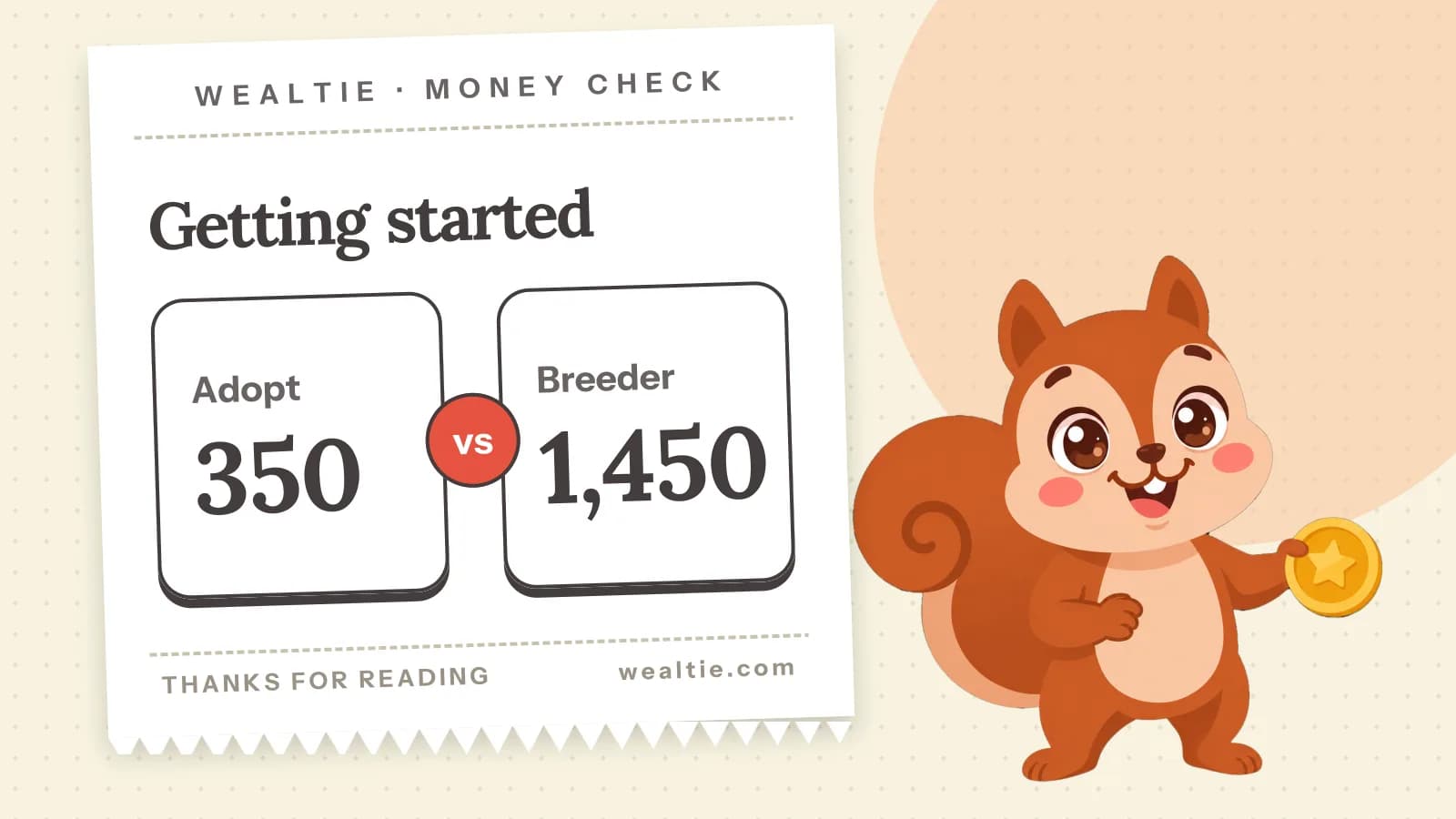
In the adopt vs buy a pet choice, adopting usually costs less upfront because rescue fees often include vaccinations, neutering and a microchip. In a worked example, adopting a dog costs 350 to get started, against 1,450 for buying from a breeder.
 By Wealtie Team · 3 min read
Key takeaways
- In adopt vs buy a pet comparisons, adopting usually costs far less upfront.
- Rescue fees often include vaccinations, neutering and a microchip.
- Ongoing costs like food, insurance and vet care are similar either way.
- Choose a responsible rescue or breeder, whichever you pick.
Adopt vs buy a pet: which costs less?
Bringing a pet home is a big decision, and how you get them affects the upfront cost. You can adopt from a rescue centre or shelter, or buy from a breeder. Adopting usually costs less at the start, partly because the adoption fee often covers vet care you'd otherwise pay for yourself. Buying from a breeder usually costs more, especially for popular breeds.
Here's a worked example for getting a dog, in round numbers that work in any currency:
| Cost | Adopt | Breeder |
|---|---|---|
| Fee or purchase price | 250 | 1,000 |
| Vaccinations | Included | 100 |
| Neutering | Included | 250 |
| Microchip | Included | 30 |
| Basic extras | 100 | 70 |
| Total | 350 | 1,450 |
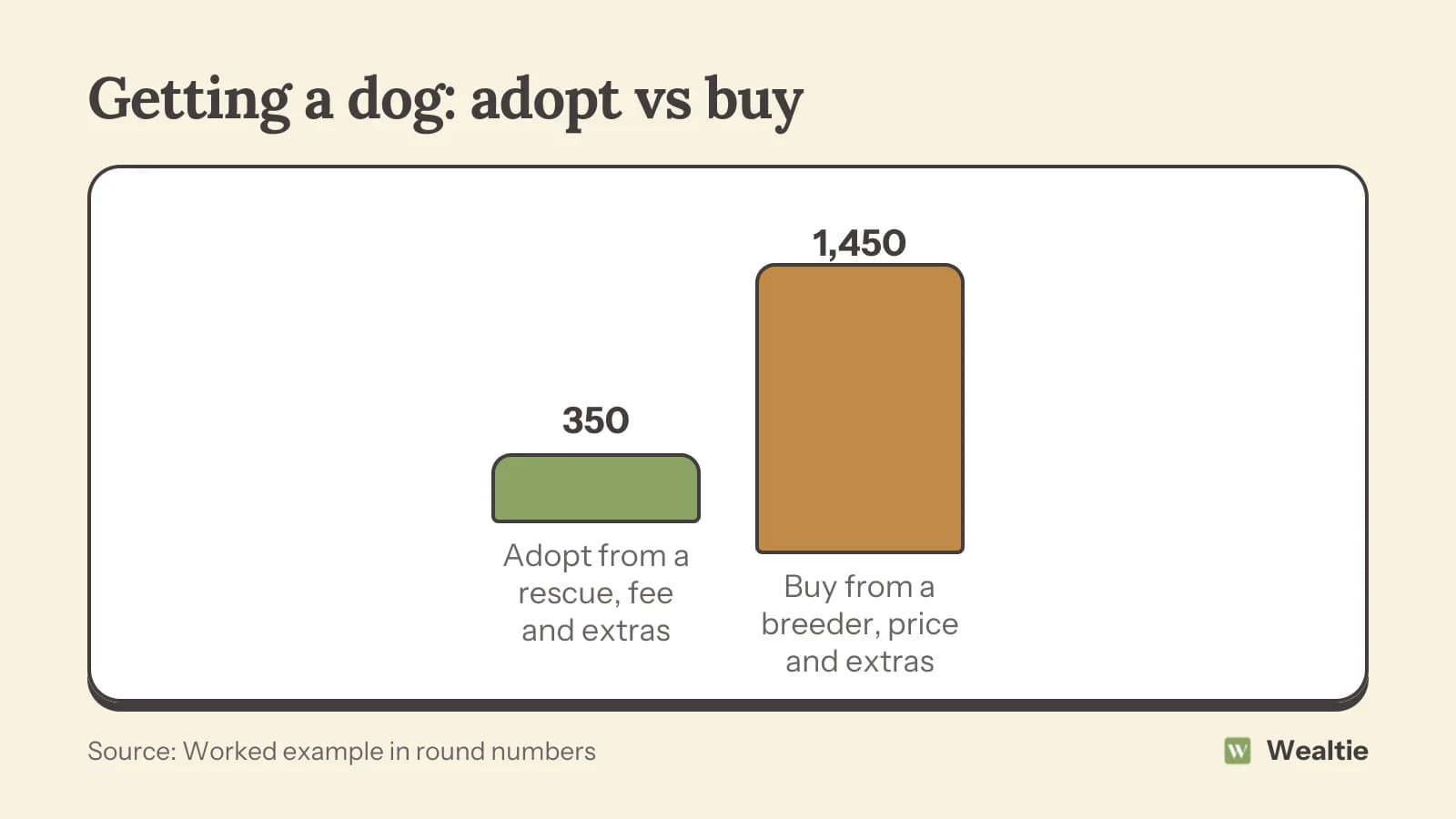
In this example, adopting costs 1,100 less to get started. Fees and prices vary widely by animal, breed, age and location, so check with local rescues and breeders.
What does an adoption fee usually include?
Vaccinations
Most rescues vaccinate animals before rehoming them, which saves you a first round of vet visits.
Neutering or spaying
Many rescues neuter animals before adoption, or include a voucher for it. This is often one of the bigger vet costs for a new pet.
Microchipping
A microchip is often included and may be required by law in some places.
Health checks and treatment
Rescues usually check animals over, treat for fleas and worms, and tell you about any known health issues.
Support after adoption
Many rescues offer advice after you take your pet home, and some will take the animal back if things don't work out.
When might buying cost less over time?
Upfront cost isn't the whole story. A puppy or kitten from a responsible breeder may come with health-tested parents, which can reduce the risk of some inherited conditions. Some rescue animals have health or behaviour needs that take time and money to manage. Equally, some breeds bought from breeders are prone to health problems that cost a lot over a lifetime. Whatever you choose, ask about known health issues and factor them into your budget.
Are ongoing costs the same?
Mostly, yes. Once your pet is home, food, insurance, routine vet care, grooming and toys cost roughly the same however you got them. In round numbers, a dog might cost around 100 a month in ongoing care. How to budget for a pet covers those costs in detail, and the first-year cost of a puppy and the first-year cost of a kitten cover the busy early months.
Insurance can cost more for older animals and some breeds. Getting quotes before you commit helps you plan. Is pet insurance worth it? covers how to decide.
What about adopting an older pet?
Older pets in rescues are often calm, house-trained and already settled in personality, which can make them easier for some homes. Their adoption fees are sometimes lower. They may need more vet care as they age, though, so it's worth reading about senior pet costs and building a vet bills fund.
How do you choose responsibly?
Choose a reputable rescue
Look for rescues that health-check and assess animals, ask about your home and lifestyle, and offer support afterwards.
Choose a responsible breeder
Good breeders let you meet the mother, show health tests, ask you questions and don't always have puppies available. Very low prices or pressure to buy quickly are warning signs.
Avoid online scams
Be wary of adverts asking for deposits before you've seen the animal in person. Scams involving pets are common.
Be honest about your budget
Whichever route you take, make sure you can afford the ongoing costs for the animal's whole life, not just the upfront price.
It also helps to think about the first few weeks. A new pet may need time to settle, and rescue animals in particular can take a while to feel at home. Budget for a few extras, like a crate, a lead and toys, and expect to spend more time at home than usual. Many rescues offer trial periods or foster-to-adopt schemes, which let you check the pet suits your home and budget before you commit.
Whichever route you take, plan for the first vet visit soon after your pet arrives, even if they've already been checked. Registering with a local vet early means you'll know where to go if anything comes up, and it gives you a chance to ask about insurance and routine care costs.
How can Wealtie help you plan for a new pet?
Before you bring a pet home, set a budget for the upfront costs, then log ongoing spending in a pet expense category. Adding insurance and regular costs as recurring transactions shows exactly what your pet costs each month.
Questions people ask
Adopting usually costs less upfront. In a worked example, adopting a dog cost 350 to get started, while buying from a breeder cost 1,450.
Adoption fees often include vaccinations, neutering, a microchip, health checks and flea and worm treatment.
Mostly not. Food, insurance and routine care cost about the same however you got your pet.
Meet the animal in person before paying, be wary of deposits requested online and avoid sellers who pressure you to decide quickly.
This article is general information, not financial, tax or legal advice. Your situation is your own; check the numbers that apply to you before you act on them.