Budgeting: How to make a minimalist budget with only a few categories
A minimalist budget keeps only a few categories and spends on what matters to you while cutting the rest. Most people can run one with five or six categories and a single number to check each week.
 By Wealtie Team · 3 min read

Key takeaways
- A minimalist budget uses five or six broad categories instead of dozens.
- Decide what matters most to you and spend on that, then cut the rest.
- Pay savings first, so the plan works even if you never check the details.
- Check one number each week: what's left to spend this month.
What is a minimalist budget?
A minimalist budget is a plan with as few moving parts as possible. Instead of tracking dozens of categories, you use a handful of broad ones, decide what matters to you, and let the rest go. The goal isn't to spend as little as possible. It's to spend on fewer things that you care about, and to spend less time managing money.
Many people give up on budgeting because their plan has too much detail. A budget with forty categories needs constant sorting, and one bad week makes it feel broken. A minimalist budget is easier to keep, which matters more than being precise.
How many categories does a minimalist budget need?
Five or six is enough for most people. A common set is:
- Home: rent or mortgage, plus anything tied to where you live
- Bills: energy, water, phone, internet and insurance
- Food: groceries and eating out together
- Transport: fares, fuel and car costs
- Fun: hobbies, outings, treats and anything else you choose
- Savings: money set aside for goals and emergencies
You can merge or split these to suit your life. Someone without a car might fold transport into bills. Someone with children might add a category for them. The budget categories list has more ideas if you want a starting point.
How do you make a minimalist budget?
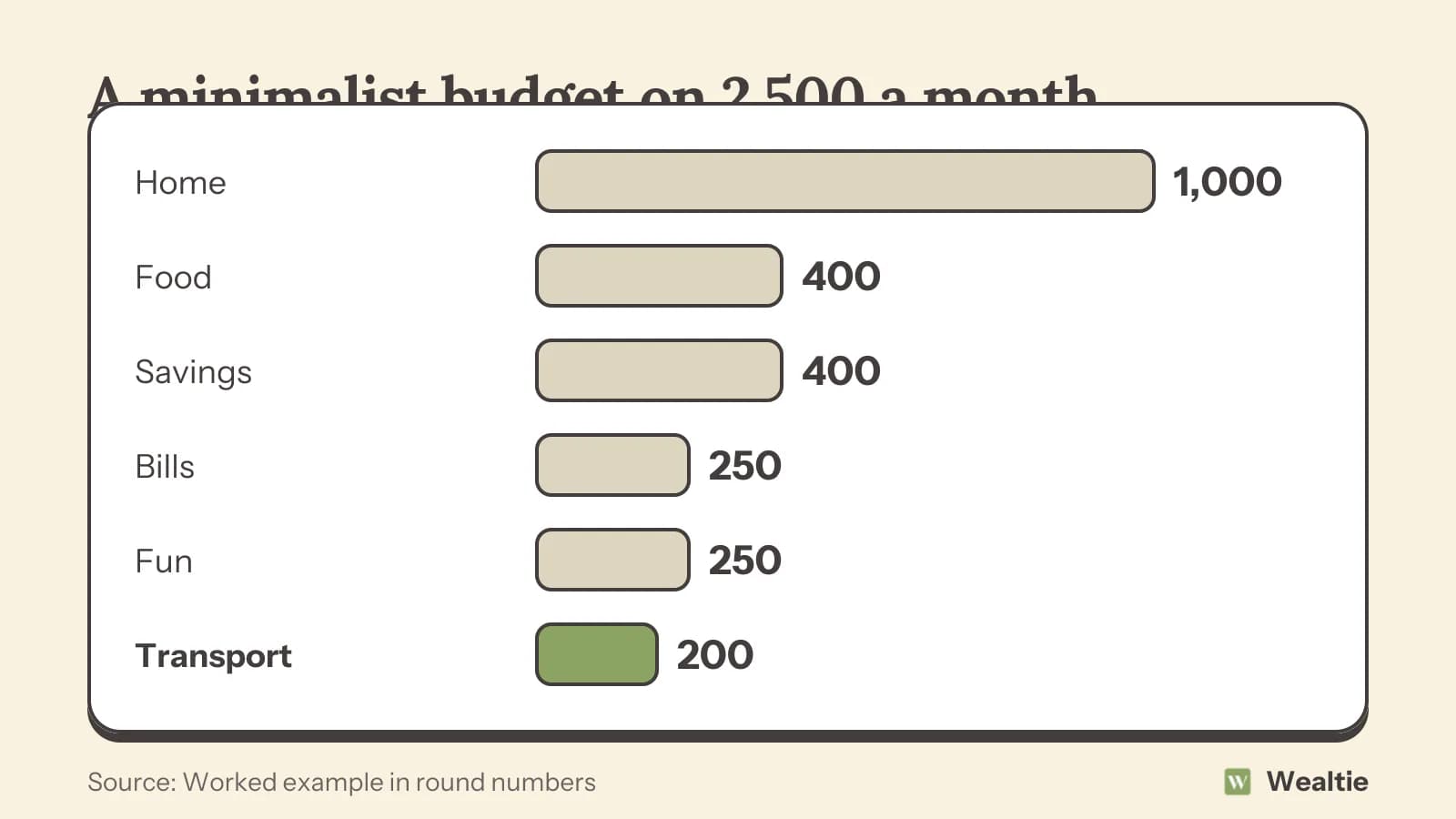
Here's a worked example on an income of 2,500 a month, in round numbers that work in any currency:
| Category | Each month |
|---|---|
| Home | 1,000 |
| Food | 400 |
| Savings | 400 |
| Bills | 250 |
| Fun | 250 |
| Transport | 200 |
| Total | 2,500 |
Step 1: Pay savings first
Move savings out on payday, before you spend anything else. Once that's done, the rest of the money is yours to spend, and you don't need to track it closely to know you're on track.
Step 2: Cover the fixed costs
Home, bills and transport change little from month to month. Set them once and check them only when a bill changes.
Step 3: Give the rest a limit
Food and fun are where spending moves. Give each a monthly limit and watch only those. Putting groceries and eating out in one food category keeps things simple: if you eat out more one week, you cook more the next, and the total still fits.
Step 4: Leave room for the unexpected
A minimalist budget with no slack breaks the first time a bill is higher than usual. Keep a little spare in the fun category, or round your fixed costs up slightly, so a surprise doesn't force you to rebuild the whole plan. Irregular costs like gifts and car repairs can come out of savings, as long as you top it back up the next month.
What should you spend on, and what should you cut?
Make a short list of the things that make your life better: maybe good food, travel, a hobby or time with friends. Spend on those without guilt. Then look for spending that adds little: subscriptions you forgot about, things bought out of habit, and upgrades you don't notice after a week. Cut those first.
This is the heart of minimalism with money. Cutting everything leaves you miserable and likely to give up. Cutting what you don't care about lets you keep what you do. Discretionary spending explains how to spot the spending you can change.
How do you keep a minimalist budget going?
Check one number each week: how much is left to spend this month. In the worked example, the fun budget of 250 is about 60 a week. If you're ahead, carry on. If you're behind, ease off for a few days. There's no need to sort every receipt or review every category.
Own less, spend less
Many people find that owning fewer things leads to spending less. Before buying something, ask where it will go and whether you'll use it in a month. Selling things you no longer use can also give your savings a boost. How to sell things you don't use covers how.
Try a short reset
If spending has crept up, a no-spend challenge for a week or a month can reset your habits and show which purchases you miss.
How do you run a minimalist budget in Wealtie?
The free plan includes up to 10 expense categories and a monthly budget, which is plenty for a minimalist budget. Set your five or six categories, give each a limit, and check what's left to spend as the month goes on. Budget Health shows at a glance whether you're on track.
Questions people ask
A simple budget with five or six broad categories, where you spend on what matters to you and cut the rest.
Five or six is enough for most people, such as home, bills, food, transport, fun and savings.
Pay savings first on payday, set the fixed costs once and give food and fun a monthly limit.
Once a week. Check how much is left to spend this month and adjust if you're behind.
This article is general information, not financial, tax or legal advice. Your situation is your own; check the numbers that apply to you before you act on them.