Budgeting: Aquarium cost: setting up and running a fish tank
Aquarium cost is mostly the setup, since the tank, filter, heater and decor cost far more than the fish. In a worked example, a beginner tank costs 300 to set up and about 15 a month to run.
 By Wealtie Team · 3 min read
Key takeaways
- Aquarium cost is mostly setup: tank, filter, heater and lighting.
- Running costs are small each month but add up over a year.
- Second-hand tanks and simple setups cut the cost a lot.
- Cycling the tank before adding fish avoids losing fish and money.
How much does an aquarium cost?
Keeping fish can be a calm, absorbing hobby, and it's often seen as a cheap way to have a pet. Aquarium cost is mostly upfront, though. The fish themselves are often the cheapest part, while the tank, filter, heater, lighting and decor make up most of the bill. After setup, running costs are modest but steady.
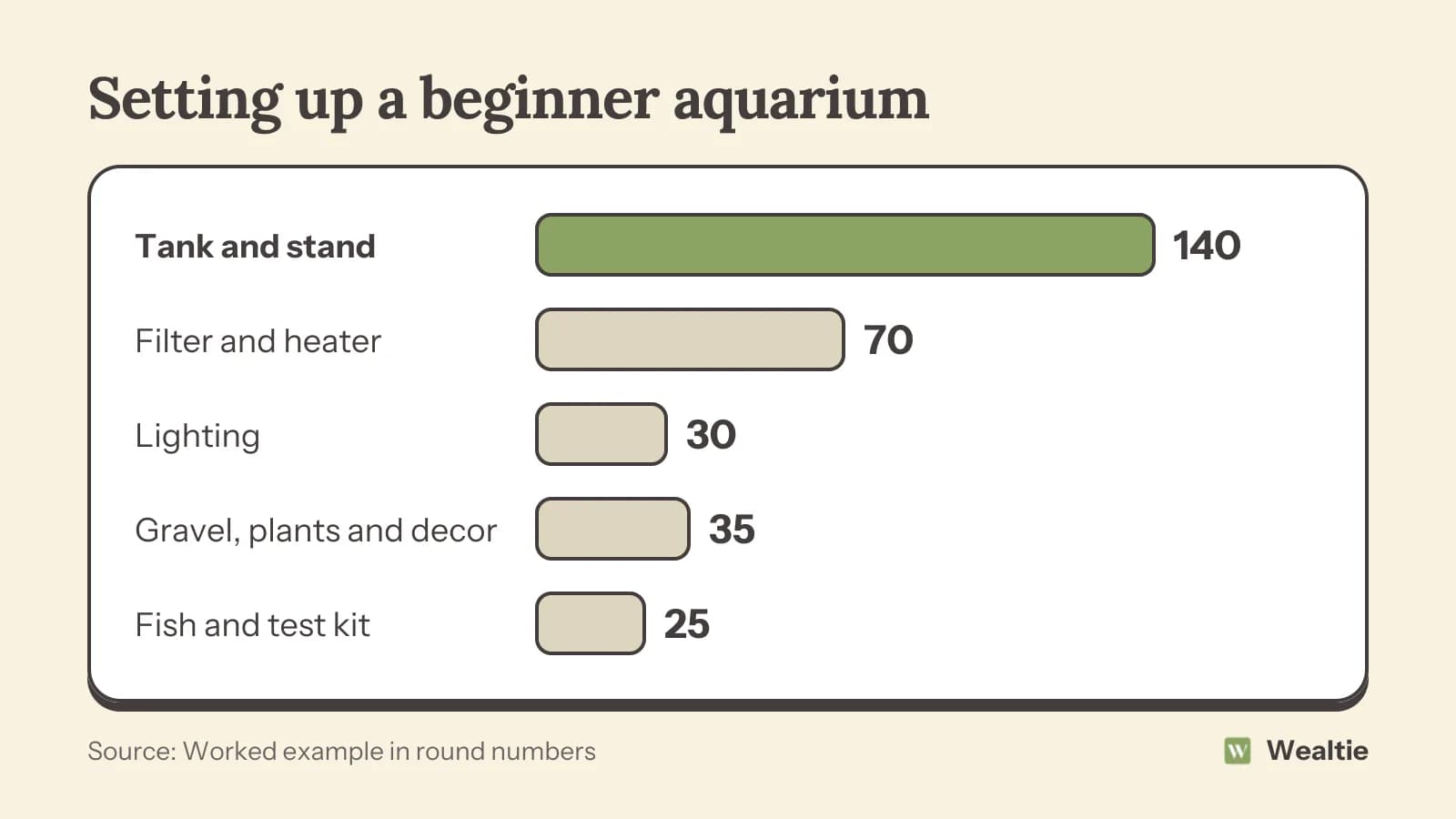
Here's a worked example for a beginner freshwater tank, in round numbers that work in any currency:
| Item | Cost |
|---|---|
| Tank and stand | 140 |
| Filter and heater | 70 |
| Lighting | 30 |
| Gravel, plants and decor | 35 |
| Fish and test kit | 25 |
| Total | 300 |
Bigger tanks, tropical setups with special lighting, and marine aquariums with saltwater equipment cost much more. A small cold-water tank for a few hardy fish could cost less. Choose the type of tank before you shop, since it decides most of the equipment you'll need.
What does a fish tank cost to run?
Once the tank is set up, the monthly costs are small. In the same example, running costs come to about 15 a month:
- Electricity: about 8 for the filter, heater and lights
- Food: about 3 for flakes or pellets
- Water treatment and filter media: about 4
That's around 180 a year. Electricity is the biggest part, especially for heated tropical tanks in a cold room. Using an efficient heater, LED lighting and a lid that keeps heat in can lower it. How to save money on your electric bill covers other ways to cut power costs at home.
What types of aquarium are there?
Cold-water tanks
For fish like goldfish and some minnows. No heater is needed, so equipment and running costs are lower, though goldfish need more space than many people think.
Tropical freshwater tanks
The most popular choice, with a heater to keep water warm. There's a huge range of colourful fish, and costs are moderate.
Planted tanks
Tanks with lots of live plants can need stronger lighting and plant food, which adds cost, but they look beautiful and help keep water healthy.
Marine tanks
Saltwater tanks with corals and sea fish are the most expensive to set up and run, and they need more care. They're usually best for experienced keepers.
How do you set up an aquarium for less?
Buy second-hand
Tanks, stands, filters and lights are widely available second-hand, often as complete setups. Check the tank holds water for a few days before adding anything, and clean everything well.
Start with a mid-sized tank
Very small tanks can be harder to keep stable, which can lead to losing fish. A mid-sized tank is often easier for beginners and doesn't cost much more.
Choose hardy fish
Beginner-friendly fish cope better with small mistakes, so you're less likely to lose them and pay to replace them.
Keep decor simple
A few rocks, some gravel and easy plants look good and cost little. Elaborate ornaments add cost without helping the fish.
Avoid gadgets you don't need
Shops sell many extras. A good filter, heater (for tropical tanks), light, test kit and water conditioner cover the essentials.
Why does cycling the tank save money?
Before adding fish, a new tank needs time for helpful bacteria to build up in the filter. This is called cycling and can take a few weeks. Adding fish too early is one of the most common beginner mistakes and often leads to losing fish, which costs money and is upsetting. A test kit helps you see when the tank is ready. Patience at the start is the cheapest part of fishkeeping.
Is an aquarium a cheap pet?
Compared with many pets, yes. Once set up, a freshwater tank costs little each month, with no vet bills in most cases, no pet insurance and no boarding when you travel, since an automatic feeder or a neighbour can cover a few days. The setup cost is the main hurdle. How to budget for a pet compares the costs of other common pets.
For many people, fishkeeping is also a hobby in its own right. Cheap hobbies covers other low-cost pastimes if you're looking for something calming to do at home.
It's also worth joining a local fishkeeping club or online group. Experienced keepers often sell or give away spare plants, fish and equipment, and they can answer questions that would otherwise cost you money through trial and error. Many hobbyists are happy to help beginners avoid the mistakes they made when they started, and some clubs run auctions where you can pick up healthy fish and plants for much less than shop prices.
How can Wealtie help you track fishkeeping costs?
Log the setup cost and monthly supplies in their own expense category, and set a monthly budget for the hobby. You'll see what your tank costs over a year, and catch it if new equipment starts to creep up.
Questions people ask
In a worked example, a beginner freshwater tank cost about 300 to set up, including the tank, filter, heater, lighting, decor and fish.
Running costs are small. In a worked example, electricity, food and water treatment came to about 15 a month.
Yes, once it's set up. Monthly costs are low and there are usually no vet bills, insurance or boarding costs.
Buy second-hand equipment, choose a mid-sized tank and hardy fish, keep decor simple and skip gadgets you don't need.
This article is general information, not financial, tax or legal advice. Your situation is your own; check the numbers that apply to you before you act on them.