Budgeting: How much does a puppy cost in the first year?
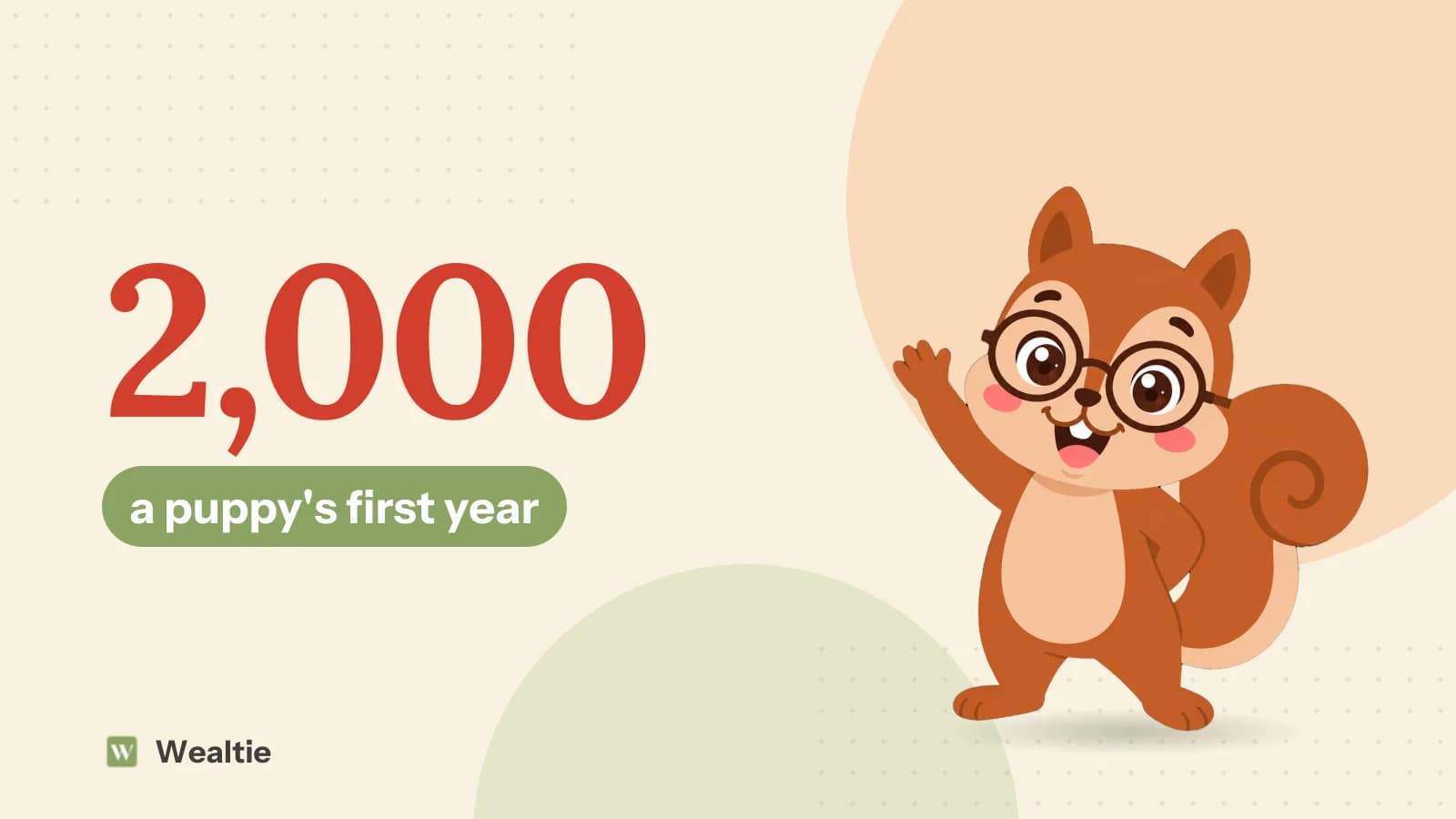
How much does a puppy cost in its first year? Usually more than any later year, because setup, vaccinations, neutering and training all come at once, and in a worked example the first year costs about 2,000 after buying or adopting, with later years around 1,000.
 By Wealtie Team · 3 min read
Key takeaways
- A puppy's first-year cost is usually the highest of its life.
- In a worked example, the first year costs about 2,000 after buying or adopting, then about 1,000 a year after.
- Vaccinations, neutering, gear and training are the big first-year extras.
- Saving before the puppy arrives makes the first months far less stressful.
What is a puppy's first-year cost?
It's the total you'll spend in the first twelve months, beyond the price of the puppy itself. The first year is usually the most expensive of a dog's life, because so much happens at once: vaccinations, neutering, microchipping, training classes and all the gear a new dog needs. Knowing the puppy first-year cost before you bring one home helps you plan, so the excitement isn't followed by money worries. It's also worth thinking about the next ten to fifteen years, since a dog is a long commitment and costs continue for its whole life.
The price of buying or adopting a puppy varies hugely, from a modest adoption fee to a large sum for some breeds, so it's left out of the example below.
How much does a puppy cost in the first year?
Here's a worked example, in round numbers that work in any currency:
| Cost | Amount |
|---|---|
| Food | 500 |
| Vet: vaccinations, neutering, check-ups | 500 |
| Gear: crate, bed, lead, bowls, toys | 300 |
| Insurance | 300 |
| Training classes | 200 |
| Other: treats, grooming, poo bags | 200 |
| Total | 2,000 |
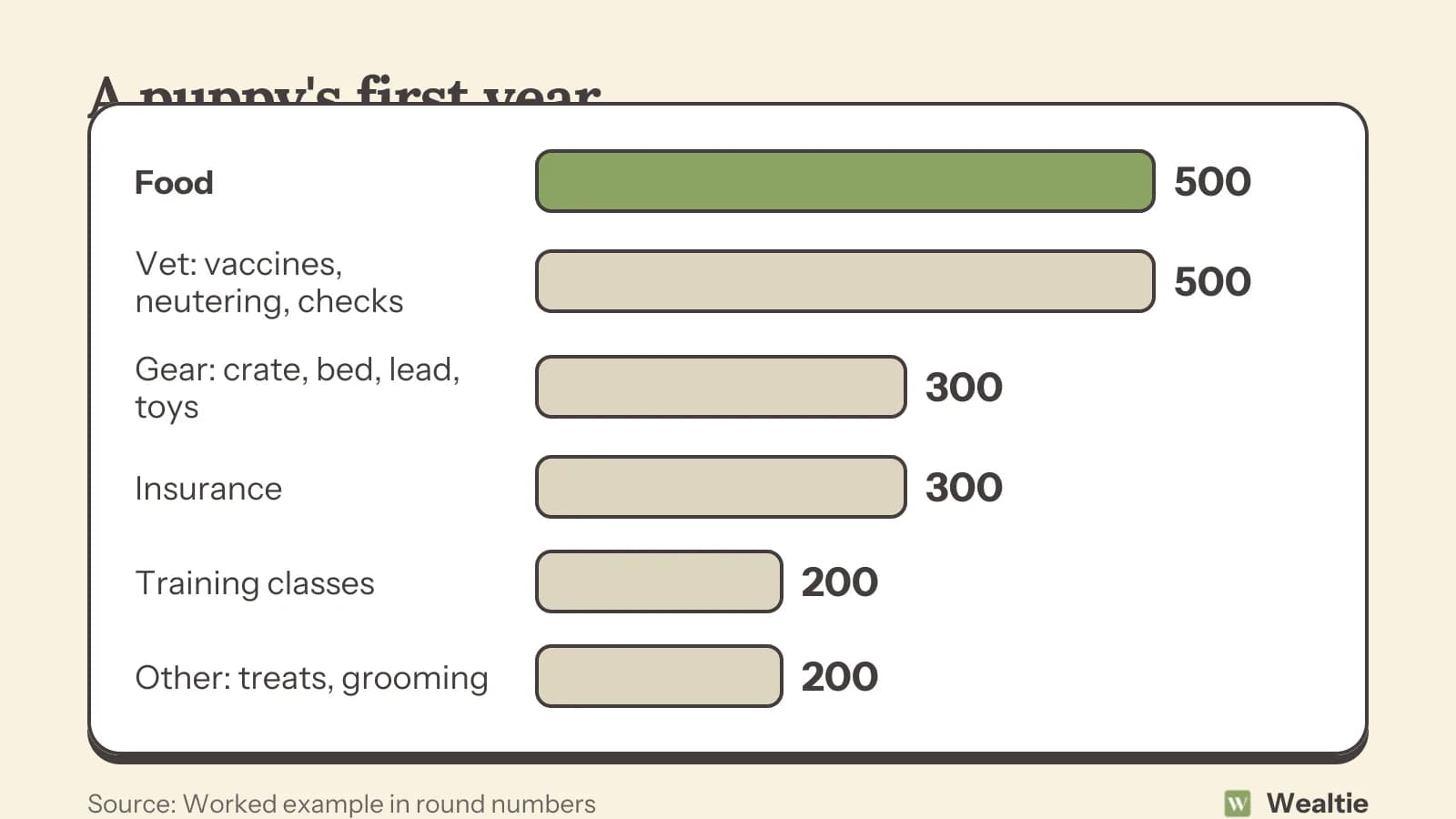
After the first year, costs usually settle at around 1,000 a year in this example, mainly food, insurance and routine vet care. Larger breeds eat more and often cost more to insure, while small breeds usually cost less. The cost of a pet covers ongoing pet costs in more detail.
What vet costs come in the first year?
A puppy needs a course of vaccinations, regular worming and flea treatment, a microchip if it doesn't already have one and check-ups as it grows. Many owners also neuter their dog, on their vet's advice about timing. Some vets offer puppy health plans that spread these costs monthly and include discounts, which can be good value if you'd use everything in the plan. Starting insurance early, while your puppy is healthy, means fewer exclusions later.
Ask about what's included
If you're buying from a breeder or adopting from a rescue, ask which vaccinations, worming treatments and checks have already been done. Rescue dogs are often already vaccinated, neutered and microchipped, which saves a lot.
How do you save on puppy gear?
Buy the basics and skip the extras. A puppy needs a bed or crate, a lead and collar, bowls, a few toys and something to chew. Puppies grow quickly and chew everything, so expensive beds and toys often don't last. Second-hand crates, gates and carriers are widely available and work just as well. How to buy second-hand has tips on checking quality.
Are training classes worth it?
For most puppies, yes. Good training early prevents problems like chewing, pulling and barking, which can be costly to fix later and can lead to damage at home. Group classes cost less than one-to-one sessions and help with socialising. Many owners also use free online guides to practise at home between classes. Short, regular sessions at home often make more difference than extra paid classes.
How do you plan for time and care costs?
Puppies can't be left alone for long. If you work away from home, you may need a dog walker, doggy day care or a friend to help, which can become one of the biggest ongoing costs. Planning this before the puppy arrives, and pricing local options, avoids a surprise. Some owners take time off work for the first week or two to help the puppy settle.
Accidents and damage
Puppies chew shoes, cables and furniture. Puppy-proofing your home, by moving cables and putting things out of reach, saves on replacements. Setting aside a small amount for the odd chewed item is realistic. Plenty of safe chew toys gives your puppy something better to gnaw on.
How do you save before the puppy arrives?
Start a few months ahead. Saving the first-year cost, or at least the setup costs, before you bring the puppy home means you're ready for the early vet visits and gear. A 2,000 first year saved over ten months is 200 a month. A sinking fund keeps the money separate. Once the puppy arrives, keep saving a little each month for vet bills and future costs. Buying food in larger bags once you know what suits your puppy brings the biggest running cost down.
How do you track puppy costs in Wealtie?
Add a savings account for the puppy and move money into it each month as a transfer, which isn't counted as spending. Once your puppy is home, log food, vet visits and gear in a pet line in your expense categories, so you can see the real first-year cost. A monthly limit in the budget tracker keeps it on plan.
Questions people ask
In a worked example, about 2,000 after buying or adopting, covering food, vet care, gear, insurance and training.
In the same example, about 1,000 a year, mainly food, insurance and routine vet care.
Adopt from a rescue, buy second-hand gear, choose group training classes and puppy-proof your home.
They can be if you'd use everything included, since they spread vaccinations and treatments monthly with discounts.
This article is general information, not financial, tax or legal advice. Your situation is your own; check the numbers that apply to you before you act on them.