Budgeting: How to budget for a pet: first-year costs, monthly costs and the vet
To budget for a pet, plan three things: first-year setup costs, a monthly amount for food, routine care and insurance, and a separate fund for vet emergencies. US households spent an average of $997 on pets in 2025, by BLS data, but that average includes homes without pets, so an owner's figure is usually higher.
 By Wealtie Team · 3 min read
Key takeaways
- US households spent an average of $997 on pets in 2025, about $83 a month, in the BLS Consumer Expenditure Survey; that average includes households with no pets.
- The first year costs more than later years, because of adoption fees, vaccinations, neutering and equipment.
- Food, routine vet care and insurance or a vet fund are the core monthly costs for most dogs and cats.
- An unexpected vet bill is the biggest risk to a pet budget; insurance or a dedicated savings pot covers it.
- Track pet costs as their own category for a few months to replace the estimate with your real number.
How do you budget for a pet?
In three parts: the first-year setup costs, a monthly amount for food, routine care and insurance, and a separate fund for vet emergencies.
Most people budget for food and forget the rest. The food is predictable. The vet bill for a swallowed sock or a torn ligament isn't, and it's what turns a pet into a money problem.
How much do households spend on pets?
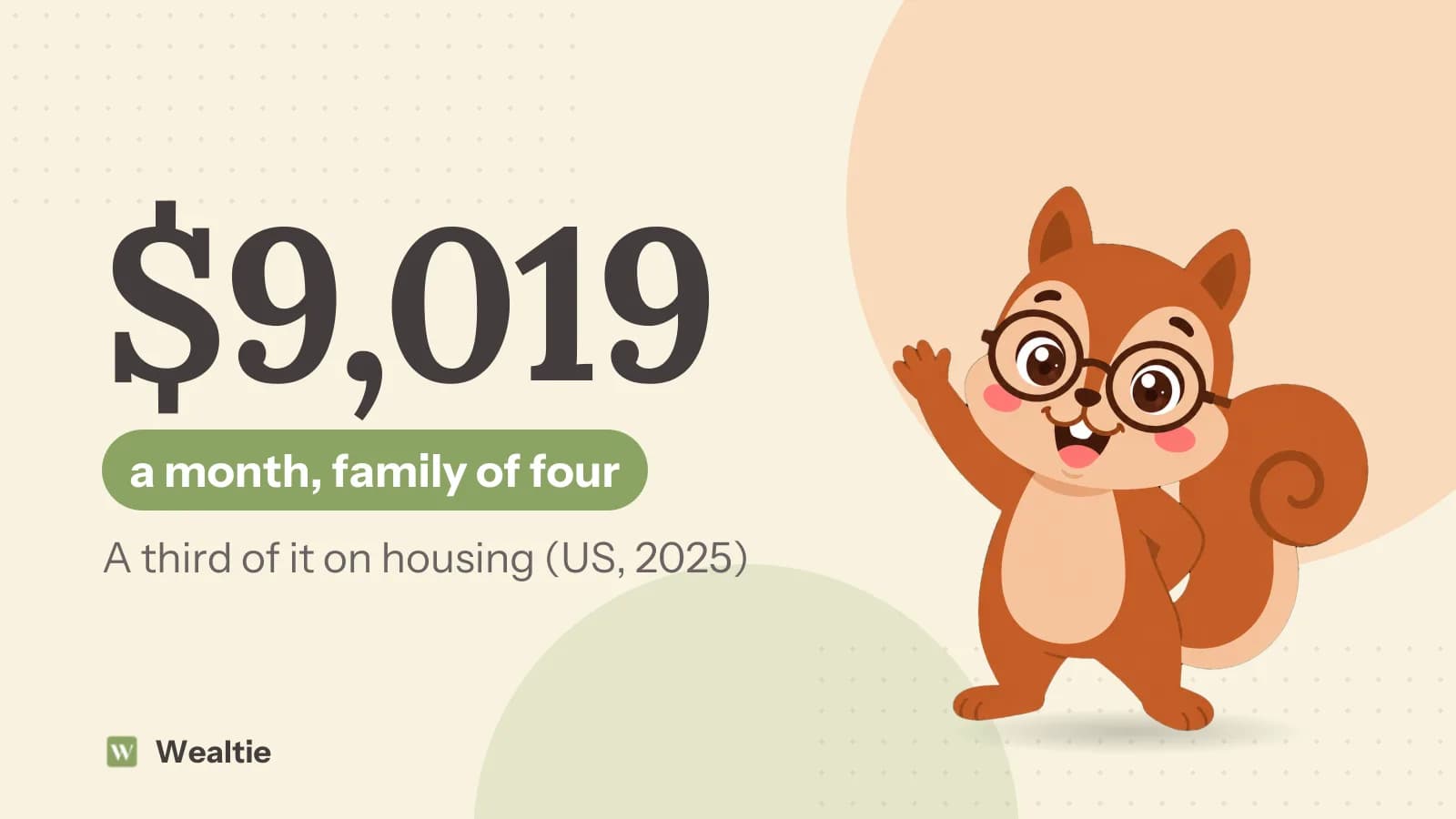
US households spent an average of $997 on pets in 2025, about $83 a month, according to the Bureau of Labor Statistics' Consumer Expenditure Survey. For one-person households, it was $560.
Those averages include every household, with or without a pet, so a pet owner's real spending is higher than the average suggests. Use it as a floor, not a target. The figure covers pet food, supplies and vet services together.
What does a pet cost in the first year?
More than later years, because of the setup. Here's a worked example for a medium-sized adopted dog, in round numbers, the same in any currency. It's an illustration, not a price list; costs vary a lot by country, city and animal.
| First-year setup | Example |
|---|---|
| Adoption fee | 200 |
| Vaccinations and first vet checks | 200 |
| Neutering | 250 |
| Bed, lead, crate, bowls and toys | 250 |
| Training classes | 100 |
| Total | 1,000 |
Adopting usually costs less than buying from a breeder, and many shelters include vaccinations or neutering in the fee. A cat's setup is typically cheaper than a dog's; a large dog's can be more.
What does a pet cost each month?
Food, routine vet care, insurance or a vet fund, and the extras.
| Monthly cost | Example |
|---|---|
| Food | 60 |
| Routine vet care, averaged (check-ups, vaccines, flea and worm treatment) | 30 |
| Insurance, or the same amount into a vet fund | 40 |
| Treats, toys and grooming | 25 |
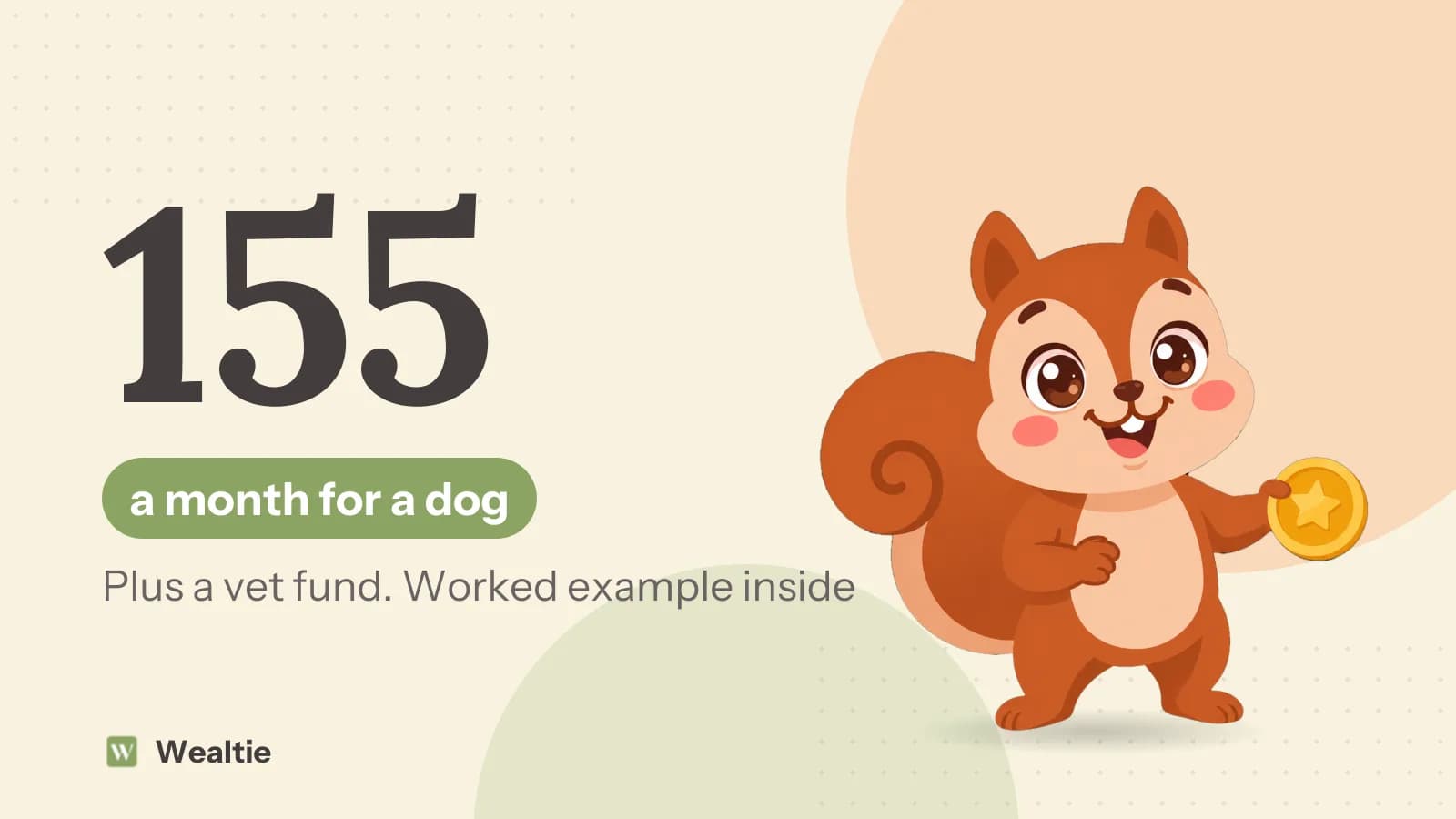
| Total | 155 |
That's about 1,860 a year in the example. Add boarding or a pet sitter if you travel, and pet-friendly rent or a deposit if your landlord charges one.
Do pets cost more as they get older?
Usually, yes. The setup costs fall away after the first year, but older animals tend to need more vet care: dental work, joint problems, long-term medication and more frequent check-ups.
Plan for it the same way you'd plan for any rising cost. Review the pet budget once a year, raise the vet fund contribution as the animal ages, and check whether your insurance premium or excess changes with age; many policies get more expensive over time. If you're adopting an older animal, budget for that from the start. Older pets are often cheaper to adopt and calmer to live with, but the vet line is higher sooner.
How do you plan for vet bills?
With insurance, a dedicated vet fund, or both. Decide before you need it.
An emergency at the vet can cost more than a year of food. Pet insurance spreads that risk into a monthly premium. A vet fund does the same thing with your own money: a fixed amount every month into a separate pot, used only for the animal. Start with about 500 before the pet arrives, and keep adding.
If a big bill would go on a credit card, insurance is usually the safer choice. If you've already got a solid emergency fund, a vet fund can do the job. How much should be in an emergency fund covers the household fund, which should stay separate from the pet's.
How do you cut pet costs without cutting care?
- Adopt rather than buy.
- Buy food in bulk once you know what your pet eats.
- Keep up with routine care: vaccines, dental care and parasite treatment cost less than the problems they prevent.
- Look for low-cost clinics for vaccinations and neutering.
- Spread yearly costs: a sinking fund turns the yearly vaccines, insurance renewal and boarding into a small monthly amount.
How do you track what your pet really costs?
Give the pet its own category and log every cost for a few months. The real number replaces the estimate.
In Wealtie, add a pets expense category to your monthly budget, log food, vet visits and extras as they happen, and Budget Health warns you mid-month if spending is heading over. Keep the vet fund as its own account, so it shows in your net worth and stays separate from everyday money.
Questions people ask
About 155 a month for a medium dog in this post's worked example, covering food, routine vet care, insurance and extras. US households averaged $83 a month on pets in 2025 by BLS figures, but that includes homes without pets.
Usually unplanned vet care: an illness, an injury or surgery can cost far more than a year of food. Pet insurance or a dedicated savings pot covers it.
Enough for the first-year setup costs plus a starter vet fund. In this post's worked example for a dog, that's about 1,000 for setup and 500 for the vet fund, before the monthly costs start.
Yes, if a large vet bill would otherwise go on a credit card. If you can build a vet fund big enough to cover a serious emergency, self-insuring with your own savings can cost less over time.
Adopt rather than buy, choose a smaller or older dog, buy food in bulk, look for low-cost vet clinics, and build a small vet fund first. A smaller monthly amount saved every month beats a big one you can't keep.
Sources
- Consumer Expenditures in 2025, table 1400: Size of consumer unit · U.S. Bureau of Labor Statistics · checked 1 November 2026
This article is general information, not financial, tax or legal advice. Your situation is your own; check the numbers that apply to you before you act on them.