Budgeting: How much does a kitten cost in the first year?
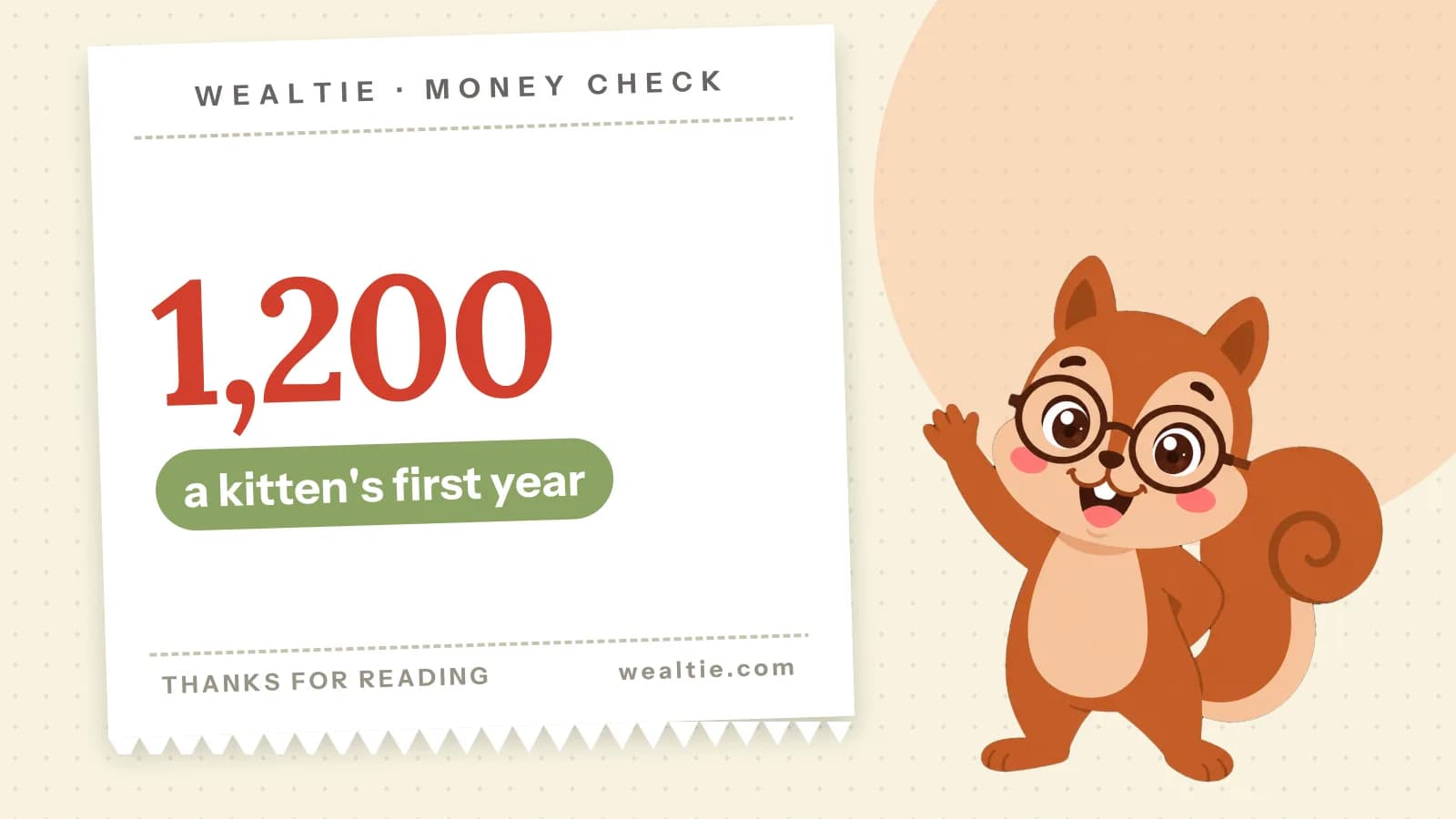
How much does a kitten cost in its first year? More than later years, because vaccinations, neutering, food, litter and gear all come at once, and in a worked example the first year costs about 1,200 after buying or adopting, with later years around 700.
 By Wealtie Team · 3 min read
Key takeaways
- A kitten's first-year cost is higher than later years, because of vaccinations, neutering and setup.
- In a worked example, the first year costs about 1,200 after buying or adopting, then about 700 a year after.
- Adopting from a rescue often includes vaccinations, neutering and a microchip.
- Simple, sturdy gear and homemade toys keep setup costs low.
What is a kitten's first-year cost?
It's what you'll spend in the first twelve months of owning a kitten, beyond the price of the kitten itself. Like puppies, kittens cost most in their first year, since vaccinations, neutering, microchipping and setting up your home all come at once. Cats are often cheaper to keep than dogs, but the kitten first-year cost is still worth planning for before you bring one home. Cats can live for many years, so the yearly costs continue long after the first year.
The price of buying or adopting varies a lot, from a small adoption fee to much more for some breeds, so it's left out of the example below.
How much does a kitten cost in the first year?
Here's a worked example, in round numbers that work in any currency:
| Cost | Amount |
|---|---|
| Food | 350 |
| Vet: vaccinations, neutering, check-ups | 350 |
| Litter | 150 |
| Insurance | 150 |
| Gear: bed, carrier, litter tray, scratching post | 150 |
| Toys and treats | 50 |
| Total | 1,200 |
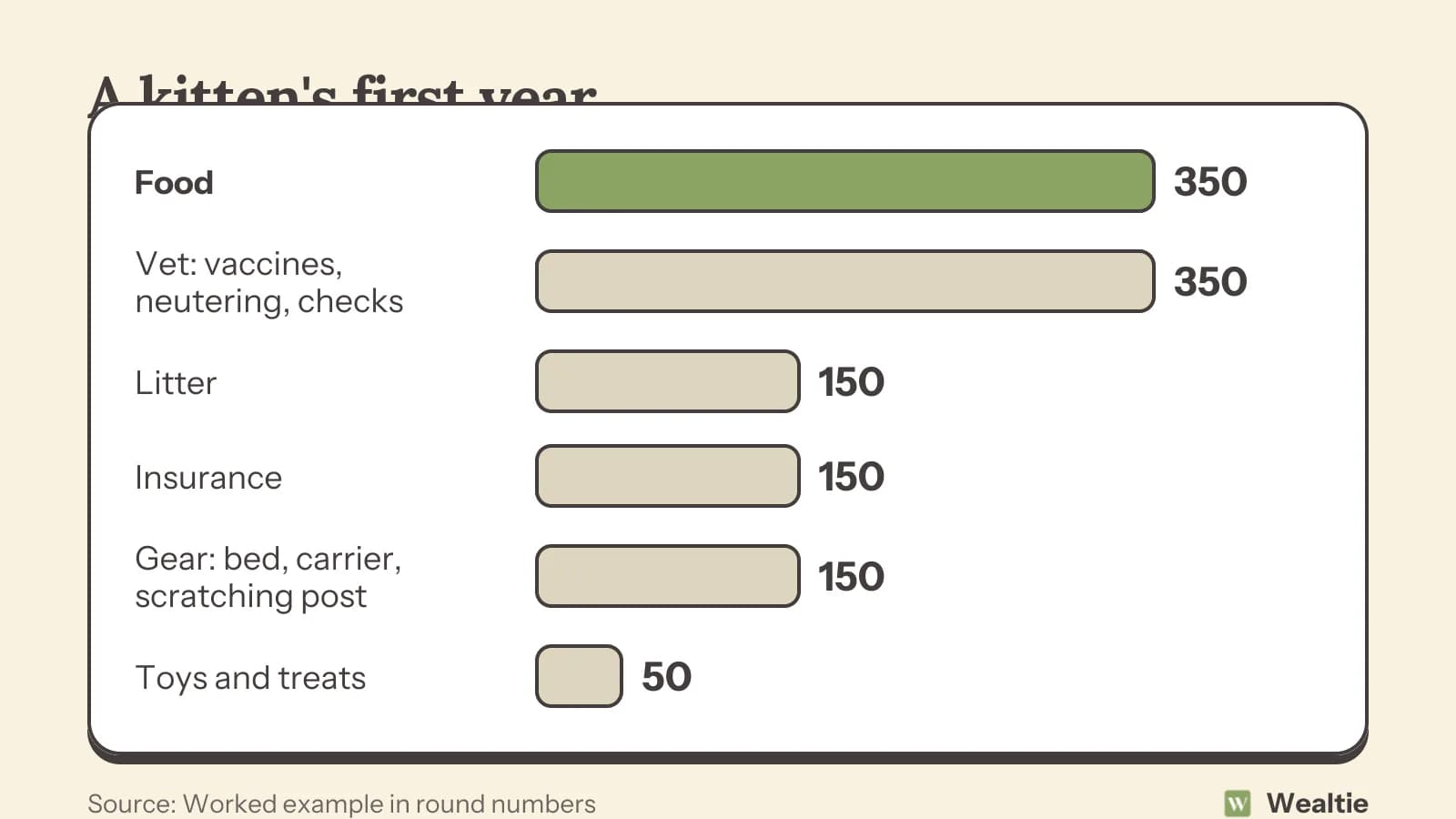
After the first year, costs usually settle at around 700 a year in this example, mostly food, litter, insurance and routine vet care. The cost of a pet covers ongoing pet costs.
What vet costs come in the first year?
A kitten needs a course of vaccinations, flea and worm treatment, a microchip and check-ups. Most owners also neuter their cat, which prevents unwanted litters and some health and behaviour problems; your vet will advise on timing. Some practices offer kitten health plans that spread these costs monthly, often with discounts on treatments. Ask what's included and compare it with paying as you go.
Adopting can save money
Rescue centres often vaccinate, neuter, microchip and health-check cats before rehoming them, which is included in the adoption fee. That can make adoption much cheaper than buying, as well as giving a cat a home.
How do you save on gear?
Keep it simple. A kitten needs a litter tray, litter, bowls, a bed, a carrier and a scratching post. Cats often prefer a cardboard box to an expensive bed, and many favourite toys can be homemade from paper, string or cardboard. A sturdy carrier is worth buying, since you'll use it for vet visits for years. Kitten-proofing your home, by tucking away cables and closing off small gaps, also prevents accidents that lead to vet visits. Second-hand carriers, trays and scratching posts are easy to find and clean. How to buy second-hand has tips.
A scratching post saves furniture
A good scratching post costs a little upfront but protects sofas, carpets and curtains, which are far more expensive to replace. Placing it near where your kitten likes to scratch helps them use it. Two kittens often keep each other entertained, though food, litter and vet costs roughly double.
How do you save on food and litter?
Food and litter are the biggest ongoing costs. Buying larger bags of a good-quality food, rather than small packs, usually costs less per meal. Ask your vet about the right amount to feed, since overfeeding leads to weight problems and vet bills later. For litter, compare types: some last longer or need changing less often, which can make a pricier bag better value. Buying litter in bulk, if you have space to store it, usually costs less per week.
Should you insure a kitten?
Many owners do, since accidents and illness can bring large vet bills. Starting insurance while your kitten is young and healthy means fewer exclusions later. If you choose not to insure, put a similar amount into a vet fund each month instead. Indoor cats may face fewer risks than outdoor cats, which can affect the decision. Whatever you choose, decide early, since conditions that appear before you insure usually won't be covered later.
How do you save before the kitten arrives?
Save the setup costs and early vet bills ahead of time. A 1,200 first year saved over eight months is 150 a month. Keeping the money in a separate pot means you're ready for the first vet visits and supplies. A sinking fund works well for this. After the first year, keep saving a little each month for routine care and the unexpected. Planning for holiday care, like a cattery or a neighbour who visits, avoids a last-minute cost when you travel.
How do you track kitten costs in Wealtie?
Add a savings account for your kitten and move money into it as a transfer, which isn't counted as spending. Log food, litter and vet visits in a pet line in your expense categories, so you can see what your cat costs each month. A monthly limit in the budget tracker keeps it on plan.
Questions people ask
In a worked example, about 1,200 after buying or adopting, covering food, vet care, litter, insurance and gear.
In the same example, about 700 a year, mainly food, litter, insurance and routine vet care.
Often, since rescue centres usually include vaccinations, neutering and microchipping in the adoption fee.
Adopt, keep gear simple, make toys at home, buy food in larger bags and compare litter types.
This article is general information, not financial, tax or legal advice. Your situation is your own; check the numbers that apply to you before you act on them.