Budgeting: Is pet insurance worth it? How to decide
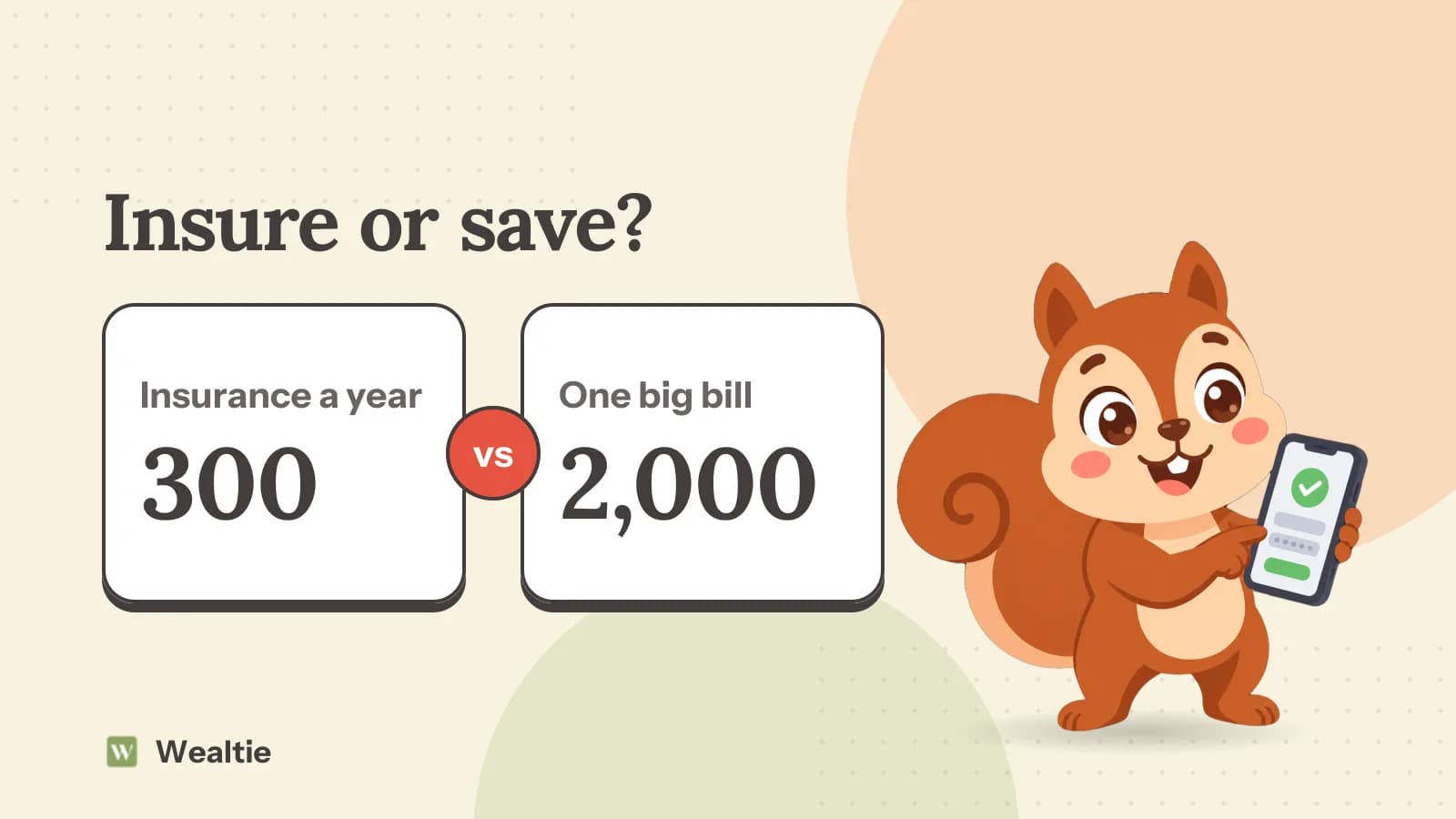
Is pet insurance worth it? It can be if a large vet bill would be hard to pay, and in a worked example 25 a month costs 300 a year, against a single treatment that can cost 2,000 or more.
 By Wealtie Team · 3 min read
Key takeaways
- Pet insurance can be worth it if a large vet bill would be hard to pay.
- In a worked example, 25 a month costs 300 a year, against a treatment that can cost 2,000 or more.
- Lifetime cover usually costs more but covers ongoing conditions year after year.
- If you skip insurance, save a dedicated vet fund every month instead.
Is pet insurance worth it?
It can be, if a large, unexpected vet bill would be hard for you to pay. Pet insurance helps cover the cost of treating illness and injury, which can run into large sums for surgery, scans or long-term conditions. Whether it's worth it depends on your pet, your finances and how you'd cope with a big bill.
The question to ask is: if your pet needed treatment costing 2,000 tomorrow, could you pay it without hardship? Many owners only think about it after a scare, when it's too late to cover that condition.
How does pet insurance compare with a big vet bill?
Here's a worked example in round numbers that work in any currency:
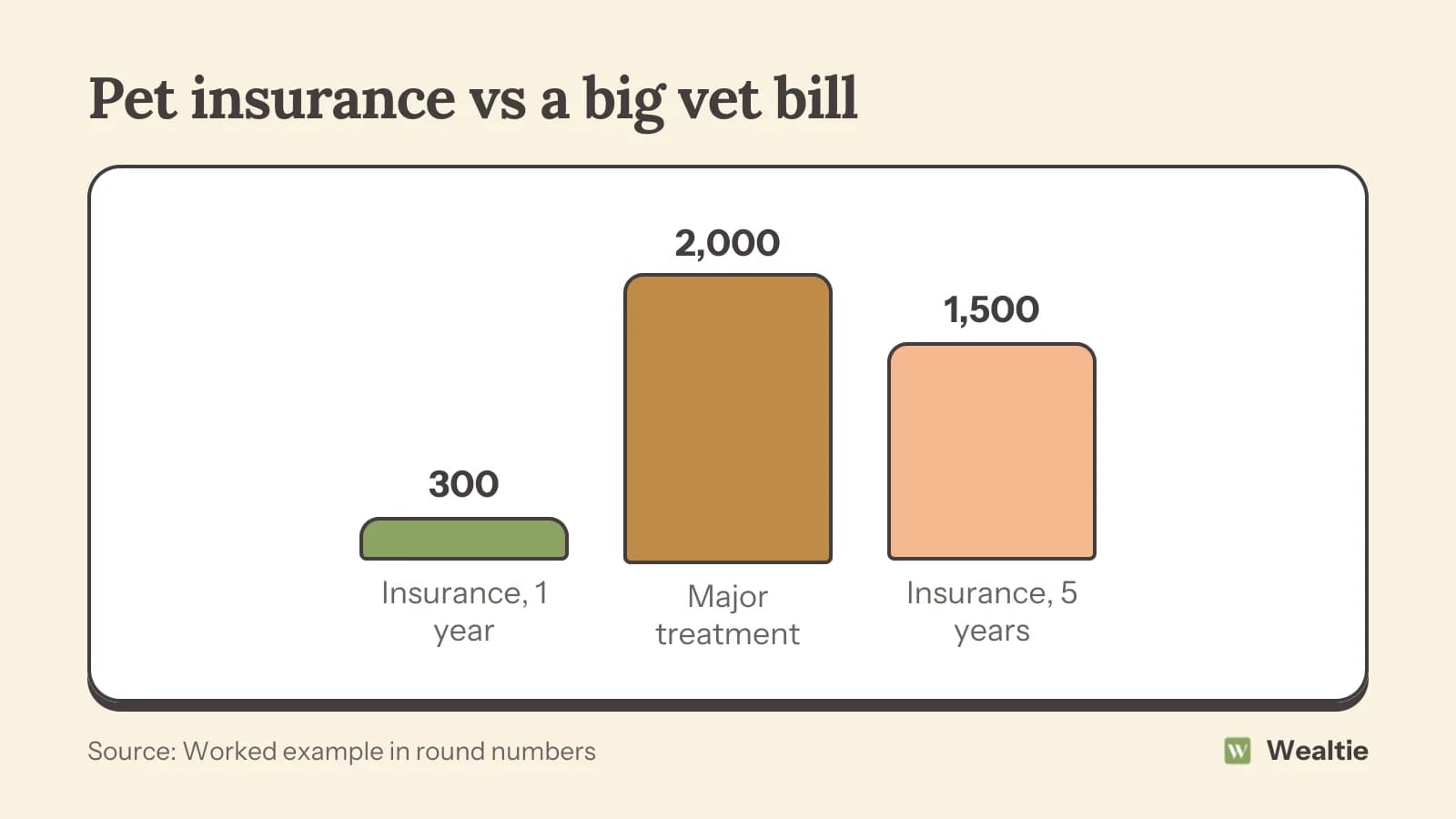
In this example, insurance costs 25 a month, or 300 a year. Over five years, that's 1,500. A single major treatment could cost 2,000 or more. If your pet never needs major treatment, you've paid 1,500 for peace of mind. If it does, insurance can save you a lot. Your own premiums depend on your pet's species, breed, age and where you live.
What types of pet insurance are there?
Policy names vary, but most fall into a few types:
- Accident only: covers injuries, not illness. The cheapest option.
- Time-limited: covers each condition for a set period, often a year, then stops.
- Maximum benefit: covers each condition up to a set amount, then stops.
- Lifetime: renews cover for ongoing conditions each year, as long as you keep the policy.
Lifetime cover usually costs the most, but it's the only type that keeps covering long-term conditions like allergies, arthritis or diabetes year after year. Cheaper policies can leave you paying for ongoing treatment yourself.
What does pet insurance not cover?
Read the exclusions. Common ones include:
- Conditions your pet had before the policy started
- Routine care, like vaccinations, flea treatment and neutering
- Dental care, unless caused by an accident
- Some breed-specific conditions
- Treatment in the first few weeks of a new policy
Most policies also have an excess, the amount you pay towards each claim, like 100. Some add a share of the cost for older pets. Check these before you buy. Waiting periods at the start of a policy mean switching insurers later can leave a gap, and a new insurer may treat existing problems as pre-existing.
Premiums rise with age
Premiums usually rise as pets get older, sometimes sharply. Ask how premiums are likely to change, and factor that into whether a policy will stay affordable.
Is saving for vet bills a better option?
It can be, if you're disciplined and your pet stays healthy. Instead of paying premiums, you put the same amount into a vet fund each month. If nothing happens, the money stays yours. The risk is a big bill before the fund has grown, or a long-term condition that costs more than you've saved.
Some owners do both: a cheaper policy for major emergencies and a small fund for routine costs and the excess. The cost of a pet covers regular pet costs, and a sinking fund works well for a vet fund. Whatever you choose, decide before your pet gets ill, since conditions that appear first usually won't be covered later.
When is pet insurance most worth it?
Insurance tends to make more sense when:
- You couldn't pay a large bill from savings
- Your pet is young, so you can start cover before conditions develop
- Your pet's breed is prone to certain health problems
- Your pet is active or outdoors a lot, with more risk of injury
It may make less sense for older pets where premiums are very high, or if you have a large emergency fund you're happy to use. For indoor pets with few risks, a smaller policy or a fund may be enough.
How do you compare policies?
Compare cover, not just price. Look at the type of policy, the yearly limit, the excess, the exclusions and how claims work. A cheap policy with low limits might not cover a serious illness. Reading reviews about how insurers handle claims is worth the time. Paying yearly rather than monthly is sometimes cheaper, if you can afford it upfront. Which insurance do you need covers insurance decisions more broadly.
How do you track pet costs in Wealtie?
Set up insurance premiums as a recurring transaction with the bill tracker, so they're logged each month. If you save a vet fund instead, add a savings account and move money into it as a transfer, which isn't counted as spending. Log vet visits and food in a pet category in your expense categories.
Questions people ask
It can be if a large vet bill would be hard to pay. In a worked example, 300 a year in premiums compares with a treatment that can cost 2,000 or more.
Cover that renews for ongoing conditions each year, as long as you keep the policy. It usually costs more but covers long-term illnesses.
Often pre-existing conditions, routine care like vaccinations, dental care unless from an accident, and treatment in the first few weeks.
It can work if you're disciplined and your pet stays healthy, but a big bill could come before your fund has grown.
This article is general information, not financial, tax or legal advice. Your situation is your own; check the numbers that apply to you before you act on them.