Saving: How to build a fund for vet bills
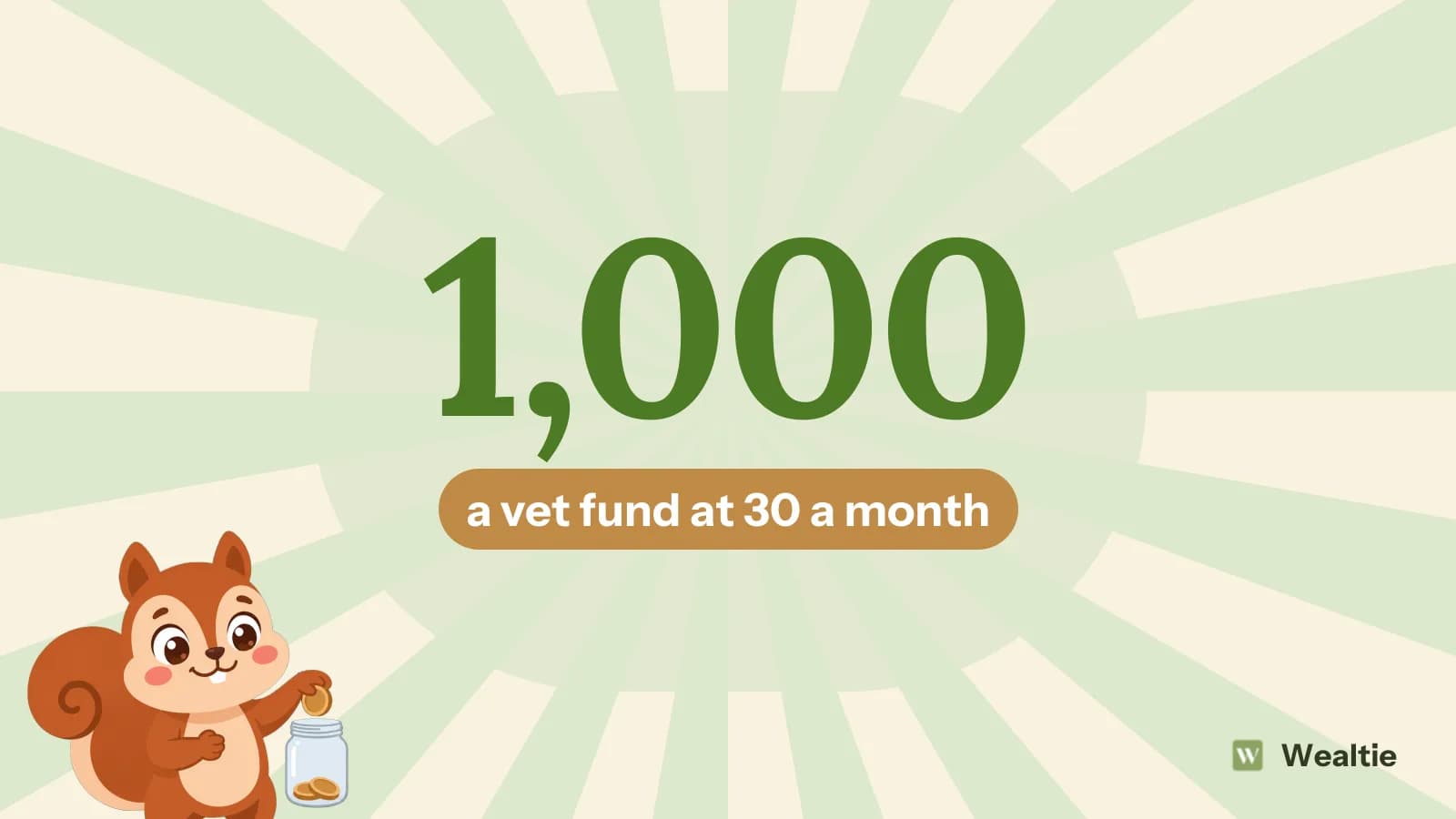
A fund for vet bills is money set aside only for your pet's health, so a sudden bill doesn't land on a credit card. In a worked example, saving 30 a month builds a 1,000 fund in under three years, and it works alongside or instead of pet insurance.
 By Wealtie Team · 3 min read
Key takeaways
- A fund for vet bills keeps money set aside only for your pet's health.
- In a worked example, 30 a month builds a 1,000 fund in under three years.
- Decide what the fund covers: emergencies, insurance excesses or routine care too.
- If a big bill comes early, ask your vet about payment plans before borrowing.
What is a fund for vet bills?
A fund for vet bills is money you set aside only for your pet's health. Pets can need treatment without warning: an injury on a walk, swallowing something they shouldn't, or an illness that needs tests and medicine. A dedicated fund means you can say yes to treatment without worrying about how to pay, and without reaching for a credit card.
It works whether or not you have pet insurance. With insurance, the fund covers the excess and anything the policy doesn't. Without insurance, it's your main protection.
How much should you aim for?
Enough to cover a typical emergency, then more over time. A good first target is around 1,000, which covers many common treatments or the excess on several claims. If you don't have insurance, aim higher over time, since serious treatment can cost several thousand. Asking your vet what common treatments cost locally gives you a realistic target.
Here's a worked example of saving 30 a month, in round numbers that work in any currency:
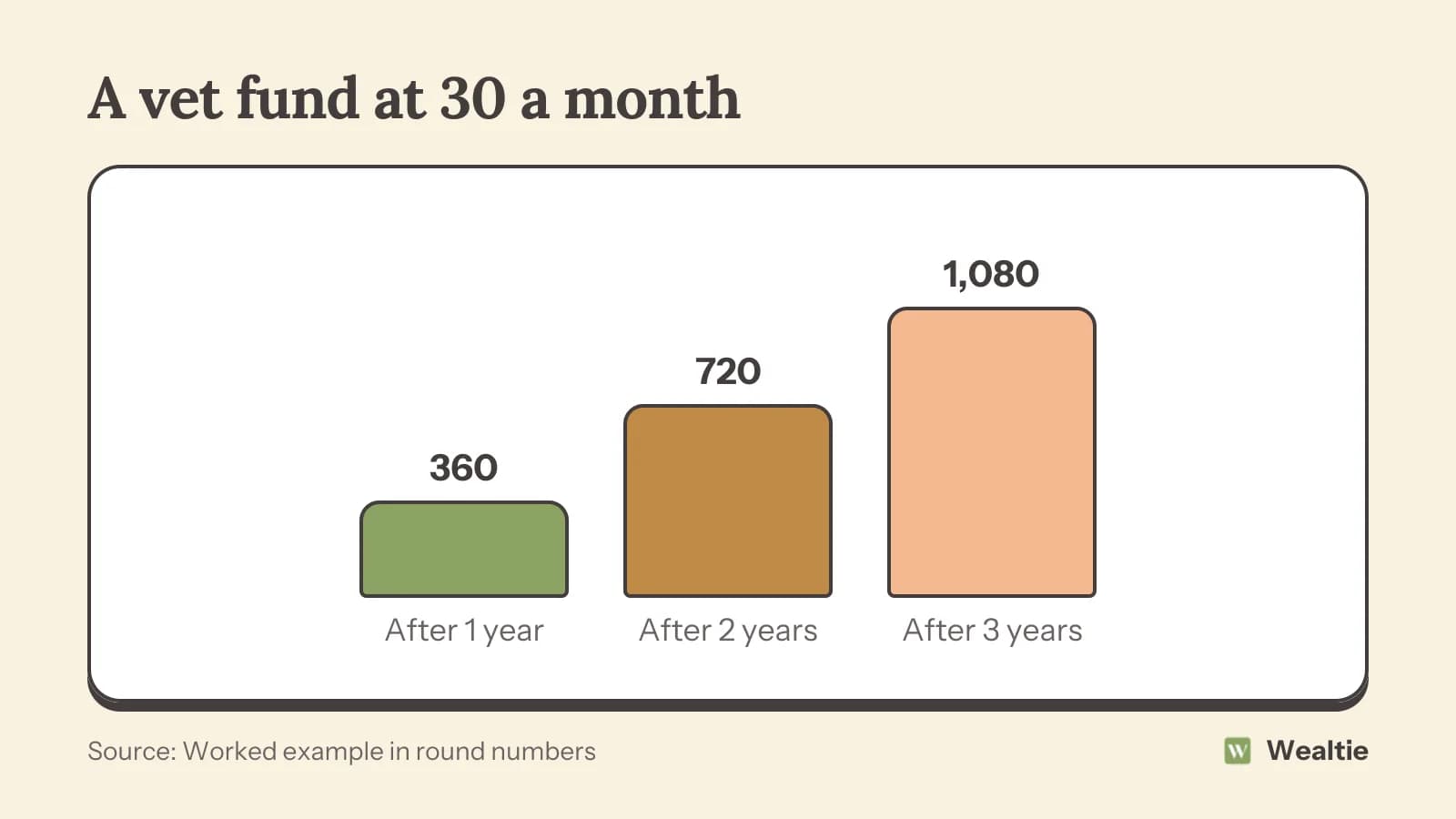
In this example, the fund passes 1,000 in under three years. Saving more each month gets you there faster.
What should the fund cover?
Decide in advance, so the money's used as planned. Options include:
- Emergencies only: injuries and sudden illness
- Insurance excesses and exclusions: if you have a policy
- Routine care too: vaccinations, flea and worm treatment, dental checks
If you include routine care, budget for it separately within the fund. In a worked example, routine care might cost 200 a year. Mixing everything together can leave the fund empty just when an emergency hits.
Keep it separate
Keep the fund in its own savings account, apart from your everyday money and your general emergency fund. Seeing it grow, and knowing it's only for your pet, makes it easier to leave alone. Writing down what the fund is for, even in a note, helps you resist using it for other things. Where to keep your emergency fund covers choosing an account.
How do you build the fund faster?
Set up an automatic transfer on payday, so saving happens without thinking. Other ways to speed it up:
- Start with a lump sum, like a bonus or tax refund
- Add the money you save by buying pet food in bulk
- Round up: move the difference when you buy pet supplies
- Add a little extra each month when your budget allows
When you get a new pet, starting the fund straight away, before problems arise, makes a big difference. How to build an emergency fund has more ideas that apply here too.
What if a big bill arrives before the fund is ready?
Talk to your vet first. Many vets offer payment plans, especially for long-standing clients. Ask for an estimate before treatment, and discuss options if the cost is high. It's also reasonable to ask whether there are different treatment options at different costs. In some places, animal charities offer lower-cost treatment for people on lower incomes.
If you need to borrow, compare the full cost of any credit, and avoid high-interest options if you can. Once the bill is paid, restart the fund and rebuild it.
How do you lower vet costs in the first place?
Prevention costs less than treatment. Keep up with vaccinations, flea and worm treatment and dental care. Feed a healthy diet, keep your pet at a healthy weight and make your home and garden safe. Regular check-ups catch problems early, when they're cheaper to treat. Keeping toxic foods and cables out of reach prevents some of the most common emergency visits. The cost of a pet covers everyday pet costs.
Should you insure as well?
It depends on how big a bill you could cover. A fund protects you from small and medium costs, while insurance protects against very large ones. Many owners use both: a fund for routine care and excesses, and a policy for major emergencies. If your fund is large enough to cover the biggest bills you'd face, you might choose to rely on it alone. Review the plan once a year, as your pet ages and the fund grows. A sinking fund works well for the predictable side of pet care.
How do you track a vet fund in Wealtie?
Add a savings account for your vet fund and move money into it as a transfer each month, which isn't counted as spending. Log vet visits, medicine and pet food in a pet category in your expense categories. A monthly limit in the budget tracker keeps regular pet costs on plan.
Questions people ask
Around 1,000 is a good first target, and more over time if you don't have pet insurance.
In a worked example, saving 30 a month builds 1,000 in under three years.
Ask your vet about payment plans, get an estimate first and check whether animal charities near you offer lower-cost care.
It helps, since it covers the excess, exclusions and routine care that insurance doesn't.
This article is general information, not financial, tax or legal advice. Your situation is your own; check the numbers that apply to you before you act on them.