Budgeting: How to budget for an older pet
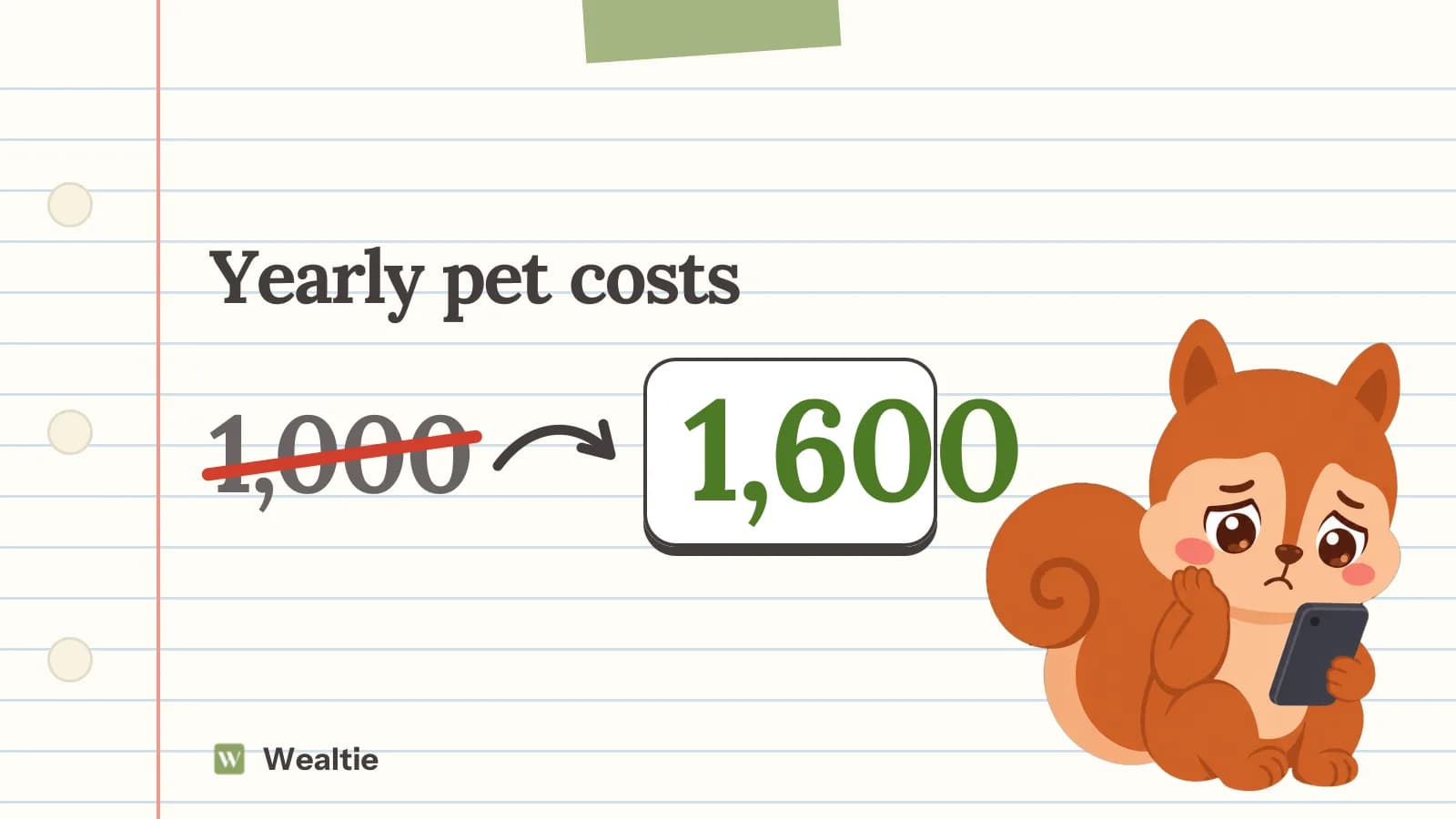
To budget for an older pet, plan for more frequent vet visits, medication, special food and comfort items, which often raise costs in later years. In a worked example, an older dog's yearly costs rise from 1,000 to about 1,600, so saving ahead helps you give good care without strain.
 By Wealtie Team · 3 min read
Key takeaways
- Costs often rise as pets age, with more vet visits, medication and special food.
- In a worked example, an older dog's yearly costs rise from 1,000 to about 1,600.
- Insurance can become expensive or limited for older pets, so a vet fund matters more.
- Regular check-ups catch problems early, when treatment is often cheaper.
How do you budget for an older pet?
Expect costs to rise, and plan for them before they arrive. As pets age, they often need more vet visits, regular medication, special food and things that make them comfortable, like softer beds or ramps. These costs can build up gradually, or arrive suddenly with a diagnosis. A budget for an older pet lets you give the care you want without the stress of finding money at short notice. Older pets also give a great deal of companionship, and planning ahead means money doesn't have to shape their care.
When pets are considered older varies by species, breed and size. Your vet can tell you what to expect for your pet.
How much more do older pets cost?
Here's a worked example for an older dog, in round numbers that work in any currency:
| Cost | Amount a year |
|---|---|
| Vet visits and tests | 500 |
| Food, including special diets | 500 |
| Medication | 300 |
| Insurance | 200 |
| Comfort items | 100 |
| Total | 1,600 |
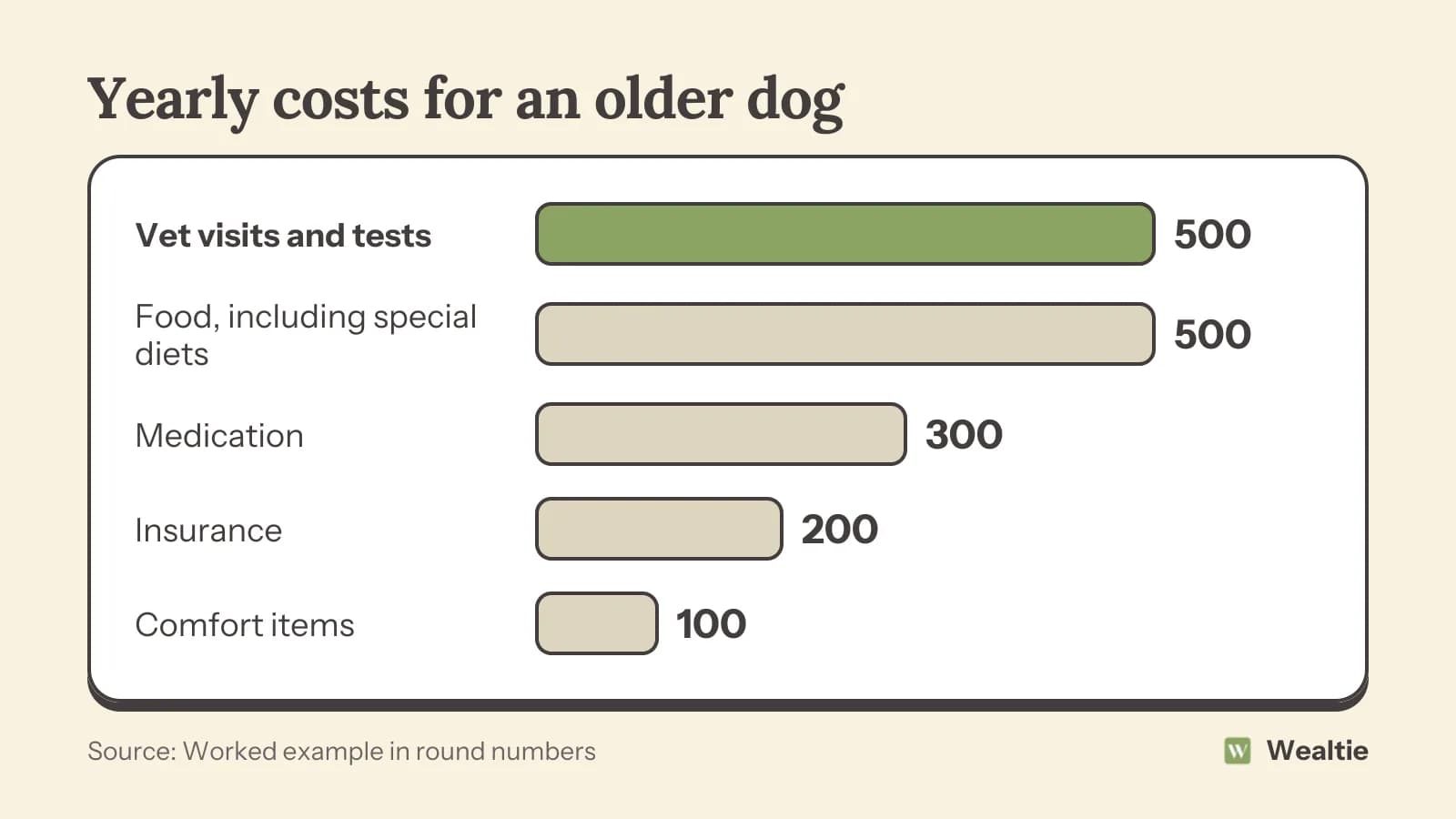
In this example, yearly costs rise from 1,000 to about 1,600. Your own costs depend on your pet's health, and some older pets need far more care than others. The cost of a pet covers costs at other stages.
Why do vet costs rise?
Older pets are more likely to develop long-term conditions, like arthritis, kidney problems, dental disease or diabetes. Vets often recommend check-ups twice a year rather than once, and blood tests to catch problems early. Early treatment is often simpler and cheaper than treating a condition once it's advanced, so regular check-ups can save money. Watching for changes at home, like drinking more, eating less or moving stiffly, and mentioning them early helps your vet act sooner.
Long-term medication
If your pet needs daily medication, it becomes a regular monthly cost. Ask your vet whether a written prescription would let you buy medication more cheaply elsewhere, and whether larger supplies cost less. Treat medication as a fixed bill in your budget. Some vets also offer health plans for older pets that include regular checks and blood tests for a monthly fee.
What happens to insurance as pets age?
Premiums usually rise as pets get older, sometimes sharply, and some policies limit cover for older animals or for conditions that started earlier. If your pet has lifetime cover, keeping it in place can be valuable, since a new policy may exclude existing conditions. If insurance becomes too expensive, putting a similar amount into a vet fund each month is an alternative. Check your policy's terms each year at renewal.
How do you keep an older pet comfortable for less?
Small changes help a lot. A thicker bed, a ramp or steps to favourite spots, non-slip mats on smooth floors and raised bowls can make an older pet more comfortable. Many can be made at home or found second-hand. Keeping your pet warm in winter, with a blanket or a bed away from draughts, also helps stiff joints. Shorter, gentler walks and keeping your pet at a healthy weight also reduce strain on joints, which can lower vet costs.
Dental care matters
Dental problems are common in older pets and can be painful and costly to treat. Regular tooth brushing, dental chews and checks at each vet visit help prevent bigger bills later.
How do you plan for end-of-life costs?
It's hard to think about, but planning ahead can make a difficult time a little easier. End-of-life care, euthanasia, cremation or burial all have costs, which vary by area and choice. Knowing roughly what they'll be, and having some money set aside, means you can focus on your pet when the time comes. Your vet can explain the options gently. Some pet insurance policies include a small amount towards these costs, so check your policy.
How do you save for an older pet's care?
Start a vet fund well before your pet reaches old age, and add to it each month. If your pet is already older, start now. Even a modest monthly amount builds a cushion for check-ups, medication or an unexpected bill. A sinking fund keeps the money separate, and how to budget for medical bills has ideas that apply to pet health too.
How do you track an older pet's costs in Wealtie?
Set up regular medication or check-up plans as recurring transactions with the bill tracker. Add a savings account for your pet's care and move money into it as a transfer, which isn't counted as spending. Log vet visits, food and medication in a pet line in your expense categories, so you can see how costs change as your pet ages.
Questions people ask
Costs often rise with age. In a worked example, an older dog's yearly costs rise from 1,000 to about 1,600.
Older pets are more likely to develop long-term conditions and often need more frequent check-ups and tests.
Premiums rise and cover can be limited. Keeping existing lifetime cover can be valuable, or save a vet fund instead.
A thicker bed, ramps, non-slip mats, raised bowls and gentle exercise, many of which can be made or bought second-hand.
This article is general information, not financial, tax or legal advice. Your situation is your own; check the numbers that apply to you before you act on them.